

Earlier in this series, I explained how to give your company a brain and a workforce. Your future workers will not all be human. Many will be AI agents. But that brain and those agents still need real machines in real buildings. And those buildings may not belong to you.
This is Part 3 of the Sovereign Enterprise series, based on Eric Gilmore’s blueprint for companies that own their AI rather than rent it. Part 1 covered Sovereign Intelligence, the company’s digital brain. Part 2 covered the Sovereign Workforce, digital workers with names, permissions, and employment records. This article covers Sovereign Infrastructure.
Sovereign Enterprise = Sovereign Intelligence + Sovereign Workforce + Sovereign Infrastructure
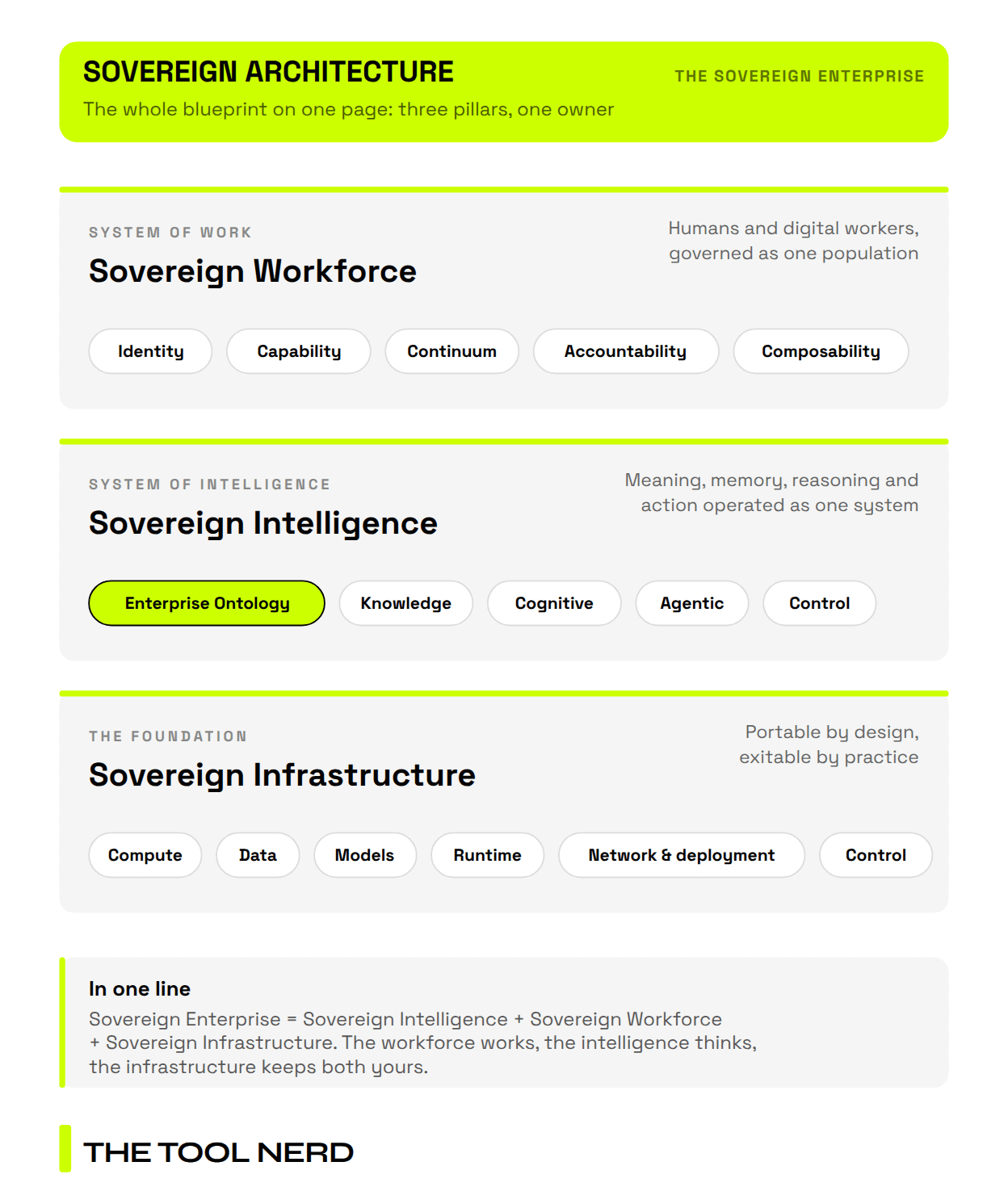
Consider the outdoor-gear retailer from the earlier articles. Its company brain knows that John bought a tent yesterday, returned a sleeping bag last week, and complained about shipping a month ago. The retailer’s Digital Twin knows the warehouse has 1,240 tents and 38 late orders. When an agent almost sent John a 99% discount instead of 20%, the Control Plane stopped it.
Right now, all of it runs on someone else’s computers.
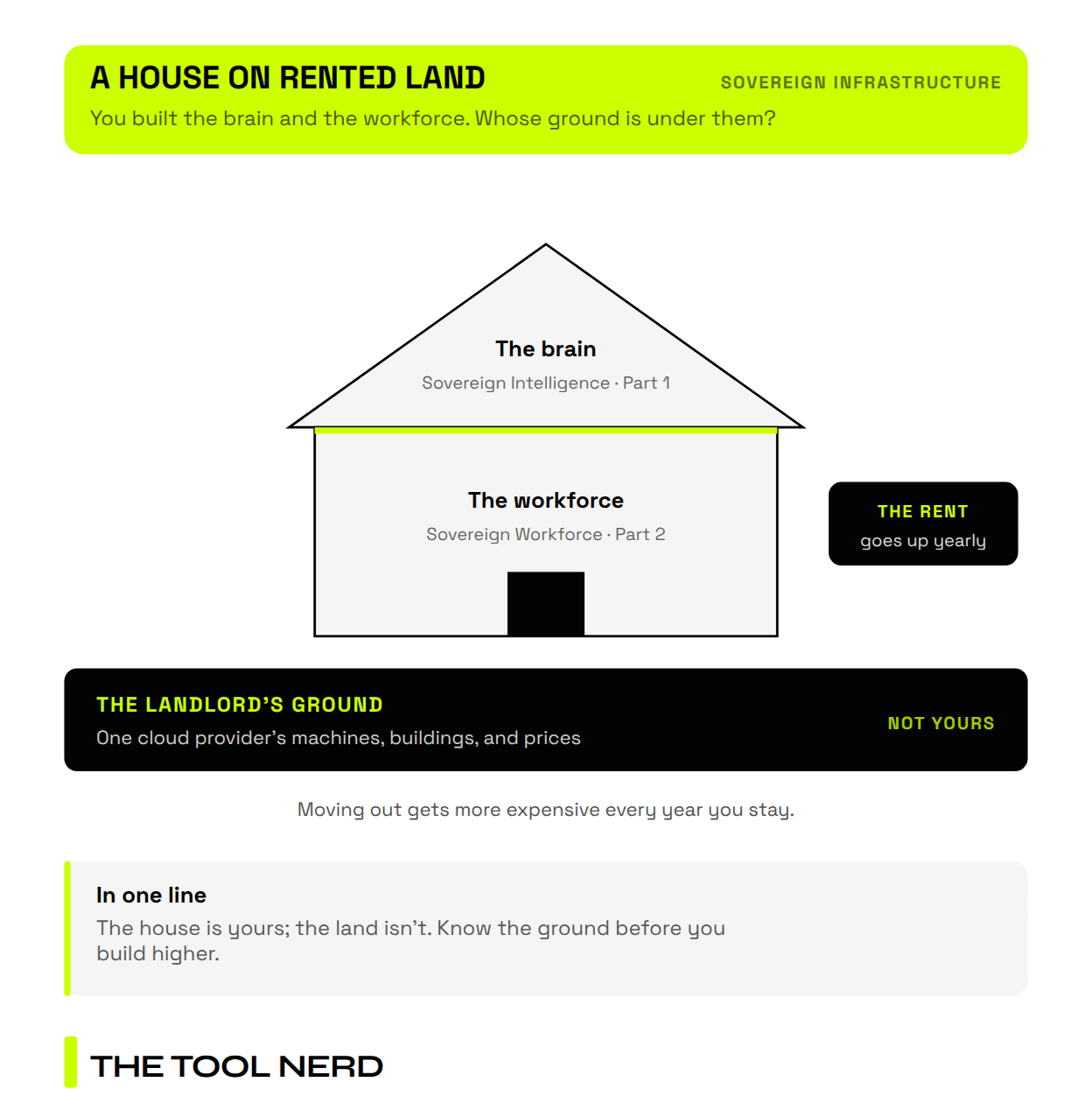
Imagine spending two years building your dream house. The interior is beautiful and the design is yours. But the land is not yours it’s landlords’. Every year you stay, moving out becomes more expensive.
Here, the infrastructure is the land. The landlords are the hyperscalers: Amazon, Microsoft, and Google, which run much of the internet.
I am not saying you should leave the cloud. Use the big providers as suppliers you can replace, not as the foundation that defines your company. The goal is to keep your options open.
You can check out my previous articles:


The Hyperscaler Trap: AI Infrastructure Lock-In
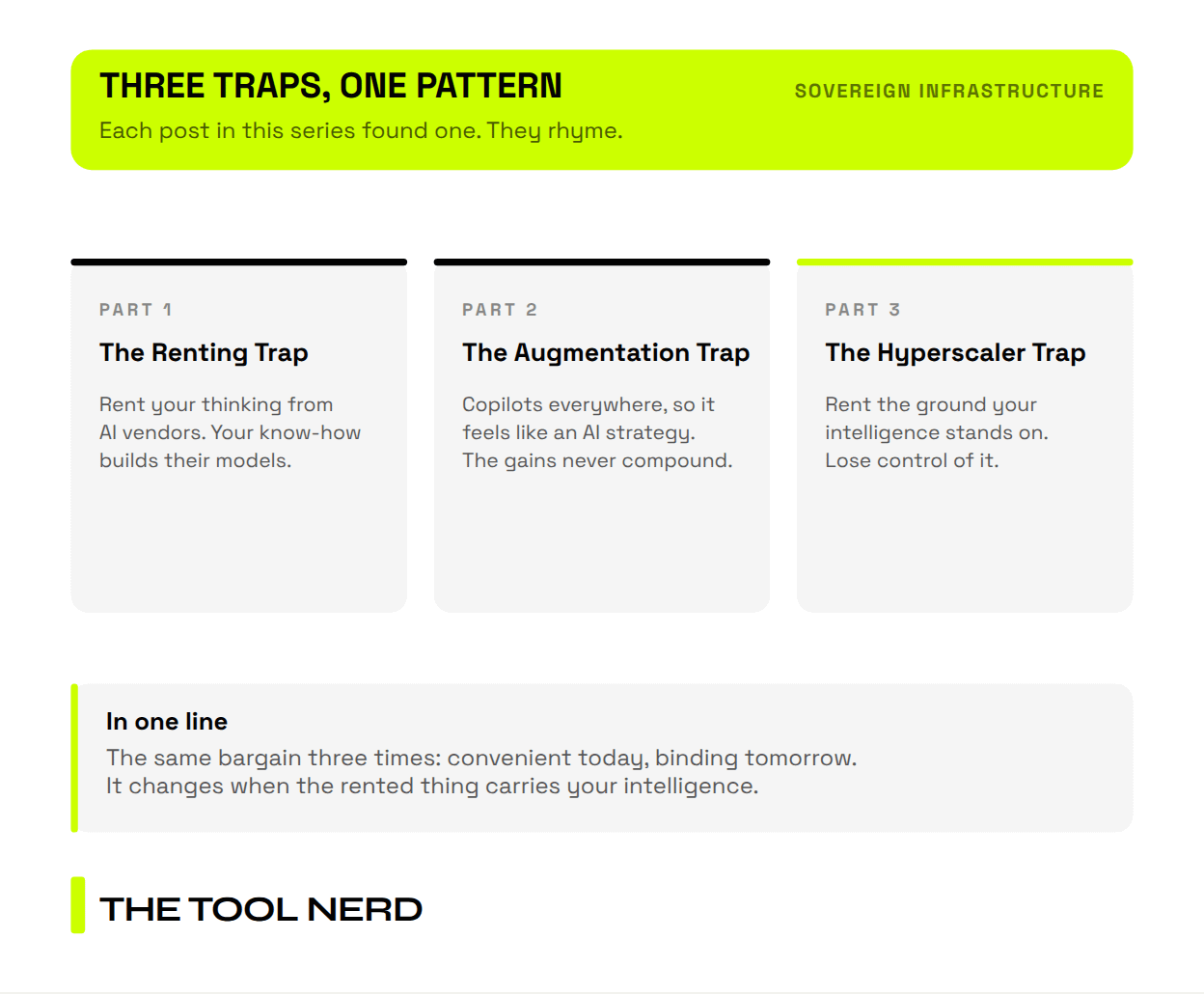
Each part of this series has had a trap.
In Part 1, we looked at companies that rent their thinking by using someone else’s AI and sharing their knowledge.
In Part 2, we looked at the Augmentation Trap: adding a few copilots and calling the company AI-powered.
This is the third trap: the Hyperscaler Trap, mentioned in the paper. It is the belief that you can rent the infrastructure your AI depends on without losing control.
A web app on a rented computer is still fine. Your ontology, knowledge graph, AI memories, and evaluation records are different. They are part of your company’s mind. But now they are stored on a rented computer as well.
Lock-in grows step by step. The model runs on the provider’s platform. The vector database comes from its catalog. Each new app uses the same provider’s tools. Over time, the company stops choosing its own architecture.
Nothing dramatic happens at first. Moving becomes more expensive, and your team slowly loses the skills needed to do it. Eventually, the cloud bill becomes a dependency.
A dependency is only comfortable while the terms stay the same. They don't.
Cloud Terms Can Change: AI Data and Model Risk
Here are a few changes that are happening recently.
Starting September 9, 2026, Lovable may use Free and Pro users’ projects and prompts to train its models.
GitHub uses Copilot interaction data from Free, Pro, and Pro+ users for training by default and may share it with Microsoft affiliates.
Both services offer opt-outs and exclude Business and Enterprise plans.
In August 2025, Anthropic changed its consumer terms to allow chat data to be used for training unless users opted out; Business plans were excluded.
Providers can revoke access: Anthropic suspended OpenAI’s API access after a terms violation.
In June 2026, Anthropic disabled its newest models worldwide after a U.S. Commerce Department export-control letter.
Companies and governments can shut off AI access, even for paying customers. Providers can change their terms, and cheaper plans generally offer fewer protections.
If your data is deeply integrated into a provider’s systems, moving it later may be difficult and expensive.
Cloud Egress Costs and Data Portability
A dependency remains manageable only as long as the terms remain unchanged. However, they do not.
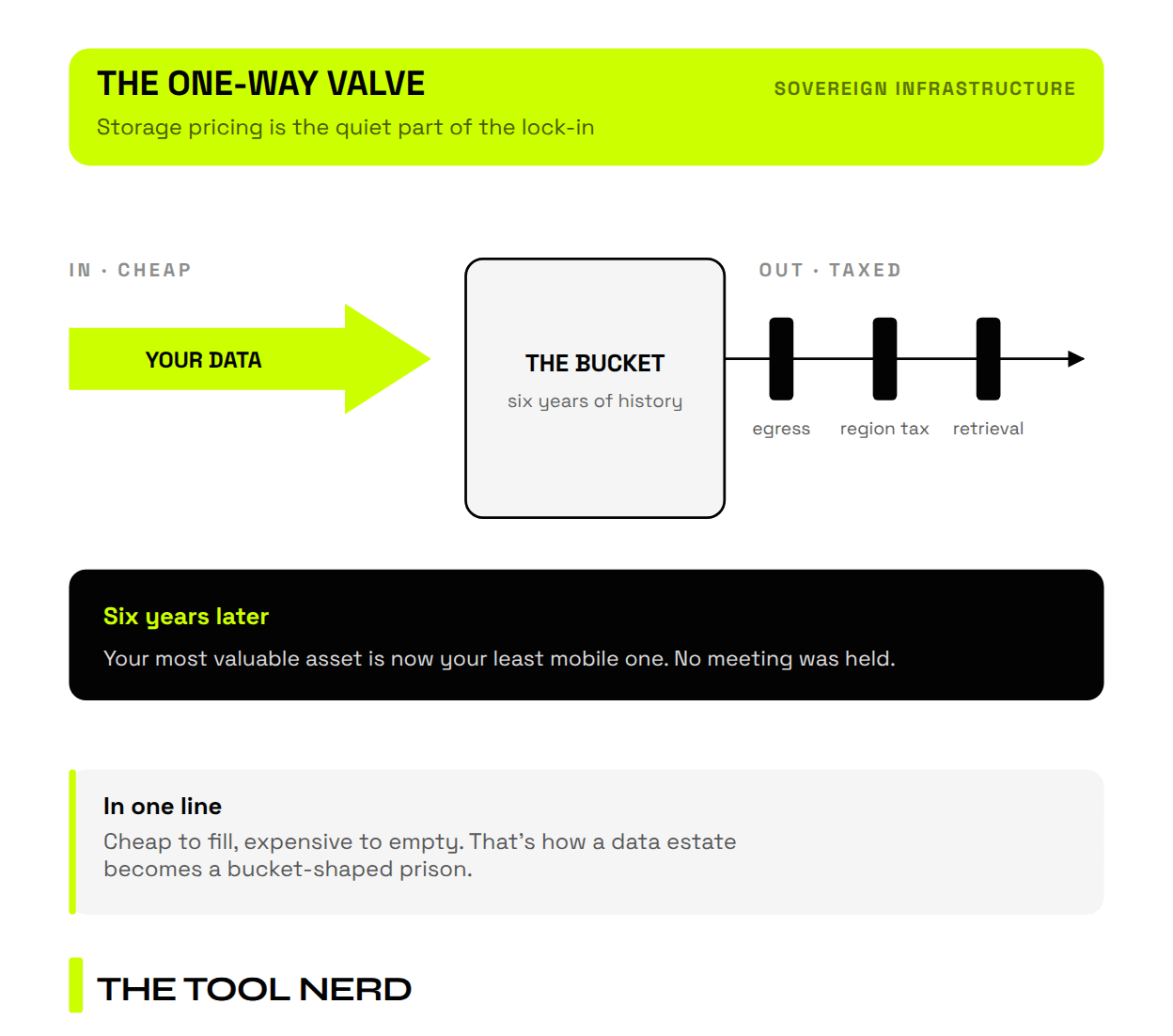
Moving data into the cloud is cheap. Keeping it there is cheap too. Moving it out costs more. Providers charge for egress and for moving data between regions or clouds. The paper calls this a one-way valve: “data flows in cheaply, accumulates quietly over years, and becomes increasingly expensive to move.”
Now imagine doing this for six years. You are locked into their ecosystem. Your most valuable asset quietly becomes your least mobile one.
Mobility isn't one decision. It gets made layer by layer.
The Five Planes of AI Infrastructure
Let’s look at the layer below the digital brain. In Part 1, we broke the brain into five planes. Infrastructure has five planes as well.
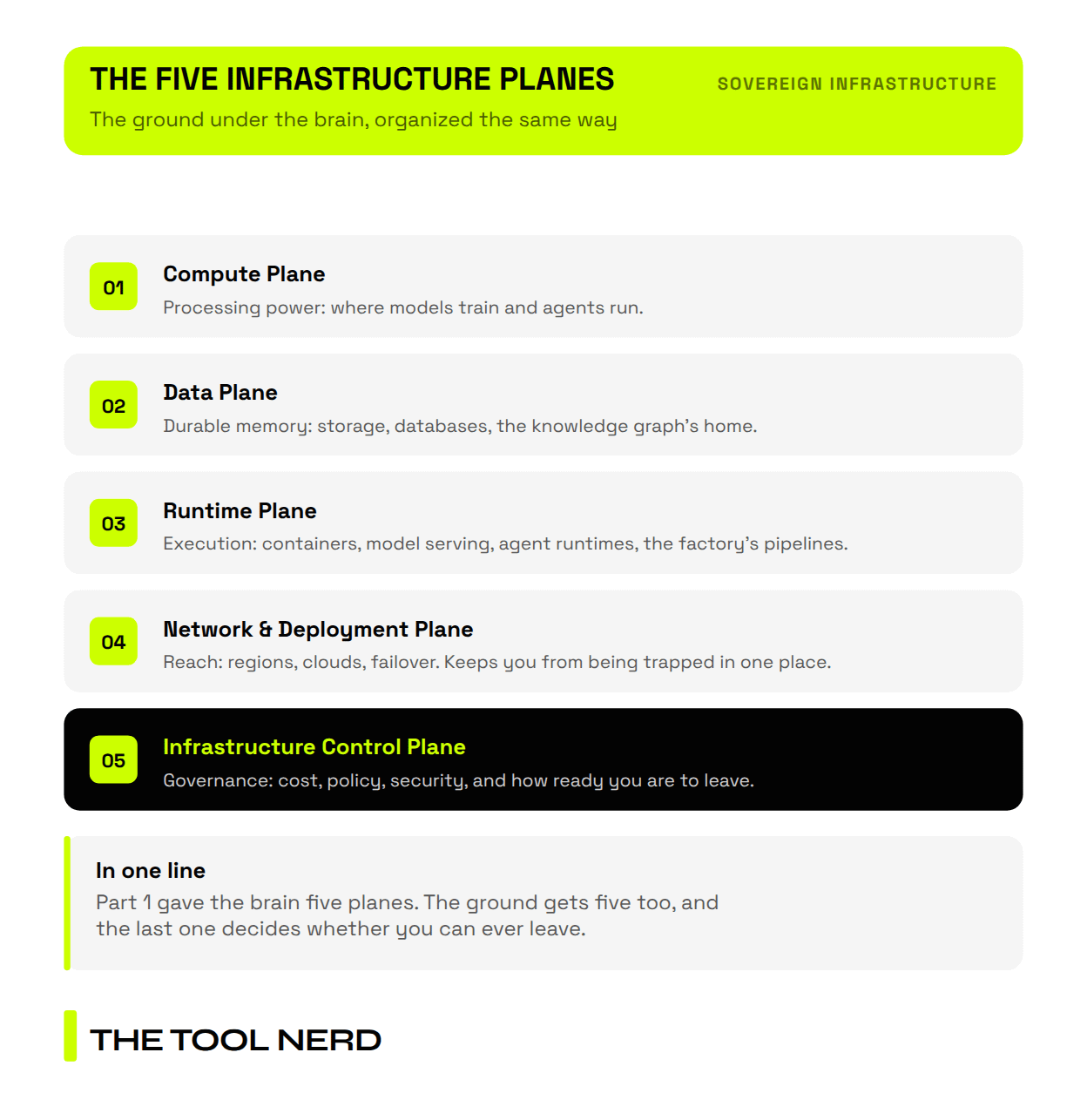
The Compute Plane is processing power: CPUs, GPUs, inference clusters, and training environments.
The Data Plane is long-term memory. It includes object storage, databases, analytical tables, and metadata catalogs. This is where the knowledge graph lives.
The Runtime Plane is where software runs. It includes containers, orchestration, model serving, agent runtimes, and the software factory from Part 2.
The Network and Deployment Plane controls where systems run. It includes regions, clouds, on-premise clusters, and failover. It keeps you from being “trapped in one location, one provider, or one deployment model.”
The Infrastructure Control Plane manages cost, policy, security, workload placement, and your ability to leave. It plays the same role as the Control Plane that blocked John’s 99% discount, but one level lower.
The five planes tell you what you own. They don't tell you how to own it.discover
Four Rules for Sovereign AI Infrastructure
What does ownership look like?
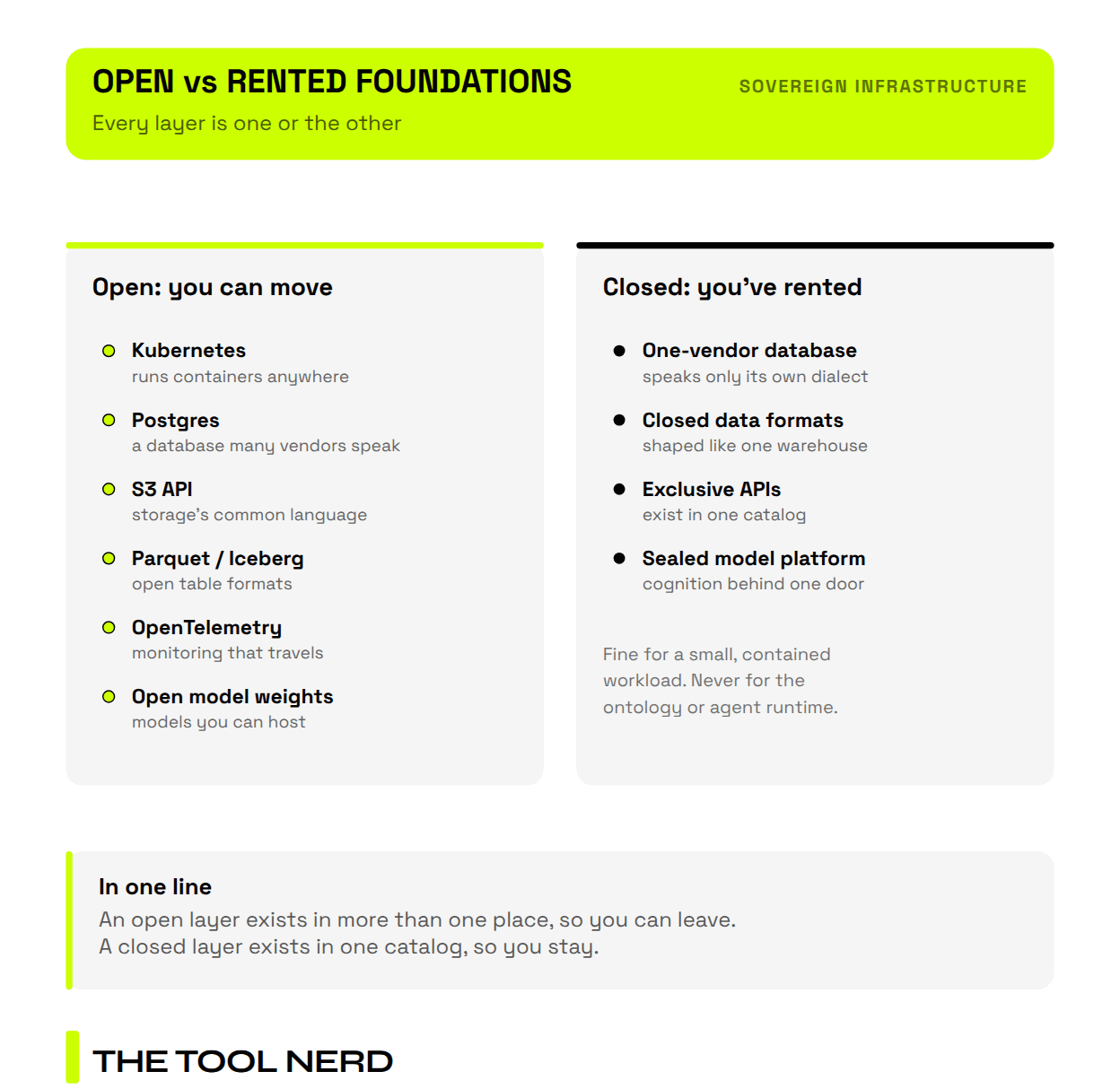
Use open foundations.
Choose tools that work in more than one place: Kubernetes for containers, Postgres for relational data, the S3 API for object storage, and Parquet or Iceberg for analytical tables. Use OpenTelemetry for monitoring and open model weights when possible. As the paper says, “These are not merely technology preferences. They are sovereignty commitments.”
Keep the valve open in both directions.
Store data in open formats and keep the metadata portable. That way, the meaning of the data survives a move. Estimate the cost of leaving on day one, while it is still cheap to plan for.
Use managed services carefully.
They are often useful and often the right choice. The risk comes when a service is both very convenient and difficult to replace. Before adopting one, ask whether its API and data model work elsewhere. A small dependency may be fine. A dependency at the center of your company’s ontology is much riskier.
Treat compute like electricity.
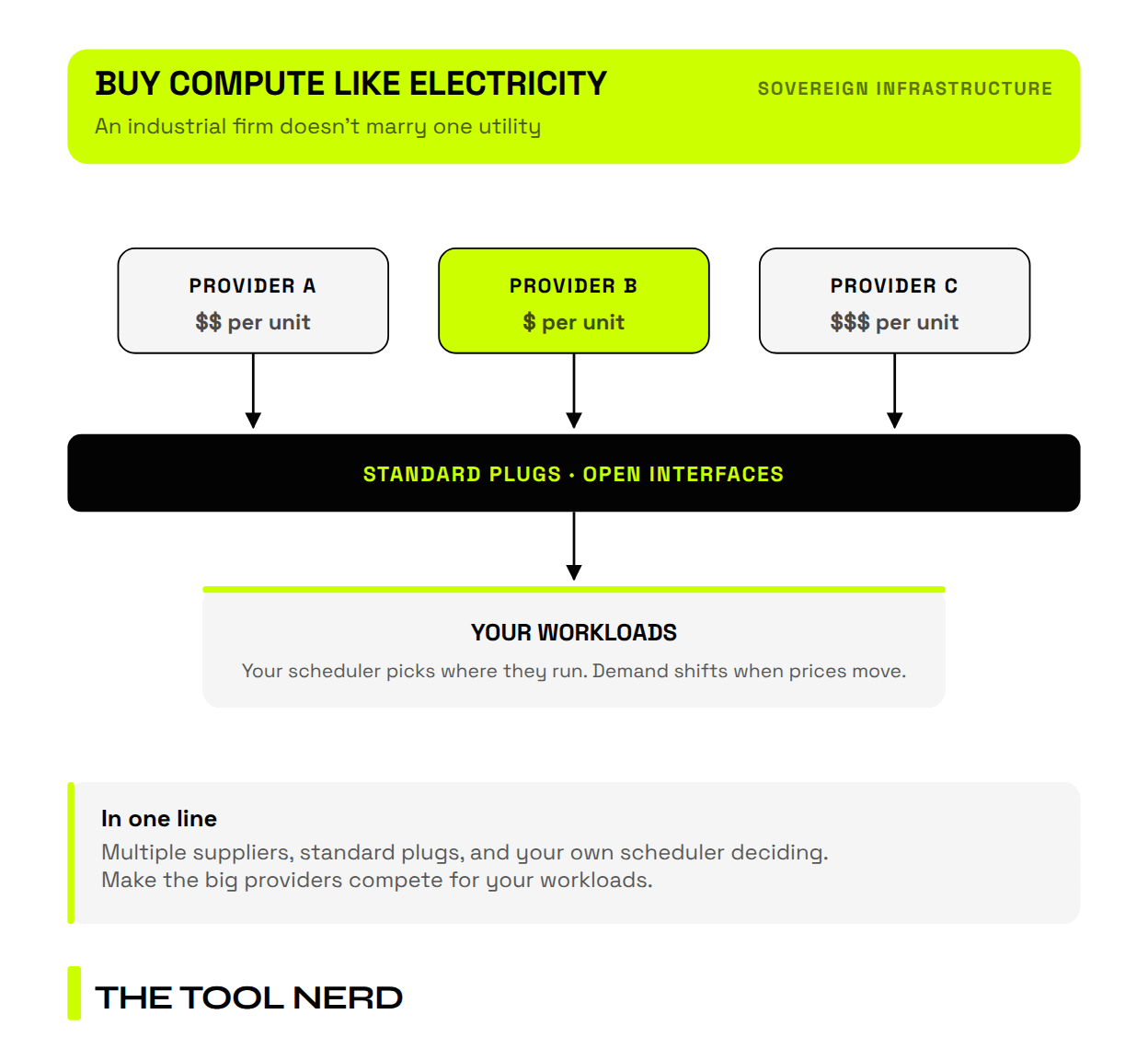
An industrial company can buy power from several suppliers through standard connections. It can shift demand when prices change. Compute should work the same way. You should be able to select and switch whoever provides the best service, price etc.
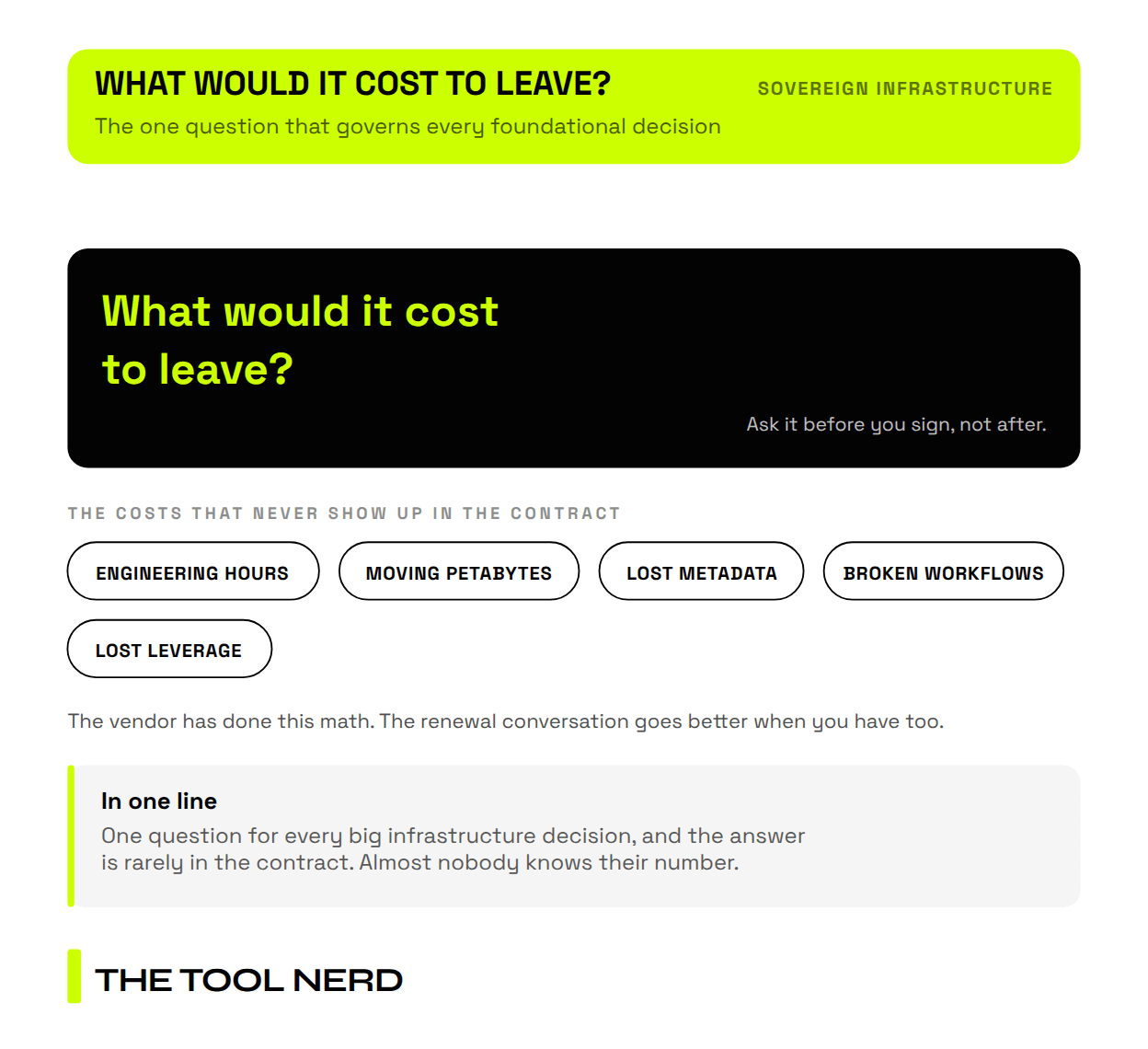
Every major infrastructure decision should answer one question: “what would it cost to leave?”
You do not have to leave. The ability to leave is what changes the balance of power.
“Infrastructure that cannot be measured cannot be governed. Infrastructure that cannot be tested cannot be trusted. Infrastructure that cannot be exited cannot be sovereign.”
The Sovereign Enterprise Blueprint
Let’s put it all together.
The blueprint is simple.
An ontology defines what your words mean.
A knowledge graph stores what your company knows.
A Digital Twin represents the present, while a
World Model prepares for the future.
Humans and digital workers follow the same rules, with autonomy earned over time.
A software factory turns intent into code, while a
Control Plane governs the process.
Underneath it all are five infrastructure planes built on open foundations.
Gilmore’s closing cadence:
“The Sovereign Enterprise chooses ownership over dependency. Architecture over procurement. Control over convenience. Sovereignty over tenancy.”
Starting today, make your choices wisely; start becoming a Sovereign Enterprise
References
[1] Eric Gilmore. “The Sovereign Enterprise: A Blueprint for the Cognitive Revolution.” - sovereignenterprise.org. July 2026.
[2] The Tool Nerd. “The Sovereign Enterprise — Part 1: Why Renting AI Will Break Your Business.”
[3] The Tool Nerd. “The Sovereign Enterprise — Part 2: Your Next Hire Won’t Be Human.”
[4] Lovable. “Data opt-out.”
[5] GitHub Blog. “Updates to GitHub Copilot interaction data usage policy.”
[6] TechCrunch. “Anthropic users face a new choice: opt out or share your data for AI training.”
[7] TechCrunch. “Anthropic cuts off OpenAI’s access to its Claude models.”
[8] CSIS. “Department of Commerce Restricted Access to Anthropic’s Latest Models: What Comes Next.”
RASA Kills IaaS. SaaS Survives on a Loophole.
Read the article to understand what this means for your tech stack.
(RASA: Remote Access Security Act | IaaS: Infrastructure as a Service | SaaS: Software as a Service)
https://substack.com/@theonenova/note/p-213043969?