

AI can make your company faster. But if someone else owns the intelligence behind every decision, what exactly do you own?
If you run a business today, chances are AI is already doing a lot of your work. Writing, coding, marketing, sales follow-ups, automation. It feels like the smart, efficient way to operate. It’s also, quietly, a trap.
The software you bought in the past was never your intelligence. It was a commodity, and renting it cost you nothing strategically. AI is different. AI is intelligence, and intelligence is the foundation of a business. When you rent it, you’re renting the one thing you’re supposed to own.
So if you’re running your company on someone else’s intelligence, and sharing all your knowledge with them along the way, you’re not building a resilient business. You’re renting space in someone else’s empire.
You’re not building a resilient business. You’re renting space in someone else’s empire.
That’s the core argument of The Sovereign Enterprise, a paper Eric Gilmore published recently that I’ve been chewing on ever since.
A Sovereign Enterprise is a company that owns its data, its meaning, its models, and its automated workers, and refuses to pay the hidden cost of renting intelligence from a third party.
Gilmore’s blueprint rests on three pillars:
Sovereign Enterprise = Sovereign Intelligence + Sovereign Workforce + Sovereign Infrastructure
In plain terms: a brain the company owns, digital workers the company controls, and infrastructure that runs on the company’s own terms. Each pillar is a big enough topic that cramming all three into a single post would shortchange them, so this series covers them one at a time.
Today is the brain — Sovereign Intelligence. We’ll look at why the current AI landscape is uniquely dangerous for businesses, what an ontology actually is, and how you give your company a mind of its own.


The Outsourcing Trap
When you build your operations on generic models like Claude or GPT, the way you write content, analyse data, and run operations starts to bend around the intelligence they provide. At first this feels great. You’re moving fast. Then one day you notice you can’t do any of it without them.
One thing you need to know: this isn’t like the cloud. When you use AWS or Azure, you still own your data and your logic. You’re just renting machines. With AI, you’re transferring the knowledge itself, knowledge that used to live entirely inside your company, into an external model. The same knowledge that could eventually be turned around on your own industry.
If you don’t own the intelligence that runs your company, you lose your edge. The paper suggests that a business has to establish control across five areas: data, meaning, models, software, and automated workers.
But owning those assets isn’t enough by itself. The five sovereignties define what the enterprise must own. Sovereign Intelligence defines how that ownership becomes operational.
Sovereign Intelligence: The Digital Brain
Sovereign Intelligence is the enterprise’s owned system of cognition. That may sound like a lot, so here’s the simple version: it’s the architecture that brings your data, semantics, models, software, agents, and governance together into one living system your company can control, improve, and trust.
It connects what the company knows to how it understands, reasons, decides, acts, and learns.
Fragmented data becomes knowledge, knowledge becomes judgment, judgment becomes coordinated action, and action becomes learning that stays inside the company instead of leaking out to a vendor.
Before we look at how this brain is structured, though, we need the foundation it runs on: the Ontology.
What’s an Ontology?
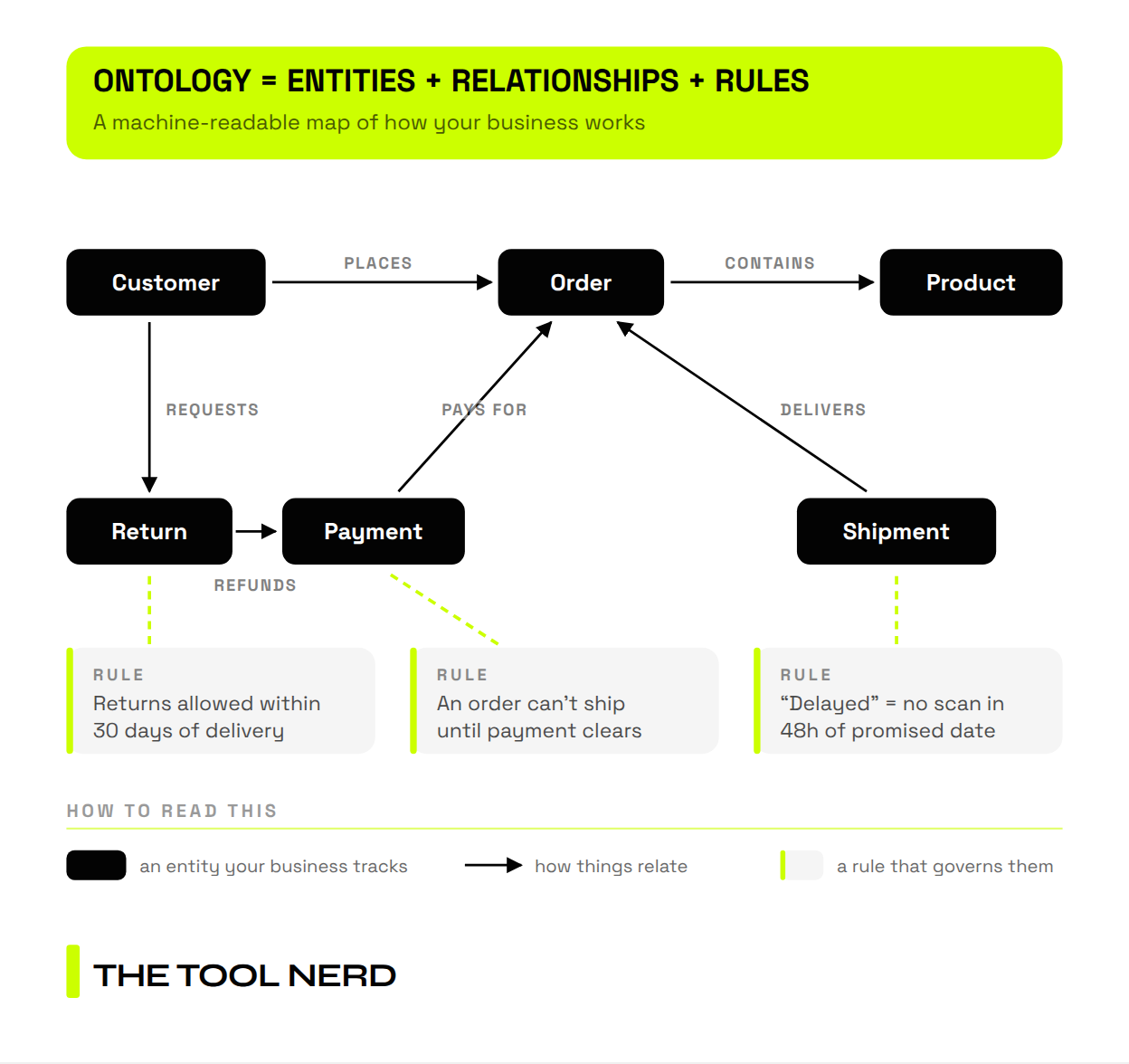
An ontology is a machine-readable map of how your business operates. It defines the entities (customers, products, orders), the relationships between them (customers place orders, orders contain products), and the rules that govern them (an order can’t ship until payment clears).
Picture an e-commerce company. Its ontology looks like a massive, interconnected web of logic covering everything the business touches: who your customers are, what they ordered, how it gets paid for and shipped, and every rule connecting those pieces.
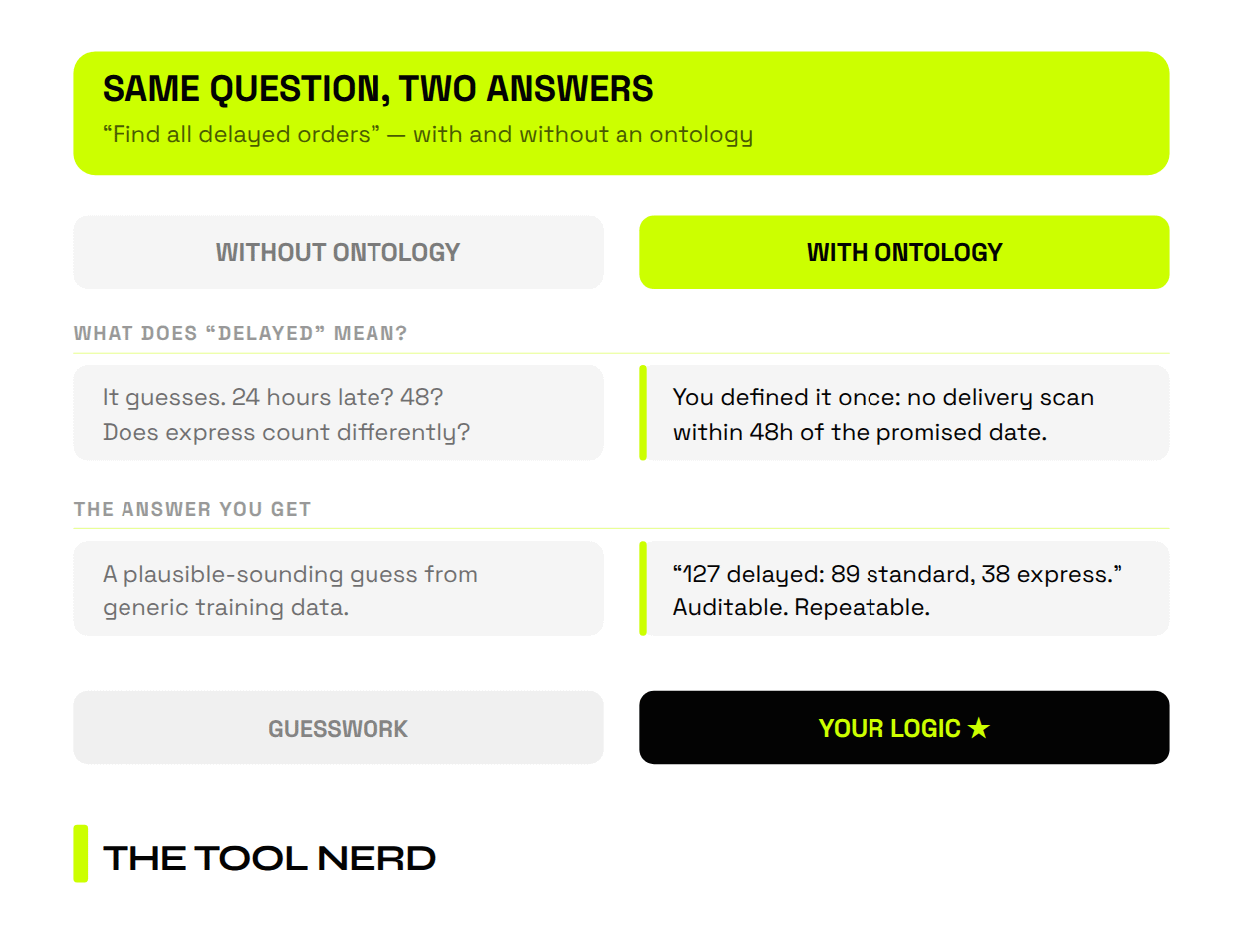
Ask any chatbot to "find all delayed orders" and watch what happens. It answers. Confidently. But delayed by what standard? The model has no idea where your business draws that line, so it invents something reasonable-sounding and moves on. An ontology is where you draw the line yourself. Write down that delayed means no delivery scan within 48 hours of the promised date. The AI model works from a rule you wrote, an SOP you have defined.
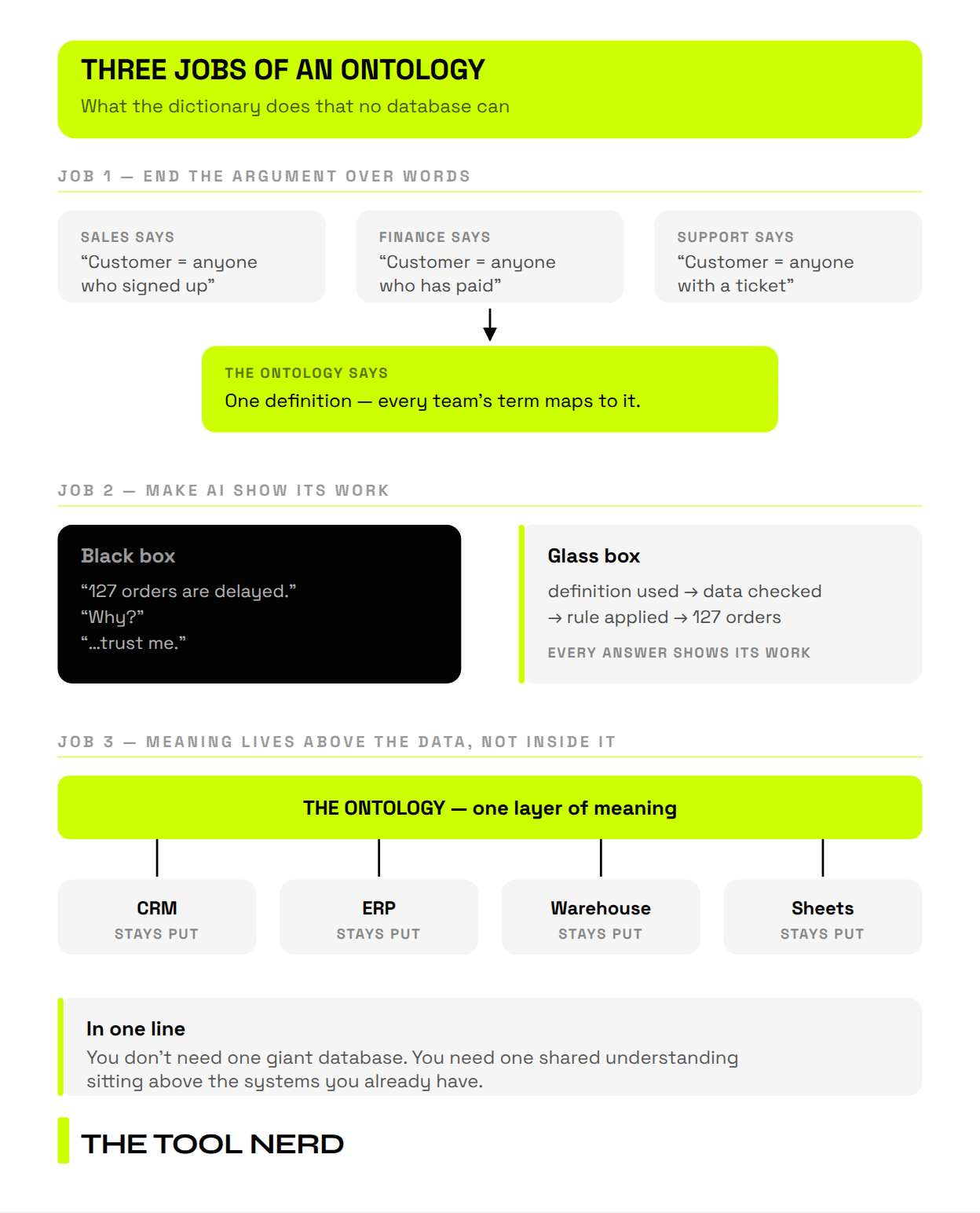
This is also why renting intelligence is a trap. You can’t build a true Enterprise Ontology inside someone else’s closed system.
The meaning of your business has to be yours.
You’ve Already Used an Ontology Today
If “ontology” still sounds like an academic word, here’s the thing: you’ve been on the receiving end of one for years.
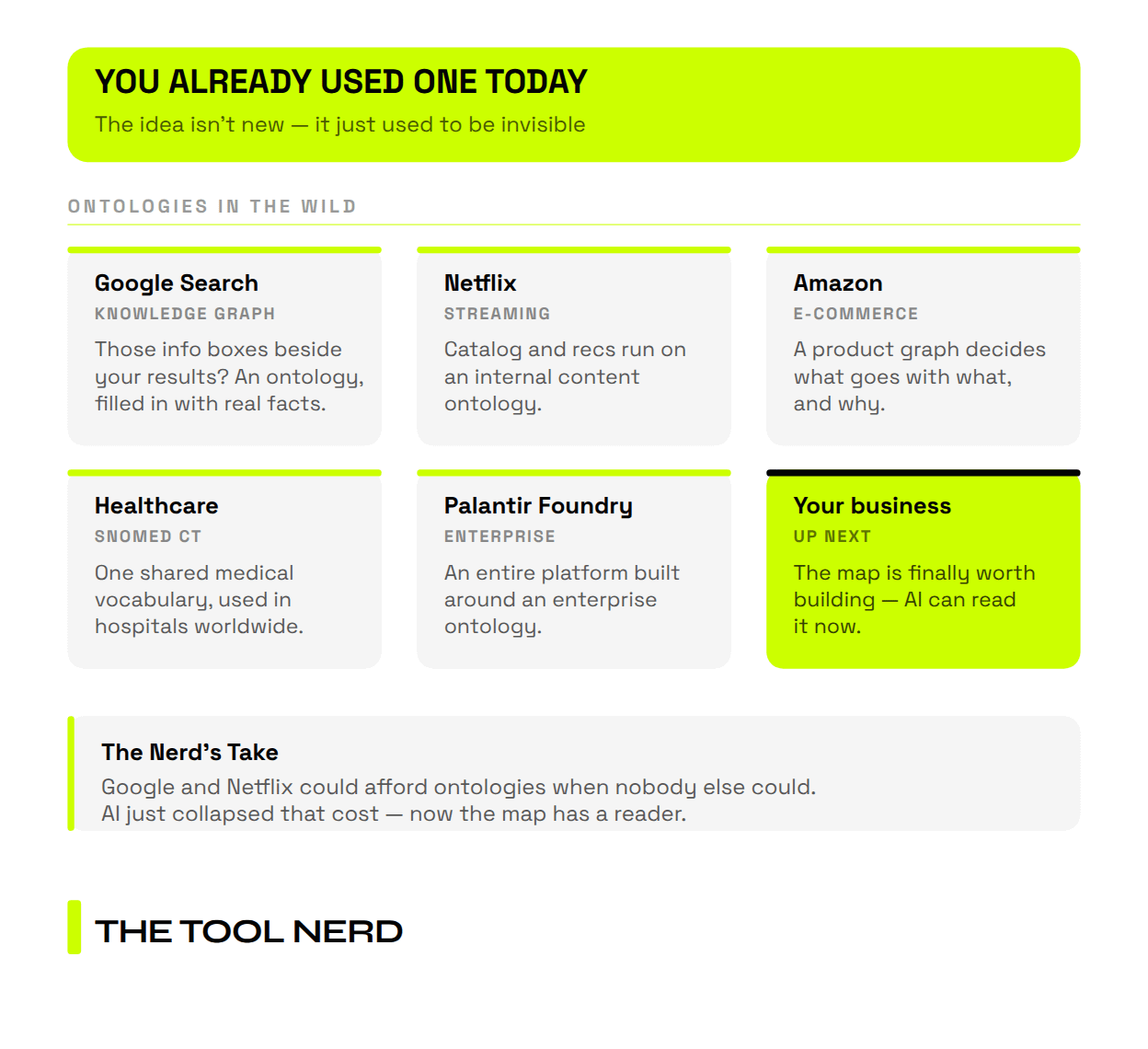
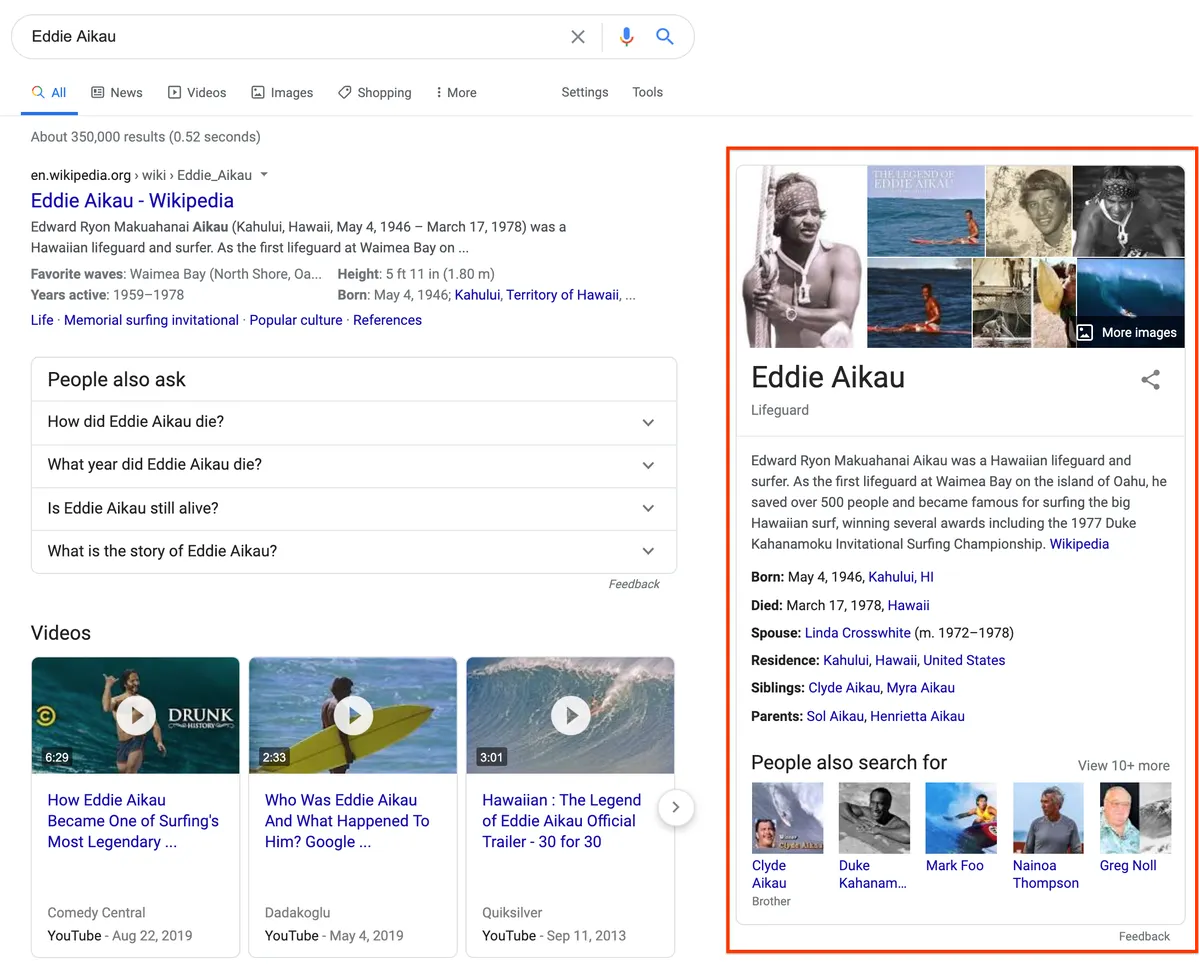
Those info boxes beside Google search results came from the Knowledge Graph, and the name is the giveaway: take an ontology of people, places, and things, fill it with billions of real facts, and what you get is a knowledge graph.
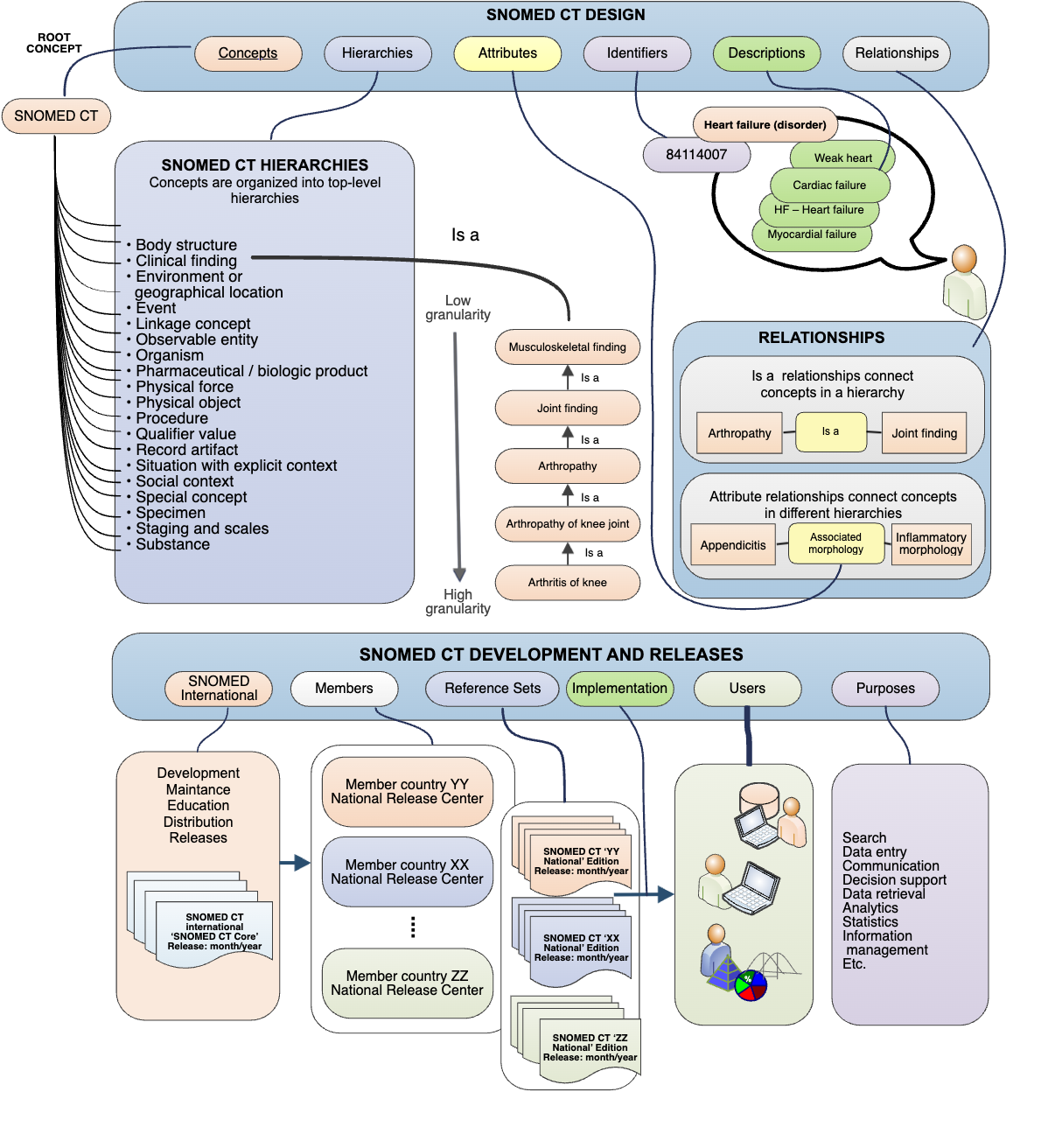
Netflix runs its catalog and recommendations on an internal content ontology. Amazon’s product graph is the same idea pointed at shopping. Doctors around the world record diagnoses in SNOMED CT, a shared medical vocabulary, so “heart attack” means the same thing in every hospital system.
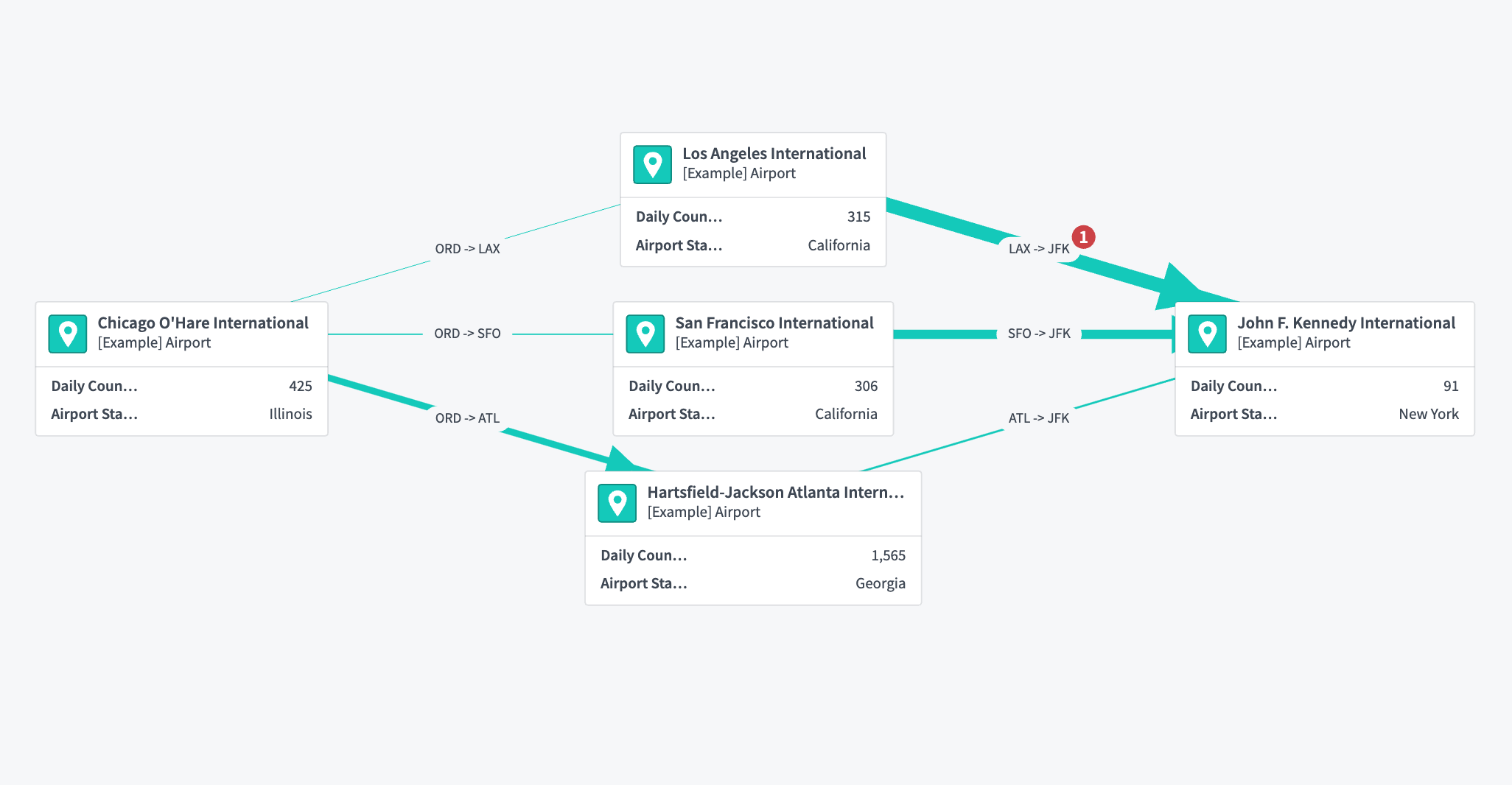
And Palantir built its entire Foundry platform around an enterprise ontology — probably the closest existing thing to what Gilmore describes.
So the concept isn’t new. What’s new is that AI finally makes it worth building one for a normal-sized business — because now the map has a reader.
The Five Planes of Intelligence - Sovereign Intelligence
Once you have your ontology, you can organize the company’s brain across five interdependent planes. Here’s how our e-commerce retailer would structure it.
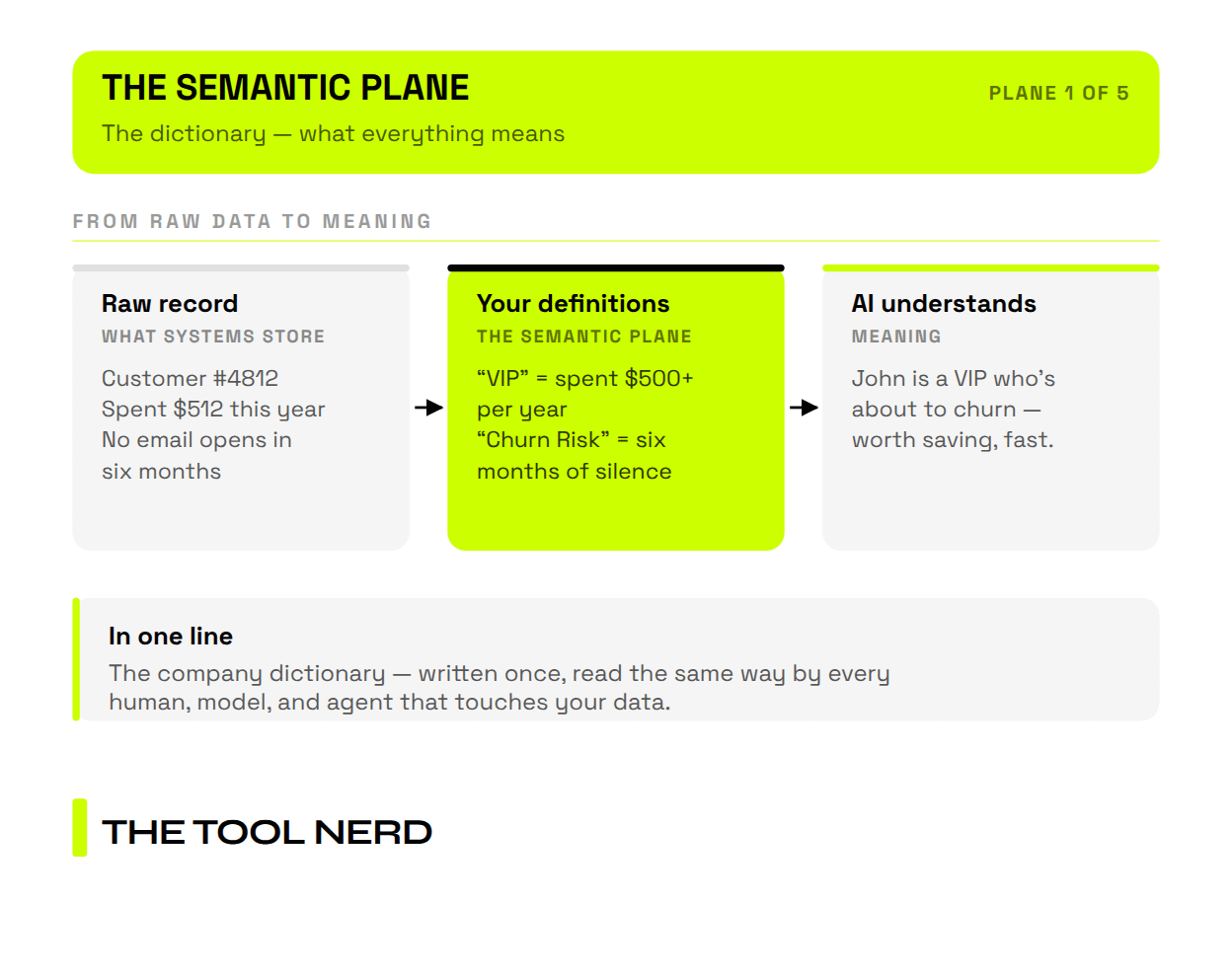
1. The Semantic Plane (The Foundation)
This is where the entire Enterprise Ontology lives, along with all the business rules, taxonomies, and logic that give coherence to everything the company knows, observes, builds, and executes. The question this plane answers: what does this mean, and how does it relate to everything else?
For our retailer, the Semantic Plane pins down exactly what a “Customer” is. It says a VIP Customer is anyone who’s spent over $500 in the past year, and a Churn Risk is anyone who hasn’t opened an email in six months. When an AI agent looks at a record, it gets the business context, not a bare row of data.
2. The Knowledge Plane (The Reality)
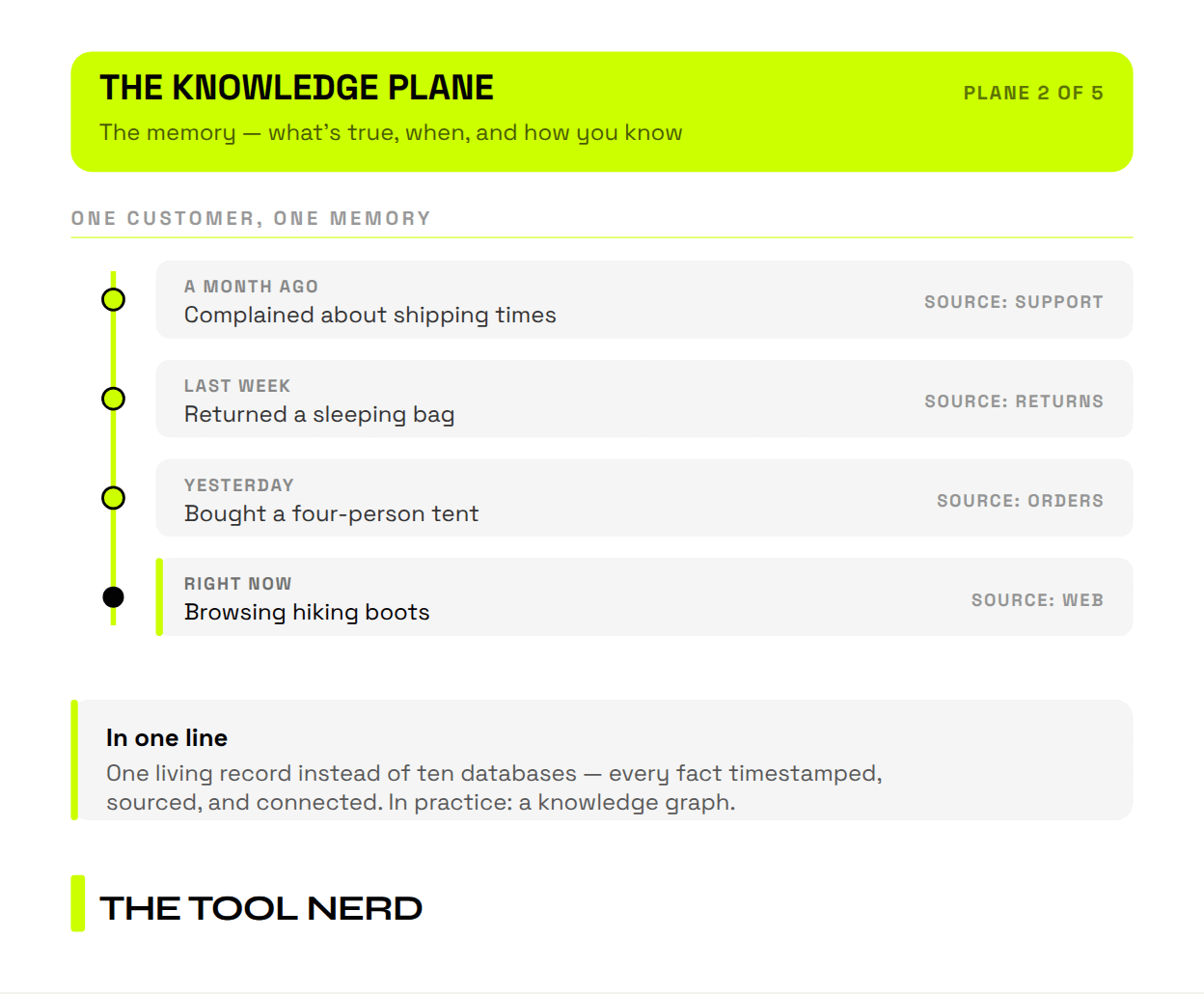
The Knowledge Plane sits above the Semantic Plane. If the Semantic Plane defines what things mean, the Knowledge Plane tracks what’s actually true, and preserves the memory of it: entities, events, documents, transactions, telemetry, all continuously updated.
It’s a living record. At any point you know the current state of the whole organisation, plus how each fact got there: when it was established, why it changed, and what the company learned from it. As autonomous systems take on more of the work, that traceability stops being a nice-to-have.
In practice, this plane gets built as a knowledge graph: the ontology populated with reality. Every actual customer, order, payment, and return becomes a connected, queryable fact. It’s the same concept as Google’s Knowledge Graph from earlier — just pointed at your business instead of the whole internet.
For the retailer, this is the unified memory that knows John bought a tent yesterday, returned a sleeping bag last week, and complained about shipping times a month ago. No guessing. The reality is on file.
3. The Cognitive Plane (The Reasoning)
This is the reasoning layer, home to the enterprise’s own tailor-made, fine-tuned domain models.
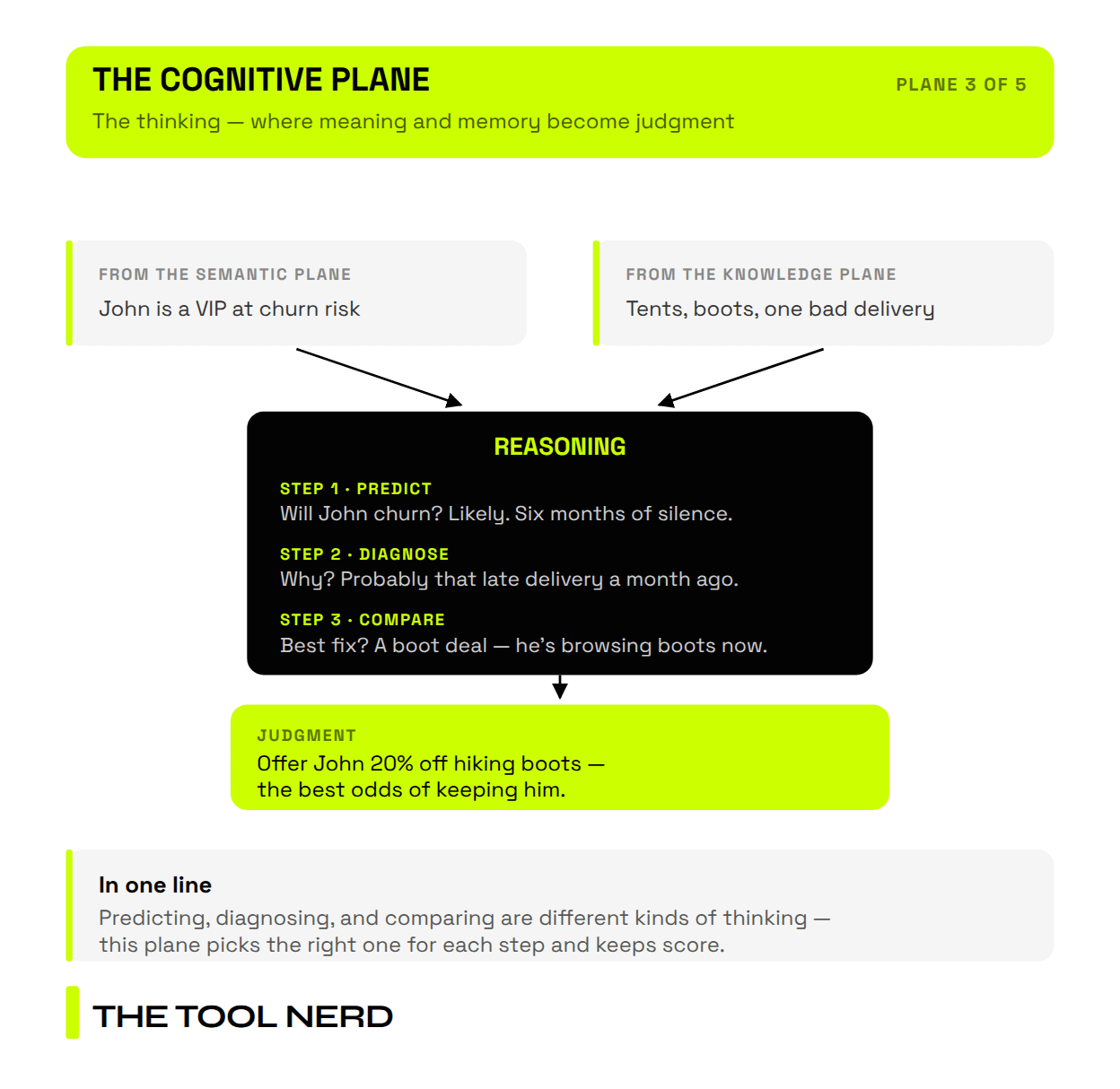
No single model architecture or reasoning strategy rules it all. Predicting what a customer will do next is a different job from working out why something happened or from weighing which fix is worth the money. So this plane keeps several kinds of reasoning on hand, gives each question to the one that fits, and tracks which ones actually earn their keep.
For our retailer, this is the layer that takes John’s history (Knowledge Plane), sees he’s a VIP Customer (Semantic Plane), and reasons that a 20% discount on hiking boots is the best way to keep his loyalty.
4. The Agentic Plane (The Action)
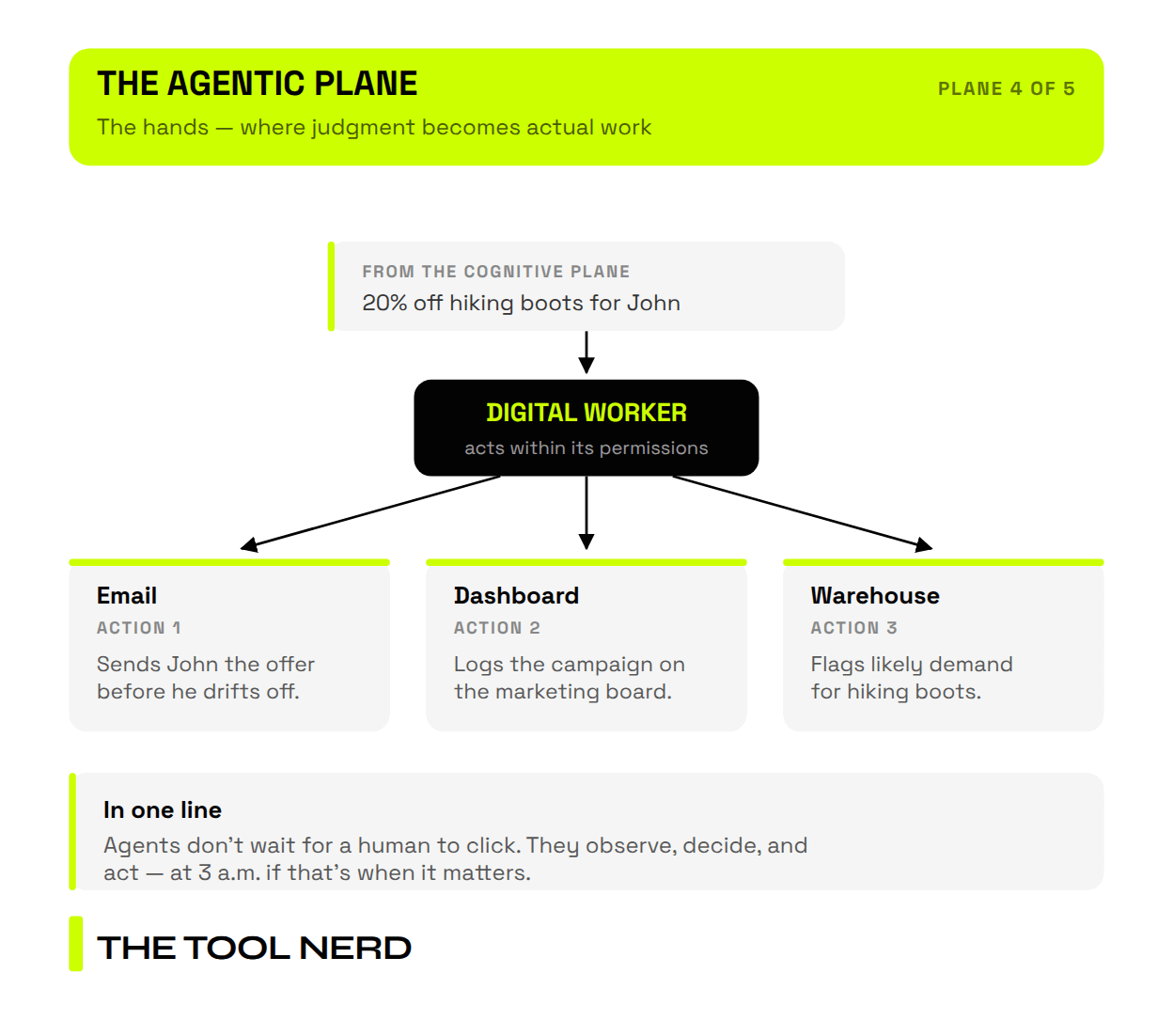
Where reasoning becomes work. This plane holds the autonomous and semi-autonomous agents that observe, reason over objectives, make decisions, and act.
For the retailer, it’s the digital worker that actually sends John the personalized discount email, updates the marketing dashboard, and alerts the warehouse to prepare for a potential boot order.
5. The Control Plane (The Governance)
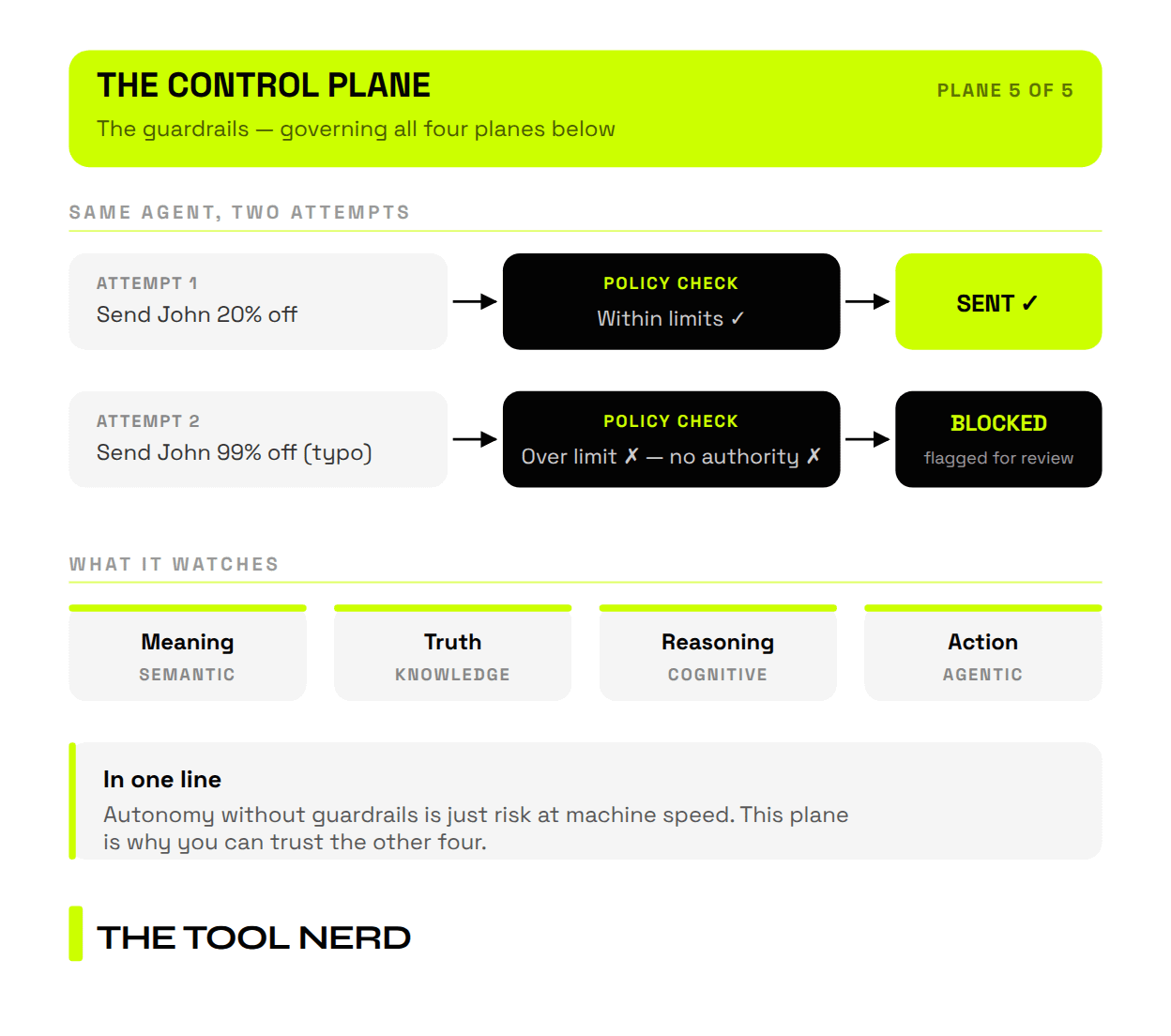
The final plane, and the one everything else depends on. The Control Plane makes the whole system governable, auditable, secure, and enterprise-grade.
It governs meaning in the Semantic Plane, truth in the Knowledge Plane, reasoning in the Cognitive Plane, and action across the Agentic Plane. If an agent tries to send John a 99% discount by mistake, this is the layer that catches it, flags the error, and stops the send.
The Brain Doesn’t Stop There
One honest caveat before we close: the five planes are the skeleton of the digital brain, not the whole of it. Gilmore’s paper goes further — into the knowledge graph we just met, an Enterprise Digital Twin that mirrors the live state of your company, and a World Model that turns the whole thing into what he calls a flight simulator of the enterprise.
Imagine testing a price change against thousands of simulated customer reactions before trying it on a single real one.
That last idea deserves its own post, because it quietly flips what AI is for. Most business AI today does retrieval: finding what you already know. A World Model does simulation: reasoning about what hasn’t happened yet. As Gilmore puts it, the winner won’t be the company that reacts fastest to reality, but the one that learns to predict it. We’ll dig into that later in this series.
Most business AI today does retrieval. A World Model does simulation.
The Choice Ahead
If you want to survive the Cognitive Revolution, you can’t rent your reasoning.
Own your ontology.
Control your knowledge.
Govern your agents.
In Part 2, we’ll go deeper into the Agentic Plane: how a Sovereign Workforce operates, and why building your own digital employees is the only way to scale without losing control.
References
Google. “About Knowledge Graph and Knowledge Panels.”
Netflix Technology Blog. “Unlocking Entertainment Intelligence with Knowledge Graph.”