


When you think about AI disruption, your mind probably jumps to software, healthcare, or finance. Today I am writing about the company, close to my heart - Recykal and a Industry that not many know about. It’s the company where I saw firsthand glimpses of how artificial intelligence, before the ChatGPT wave hit the world, can transform one of the world’s oldest most fragmented industries: waste management.
The Industry Nobody Talks About (But Should)
Quick question: What’s the global market size of waste management?
Over $500 billion USD as of 2025, expected to hit $900 billion in the next 5-7 years.
Most people don’t know the industry is this big. Even fewer know that AI can change this industry as much as it has changed fintech or logistics. The difference? Waste management’s complexity—fragmentation, informality, contamination, regulatory burden—makes it a perfect proving ground for intelligent systems that can handle chaos.
Learning From the Inside
Today’s article is special. I’m co-authoring it with my mentor and well-wisher Vikram Prabakar, Co-Founder and Chief Product Officer at Recykal. I spent significant time at Recykal during its early days, helping set up operations and business across several verticals. Seeing the company evolve from startup to nationally-recognized AI innovator is so heartening to see.
What follows is Vikram’s account of how Recykal built AI into every layer of the waste value chain—from pricing models and document verification to household-level material recognition and regulatory compliance automation.
To know how AI is getting applied in different industries like Shipping Industry, Manufacturing etc.. do subscribe

No Time to Read? Here’s the Scoop
The Opportunity: Waste management is a $500B+ industry growing to $900B, yet no one knows about it.
The Innovation: Recykal built multi-agent AI systems that orchestrate document verification, pricing prediction, and regulatory compliance at scale
The Impact: Google-Recykal collaboration on computer vision improved sorting quality from 15% to 80%+ through behavioral feedback loops
The Stack: GenAI agents (creator → reviewer → auditor), Smart Skan CV system, IoT-enabled deposit refund machines with UPI integration
Key Lesson: AI in traditional industries isn’t sexy, but it’s where massive disruption potential lives—think agriculture, construction, logistics
For Builders: Multi-agent orchestration + document AI + regulation-driven demand = enterprise adoption at scale
The following article is in the words of Vikram Prabakar, Co-Founder & Chief Product Officer, Recykal
Understanding the Challenge in Waste Management
India’s waste challenge is often viewed as one of scale, but at its core, it is a problem of structure. Fragmentation, informality, and a persistent lack of trust have long constrained the ecosystem. Our dominant attitude towards waste remains “out of sight, out of mind,” ignoring the fact that what households discard holds significant economic value.
Millions of livelihoods in India’s informal recycling economy depend on this material.
When waste is mixed and contaminated, that value is destroyed—making recyclables unsafe and unviable. Globally, technology is reshaping this equation.
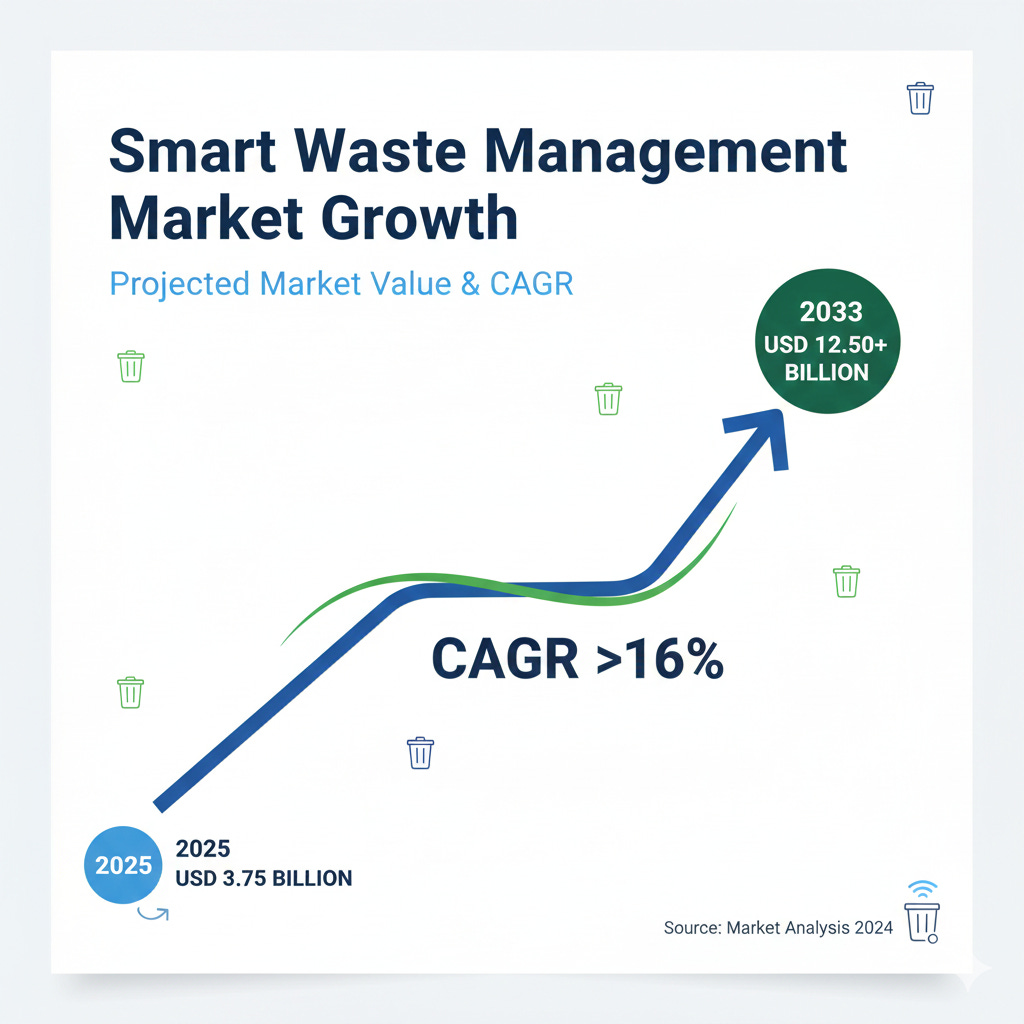
According to Cognitive Market Research, the smart waste management market is expected to reach USD 3.75 billion in 2025 and grow at a CAGR of over 16% through 2033. This growth reflects a broader shift: waste systems are transitioning from manual, reactive operations towards data-driven, intelligent networks that preserve value across the lifecycle.
The Real Bottleneck Is Flow, Not Collection
For decades, waste management efforts focused largely on collection. However, collection alone does not create value. Waste is generated in varying volumes with varying degrees of quality, while recycling capacity remains concentrated in select geographic areas. This imbalance means that recyclers operating formal facilities often struggle more with sourcing reliable material than with processing it. The result is inefficiency, pricing disputes, and large-scale economic loss.
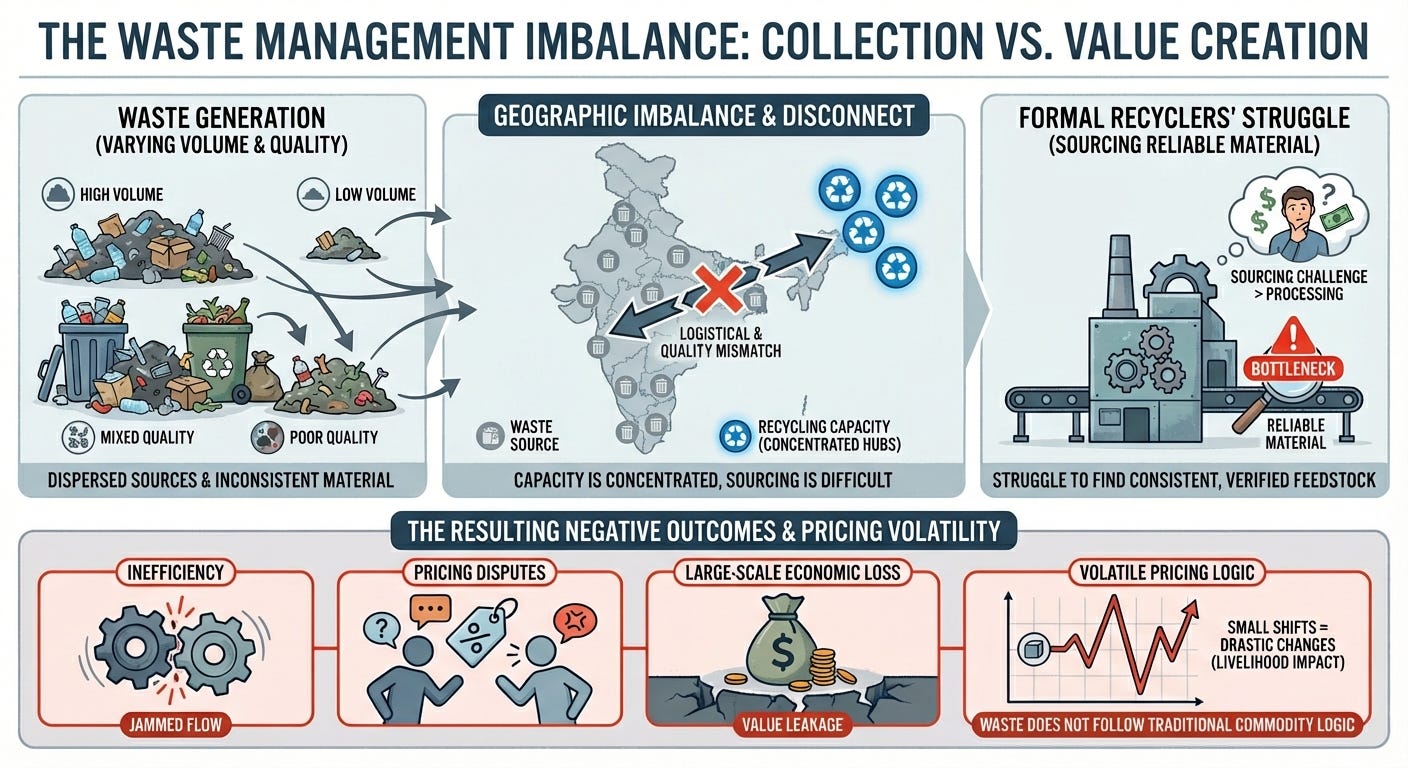
This challenge led us to found Recykal in 2016. Early on, we realized that simply digitizing transactions was not enough. Waste does not follow traditional commodity pricing logic—small shifts in supply or quality can drastically affect prices and, by extension, livelihoods.
To address this, we developed AI models that predict near-term pricing trends, enabling buyers and sellers to transact with greater confidence and make faster decisions. We also implemented document AI solutions to remotely authenticate weighbridge slips, invoices, and regulatory paperwork, tying each transaction to verified data sources.
Recykal’s early AI systems were built to classify and verify materials. Over time, these models have evolved into agentic GenAI systems that can independently validate complex transactions. This capability is now used on platforms supporting companies operating under Extended Producer Responsibility (EPR) regulations.
EPR Explained: Extended Producer Responsibility (EPR) is a regulatory framework that makes manufacturers and producers responsible for managing the waste generated by their products throughout their entire lifecycle, including post-consumer disposal. Under EPR, companies must ensure proper collection, recycling, and disposal of their products’ packaging and materials, often by meeting specific compliance targets and maintaining detailed documentation. This shifts the burden of waste management from municipalities to the producers themselves, incentivizing them to design more sustainable, recyclable products.
EPR compliance relies heavily on documentation, often spanning thousands of records. To address this, Recykal deploys GenAI agents that read, corroborate, and assess the authenticity of these documents.
How it works:
A creator agent extracts and structures information from documents
A reviewer agent validates the output, functioning like a human auditor
An audit agent performs sample checks to ensure accuracy and integrity across the system
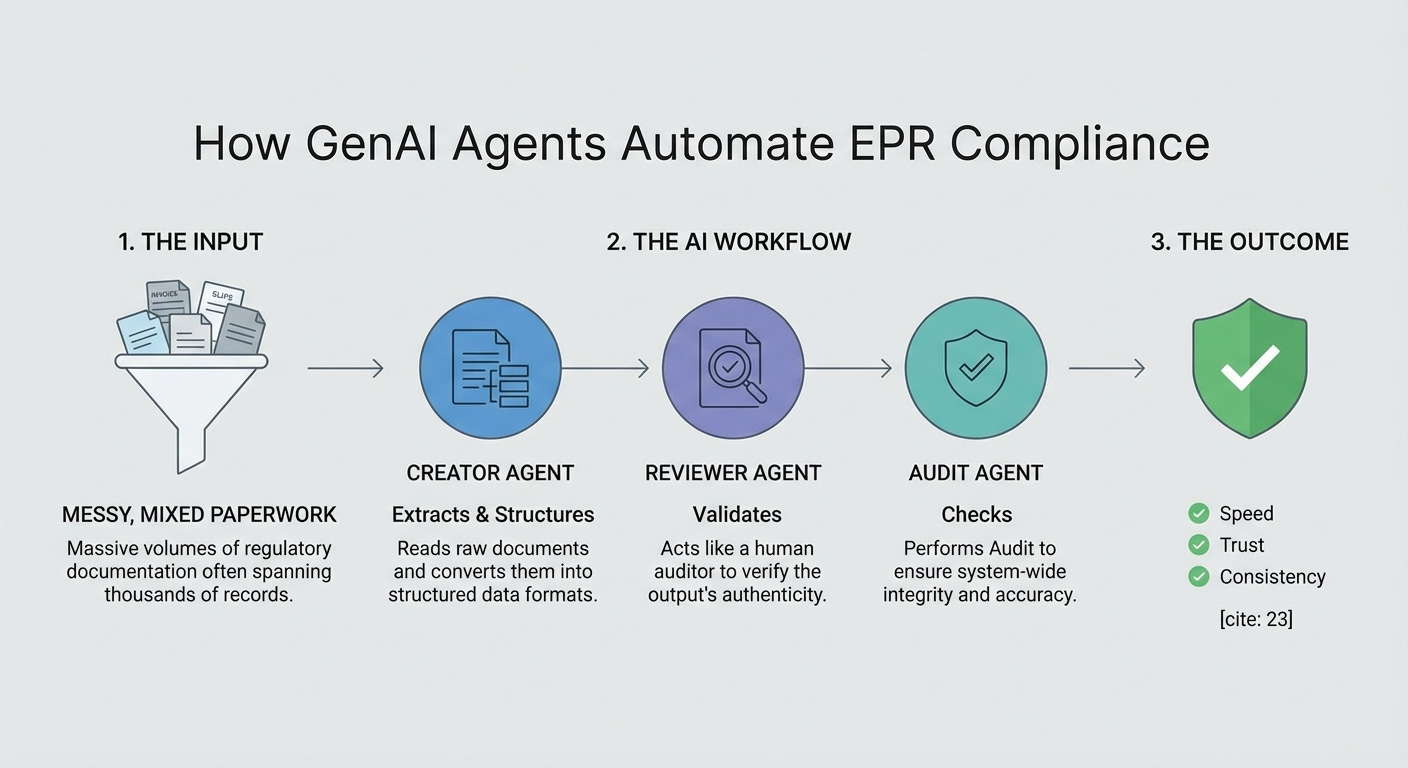
Together, these layers have brought speed, trust, and consistency to regulatory compliance.
Value Begins at the Household
The breakthrough, however, came from acknowledging that material quality is determined much earlier—in homes and communities.
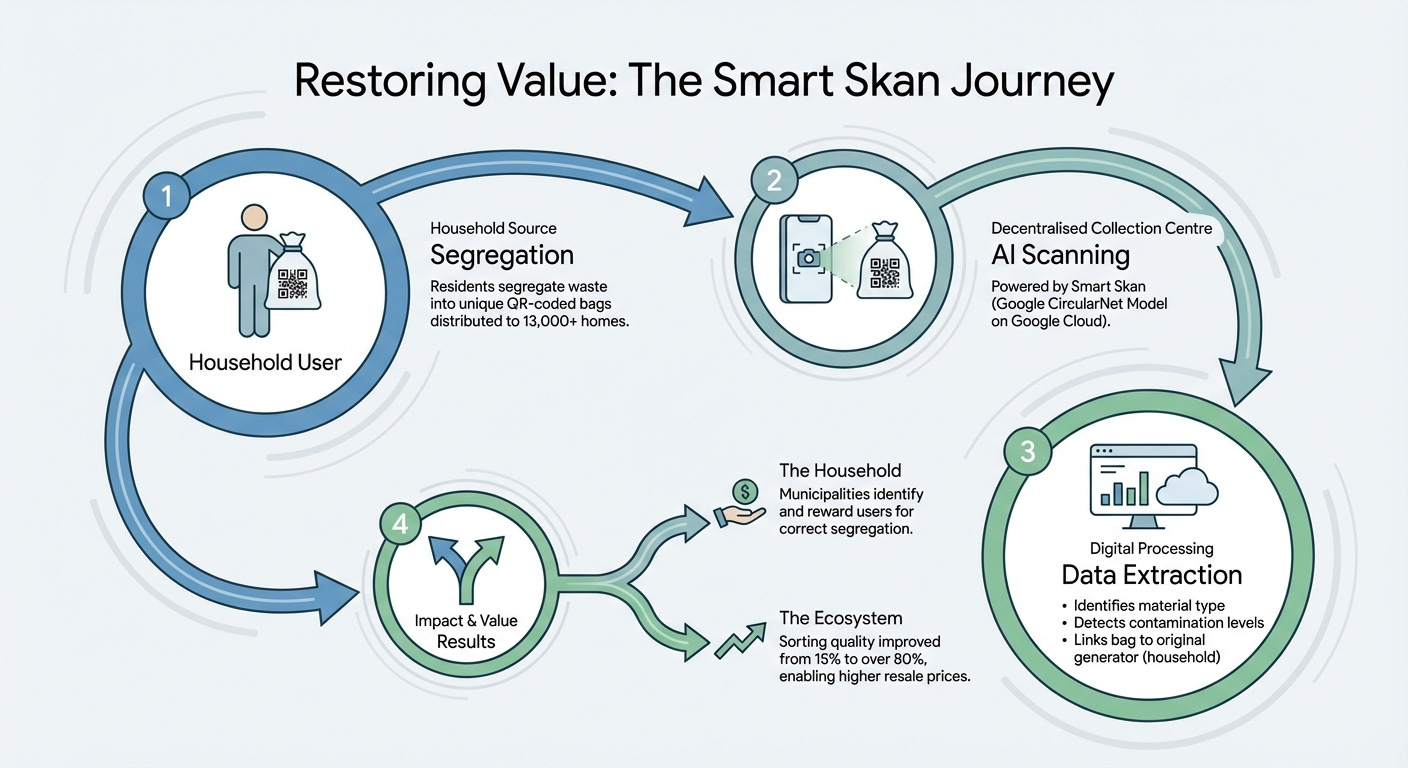
To address the issue of recyclables being lost at the source, we piloted a program across nearly 13,000 households in Latur and Bengaluru, distributing unique QR-coded bags for waste segregation. Once filled, these bags were brought to decentralized collection centers where they were scanned using our Smart Skan, an AI-powered application built on Google’s CircularNet open-source model running on Google Cloud.
Smart Skan identifies:
Material type
Contamination levels
Ties each bag back to its original generator through the QR code
This simple intervention had a transformative effect for Recykal:
Sorting quality improved from 15% to over 80% almost immediately
Municipalities could now identify and reward households that segregated properly
Cleaner materials could be sold to recyclers at significantly better prices, restoring value that was earlier being lost
Initially, people questioned whether technology had any role to play in ‘trash’. Today, through our marketplace platform, we have channelized tonnes of waste every month to the right recycling destinations, proving that small behavioral shifts, when enabled by digital systems, can unlock exponential ecosystem value.
Beyond Recycling: Cities, People, and Behavior
AI’s role now extends beyond private supply chains. In cities such as Barcelona and Copenhagen, smart bins equipped with IoT sensors monitor real-time fill levels, enabling AI-driven route optimization.
At Recykal, this thinking led to the digital Deposit Refund System (dDRS), where AI-enabled smart collection machines recognize returned containers and issue instant UPI refunds.
Digital Deposit Refund System: The digital Deposit Refund System (dDRS) is a technology-enabled system where consumers pay a small deposit when purchasing packaged items and receive it back instantly when they return the empty container. AI-powered machines identify the item, verify authenticity, and process refunds—often through UPI—making recycling easy, fast, and rewarding.
UPI Explained: UPI (Unified Payments Interface) is a real-time payment system in India that enables instant money transfers between bank accounts using a mobile phone. It allows peer-to-peer (P2P) and person-to-business (P2B) transactions through a simple mobile interface, often using QR codes or virtual payment addresses.
Designed for high-footfall zones such as tourist and pilgrimage circuits, these systems reduce friction while encouraging participation at scale.
Case Study: Bhutan Pilot We’ve done a pilot project in Bhutan, specifically in Gelephu where the entire city operates on DRS. The consumer has an application that allows them to:
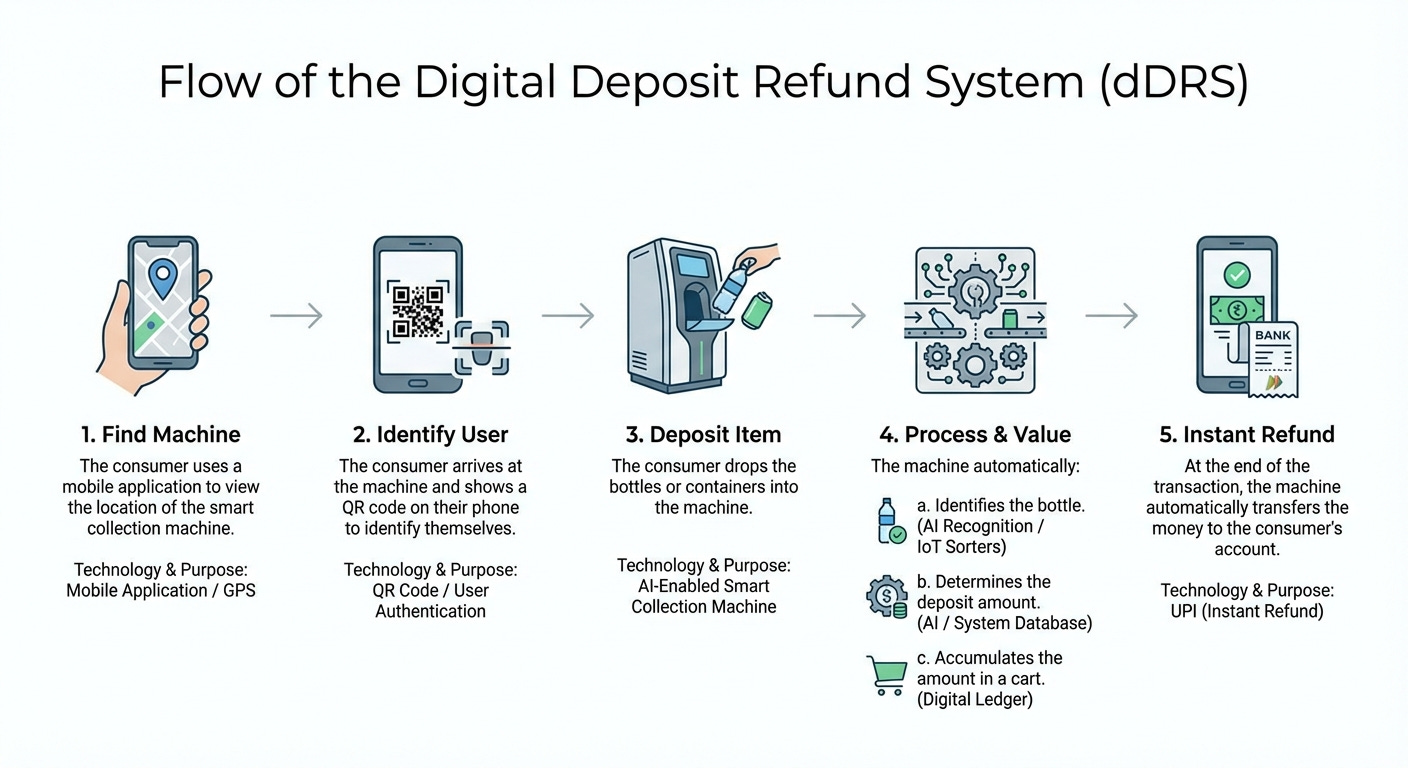
View the machine’s location
Show a QR code on their phone to identify themselves
Drop bottles into the machine
Machine automatically identifies the bottle and determines the deposit amount
Money is automatically transferred to their account at the end of the transaction
We’ve also introduced the Smart Centre Solution for digitized Material Recovery Facilities (MRFs). Here, facial recognition models help:
Track attendance of sanitation workers and waste collectors
Automate payroll calculations
Authenticate material brought into the center
AI models assess contamination levels, enabling fair pricing while improving material quality throughout the supply chain.
Building Invisible Infrastructure for a Circular Future
Waste management is no longer just an environmental obligation. With the right digital infrastructure, it becomes a value-generating ecosystem.
AI has introduced:
Trust into what was previously fragmented
Predictability into uncertainty
Speed into scale
Recykal’s work has been recognized nationally and globally, including being named ‘AI Game Changer’ by NASSCOM and ‘Global Innovator’ by the World Economic Forum. But the most significant shift is quieter.
According to the World Economic Forum, global waste generation is projected to rise nearly 70% by 2050. The most impactful technologies will remain largely invisible, embedded into systems that keep materials in circulation and preserve value.
When waste is traced, trusted, and treated as an asset, it no longer marks the end of a product’s journey. It becomes the starting point of a smarter, more circular economy.
Key Takeaways: What Developers and AI Builders Can Learn
After spending time at Recykal and watching Vikram’s team build these systems, here’s what stands out to me as an AI enthusiast:
1. AI’s Real Value Is in Workflow Automation and Orchestration
Recykal built an agentic system where:
One agent extracts data from documents
Another agent audits for accuracy
A third agent validates regulatory compliance
This is multi-agent orchestration at production scale, handling thousands of transactions daily. If you’re building AI systems, think how agents can collaborate to handle complex, multi-step workflows.
2. Document AI + Verification = Trust at Scale
Waste management (like many traditional industries) runs on paperwork: invoices, weighbridge slips, compliance certificates. Recykal’s document AI doesn’t just OCR text—it corroborates information across sources to detect fraud and errors.
Lesson: In low-trust, high-volume environments, AI’s ability to cross-reference and validate documentation can unlock tremendous value.
3. Computer Vision Changes Behavior: A Google-Recykal Collaboration
The QR-coded bags + Smart Skan system demonstrates how computer vision can drive behavioral change at scale. This was built as a collaboration between Google and Recykal, combining:
Google’s CircularNet model for material recognition
Recykal’s QR-based tracking system to tie each bag back to households
Immediate feedback loops that reward proper segregation
Result: Sorting quality jumped from 15% to 80%+. When you give people instant visibility into their impact and reward them for it, behavior shifts dramatically. The key insight here is that AI isn’t just recognizing materials—it’s creating an incentive structure that changes how entire communities handle waste.
4. AI in Traditional Industries = Massive Opportunity
The waste management market is $500B+ and growing to $900B. Smart waste tech is a $3.75B market growing at 16% CAGR. And this is just one “boring” industry.
Think about:
Agriculture ($3.6T market)
Construction ($10T+ market)
Logistics ($8.6T market)
These industries are data-rich, process-heavy, and ripe for AI disruption. The opportunity isn’t in building another chatbot—it’s in applying intelligent systems to messy, real-world infrastructure.
5. Regulation Drives AI Adoption
EPR compliance requirements created the demand for Recykal’s document AI. Regulatory pressure is an underrated driver of enterprise AI adoption.
If you’re building B2B AI tools, look for industries where:
Compliance is mandatory
Documentation is overwhelming
Penalties for errors are high
That’s where your AI agents will get adopted fast.
AI’s Next Frontier Isn’t Sexy—It’s Essential
After seeing what Recykal has built, I’m convinced that the next wave of AI disruption won’t come from consumer apps or creative tools. It’ll come from intelligent systems embedded into the infrastructure we don’t think about: waste, water, energy, agriculture, construction.
These industries are:
Huge (trillions in market size)
Fragmented (perfect for platforms)
Data-starved (your models don’t need to compete with OpenAI)
Impact-driven (solving real problems for real people)
If you’re a developer or founder looking for where to apply AI next, don’t just chase the latest model release. Look for the industries where AI can create trust, preserve value, and build invisible infrastructure that makes the world work better.
Recykal proved it’s possible. Now the question is: What “boring” industry will you make intelligent next?
Check out this interesting video to learn more:
If you would like to start your journey with AI or stay updated with whats happening in the field of AI subscribe to the newsletter:


