

While this starts with a family trip to a Tiger Reserve rather than a breakdown of code, the lessons I uncovered in the wild apply directly to a challenge many of us face: building high-performing tech teams and deploying complex AI solutions.
We often talk about hiring “rockstars” and “10x engineers,” but what happens when those exceptional individuals join our organisations? Do we give them the environment they need to truly lead, or do we inadvertently clip their wings?
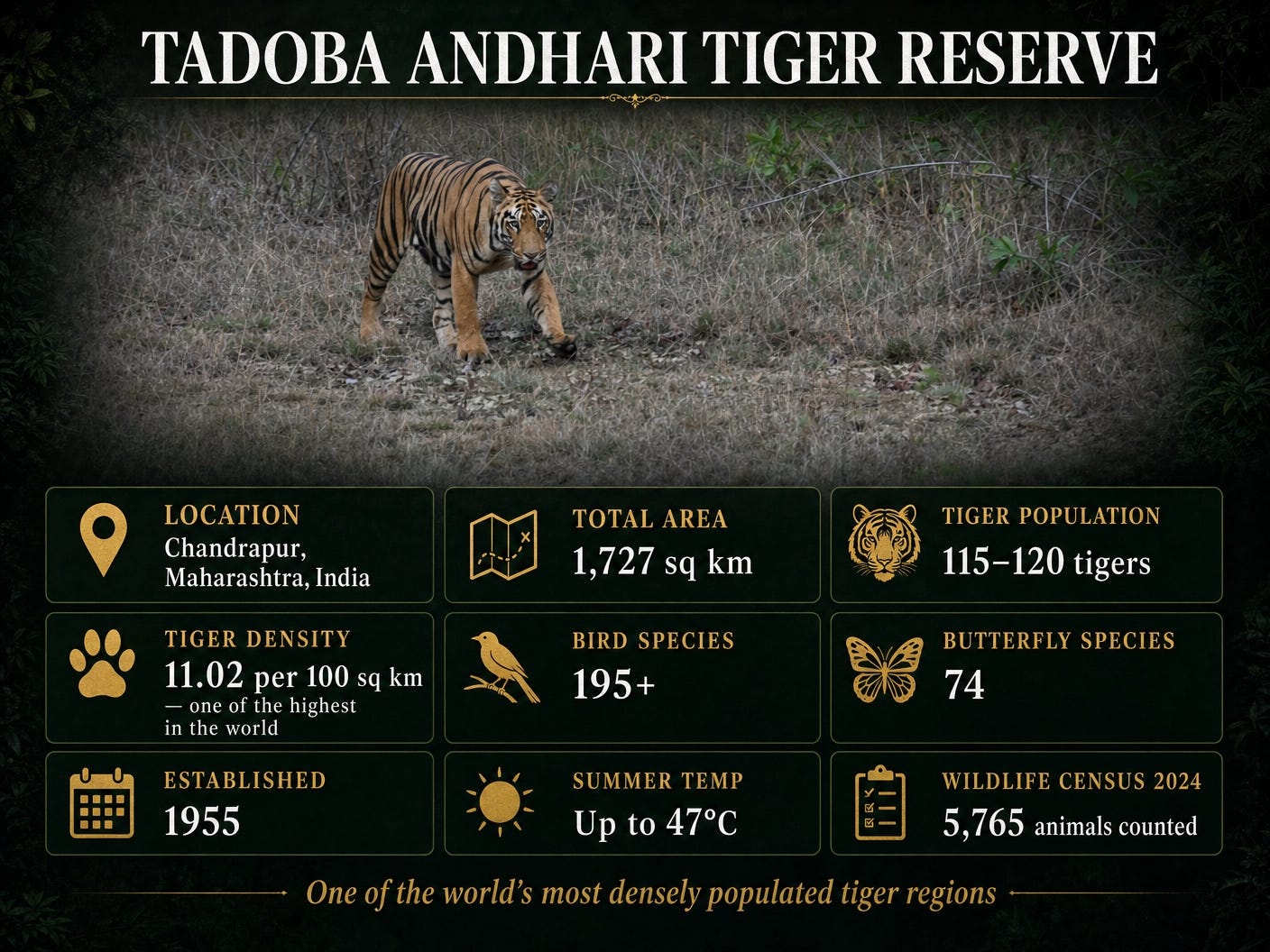
This question became vividly clear to me during a recent trip to the Tadoba Tiger Reserve, one of the densest tiger reserves in the world. While observing these magnificent creatures in their natural habitat, I uncovered profound leadership lessons that directly apply to building and managing high-performing tech teams and AI solutions.
The Uncaged Leader: Why High-Performing Talent Needs Autonomy
Imagine a tiger. It hunts, eats, and sleeps entirely on its own terms. It carves out its territory, sets its own rules, and operates with an inherent sense of independence. A tiger is the ultimate natural leader—unbeholden, self-sufficient, and powerful because it’s free to be itself.
In the corporate world, especially in fast-paced tech and AI development, everyone wants to hire leaders. We search relentlessly for individuals with that rare blend of independence, decisiveness, and innate drive. We want people who can take ownership, innovate, and push boundaries. Essentially, we want tigers.
If you love this, checkout my previous articles here.


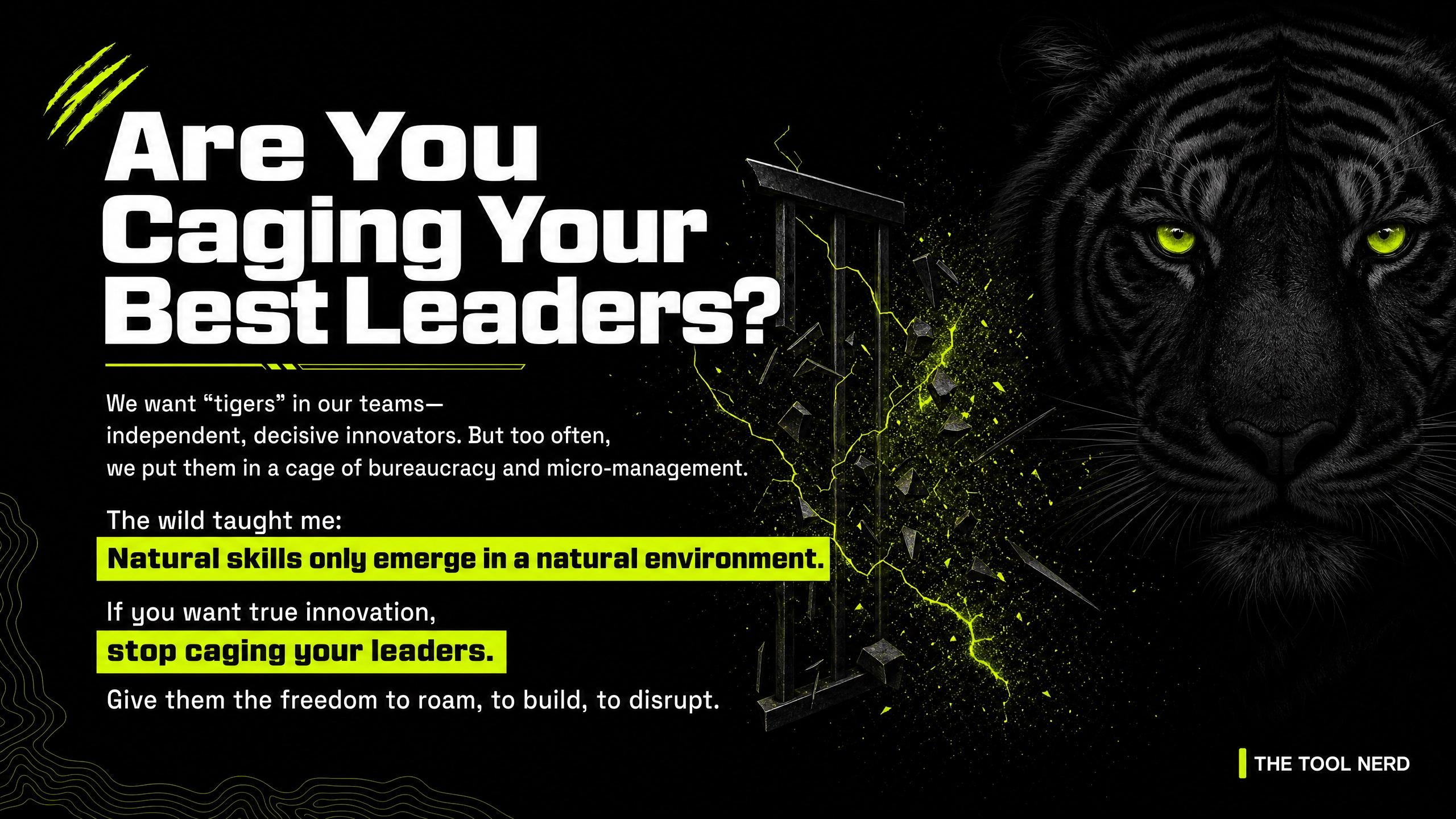
But here’s the paradox: once we bring these “tigers” into our organizations, we often try to put them in a cage. We impose rigid processes, layers of bureaucracy, and micro-management. We expect them to operate within predefined boxes, follow every instruction, and conform to a system that stifles their natural instincts. We want the power of a tiger, but we want it safely contained.
"We want the power of a tiger, but we want it safely contained. If you hire a tiger and then restrict its movement, you're not going to get a tiger; you're going to get a frustrated, underperforming house cat."
This approach is fundamentally flawed. Natural skills—especially those of a true leader or an innovative engineer—only emerge and flourish in a natural, empowering environment. If you hire a tiger and then restrict its movement, you’re not going to get a tiger; you’re going to get a frustrated, underperforming house cat.
Great leaders, like tigers, aren’t servants to a system; they are the system, creating their own impact and driving progress.
The Thrill of Uncertainty: Embracing Risk in AI & Innovation
My safari experience also highlighted a crucial aspect of human nature and its impact on innovation: our obsession with certainty.
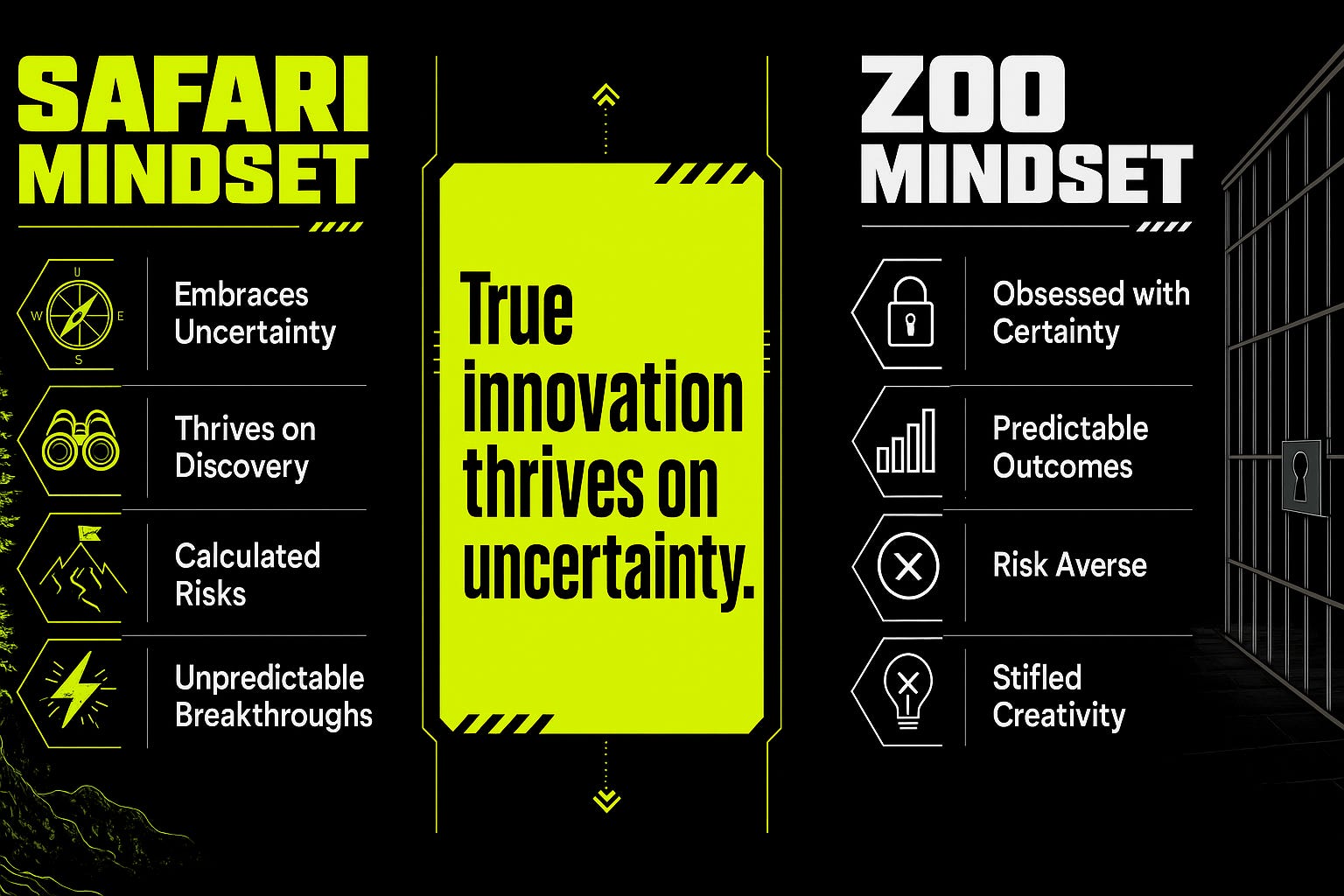
When you go on a safari, the probability of finding a tiger is never 100%. You might drive for hours, see nothing, and feel the disappointment build. But that very uncertainty is what makes the eventual sighting so thrilling, so memorable. It’s an earned experience, a moment of pure, unadulterated awe.
Compare this to a zoo. You’re 100% certain to see a tiger. Yet, the experience, while educational, lacks the same visceral excitement. The certainty kills the magic. We, as humans, crave certainty in our projects, our product roadmaps, and our careers. We try to eliminate all risks, predict every outcome, and guarantee success.
"True innovation, especially in AI, thrives on uncertainty. When we over-optimize for certainty, we strip away the elements of surprise and discovery that fuel creativity."
However, true innovation, especially in AI, thrives on uncertainty. The most groundbreaking discoveries often come from exploring the unknown, taking calculated risks, and embracing the possibility of failure. When we over-optimize for certainty, we strip away the elements of surprise and discovery that fuel creativity and lead to truly memorable breakthroughs.
Building an AI product is not about following a perfectly predictable path; it’s about navigating a complex, often uncertain, landscape and finding new ways forward.
The Value of Scarcity: A Patient Approach to Hiring Exceptional Leaders
Finally, the safari reinforced the principle of scarcity. You need immense patience to find a tiger in the wild because they are rare. Their scarcity is precisely what makes them so valuable and sought after.
If tigers were abundant, if they were behind every bush, the thrill and effort of seeking them out wouldn’t be the same.
This applies directly to talent acquisition and fostering innovation in tech. People with genuine leadership qualities, unique technical talents, or a truly innovative mindset are scarce. They are not easily found, nor can they be mass-produced. Identifying and attracting these individuals requires patience, a keen eye, and a willingness to invest time and effort in the search.
Just as you wouldn't expect to stumble upon a tiger without effort, you shouldn't expect to build a team of exceptional leaders and innovators without a deliberate, patient, and discerning approach.
And once you find them, the lesson from the uncaged tiger becomes even more critical: give them the freedom and environment to flourish, or their rare value will be diminished.
Key Takeaways for Tech Leaders:
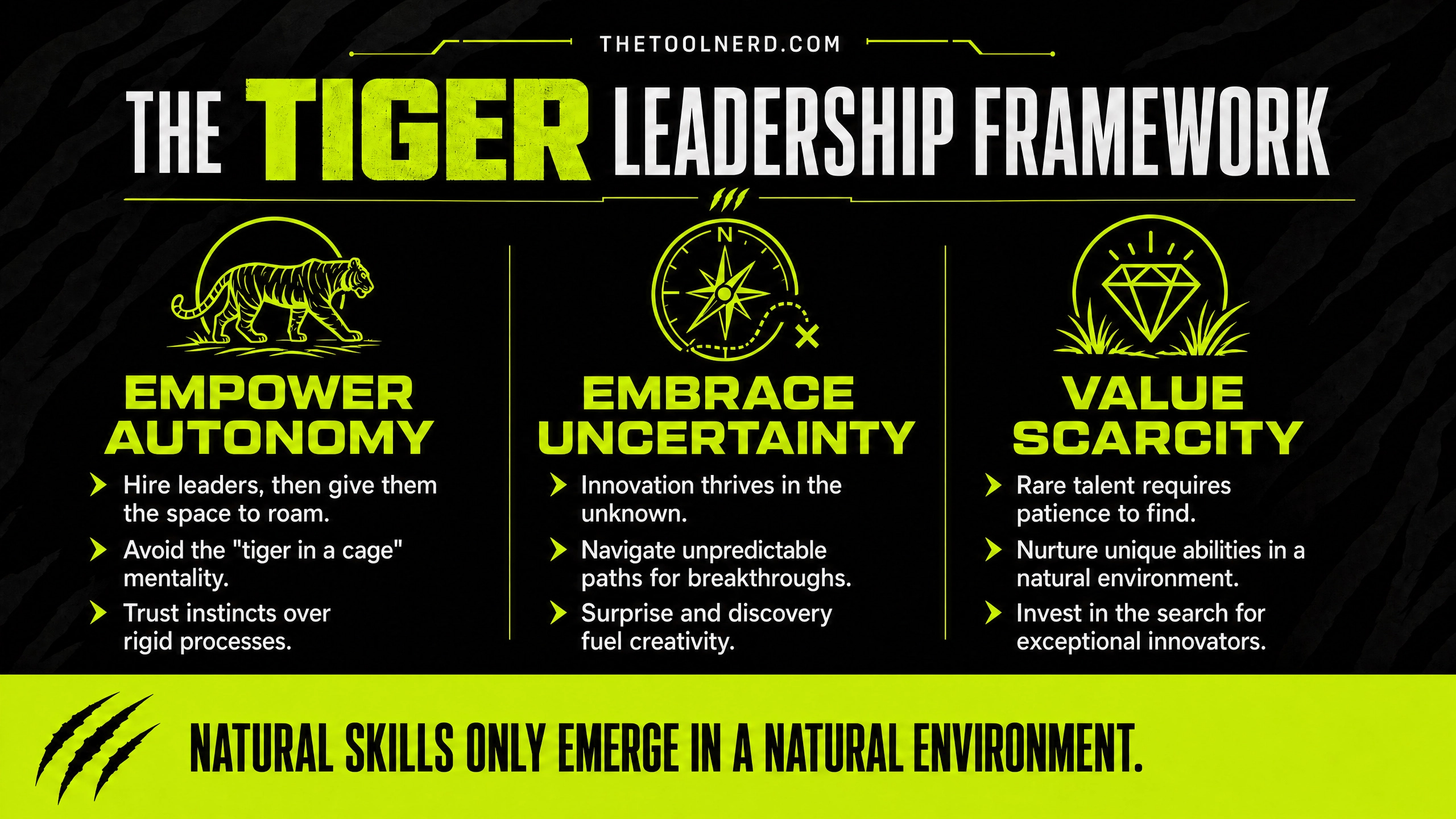
Empower Autonomy: Hire leaders and innovators, then give them the space and freedom to operate. Avoid the “tiger in a cage” mentality.
Embrace Uncertainty: Recognize that true innovation and memorable achievements often arise from navigating unpredictable paths, not from rigid, risk-averse planning.
Value Scarcity with Patience: Invest time and effort in finding rare talent. Once found, nurture their unique abilities by providing an environment where they can thrive naturally.
My Tadoba experience was more than just a wildlife sighting; it was a powerful reminder that the principles governing the wild often hold profound truths for the boardrooms and development sprints of the tech world. Let’s build teams where our tigers can roam free and lead us to uncharted territories.