

For the past month and a half, I’ve been living a tale of two AI agents. On one side was OpenClaw, the powerful, open-source darling of the developer community that promises raw, untethered control.
On the other was Manus ( Now acquired by Meta), the polished, increasingly capable agent that aims for seamless integration into your daily workflow. I had tried out earlier and was blown away by its potential at that point in time (few months ago).
Check out my previous articles on Manus


I recently got access to it via the Lenny’s Newsletter (Go and get yours to access $25K worth tools like Lovable, Bolt, Cursor, Elevenlabs and a lot more)

Everyone is talking about OpenClaw, and for good reason - it’s a glimpse into the future of agentic AI. But after extensive hands-on testing, my conclusion is this:
OpenClaw is powerful and is right for a specific customers but for most of the professionals like PMs, Marketers, Researchers, Business Owners etc.. Manus might be the right one.
I went deep on both platforms, using them for real-world tasks, from research and coding to content creation. Here’s what I found.
OpenClaw: The All-Powerful Agent That Demands Everything
OpenClaw is incredibly powerful. It gives you direct terminal access, lets you bring your own models, and offers a level of control that feels limitless. You can chain together complex commands, give it access to your local files, and watch it execute tasks with a raw capability that no closed-source tool can match. It’s the dream for tinkerers and developers who want to build a truly bespoke AI assistant.
I have written a detailed article on what I built with OpenClaw and my experiences

The Security Tightrope and the “Black Box” Problem
My biggest reservation with OpenClaw is security. The platform’s open nature and deep system access create a massive attack surface. While the project is improving, the risk of a “400K lines of code” leading to a serious vulnerability is a constant concern. It’s difficult for anyone to audit it properly as well. Recent history backs this up, with researchers discovering critical flaws like CVE-2026-25253, a one-click remote code execution vulnerability that allowed a malicious website to hijack a user’s agent .
Beyond the security risks, there’s a significant clarity issue. More often than not, I found myself unsure of what OpenClaw was doing behind the scenes.
It can feel like a black box; you provide a prompt and wait for the result, with little insight into the intermediate steps.
This lack of transparency makes debugging difficult and erodes trust, especially when the agent has access to sensitive data and systems.
Finally, there’s the management overhead.
Maintaining an OpenClaw instance is not a trivial task. It requires constant monitoring, updates, and a deep understanding of the underlying system.
For an individual, this is a significant time investment and a constant source of friction. And let’s not forget the credit consumption; OpenClaw can be a credit hog. I personally use Kimi K2.5 to manage its usage, unlike other models like Claude, Gemini and Codex, which can get exhausted quickly.
What truly makes OpenClaw stand out is its multi-agent power. You can spin off multiple agents, each with its own context, memory, and file management. This capability allows for highly complex, parallel workflows, making it incredibly powerful for those who can harness it.
While many are launching their own versions of OpenClaw by adapting it—like Kimi Claw, Kilo Claw, and MiniMax agent Claw—these are essentially building on OpenClaw’s infrastructure.
Manus, on the other hand, operates on its own distinct design.
Manus: The Reliable Workhorse That Just Gets Things Done
After the high-stakes environment of OpenClaw, setting up Manus felt like a piece of cake. It may not have the raw, untamed power of its open-source counterpart, but it excels in reliability, ease of use, and seamless integration.
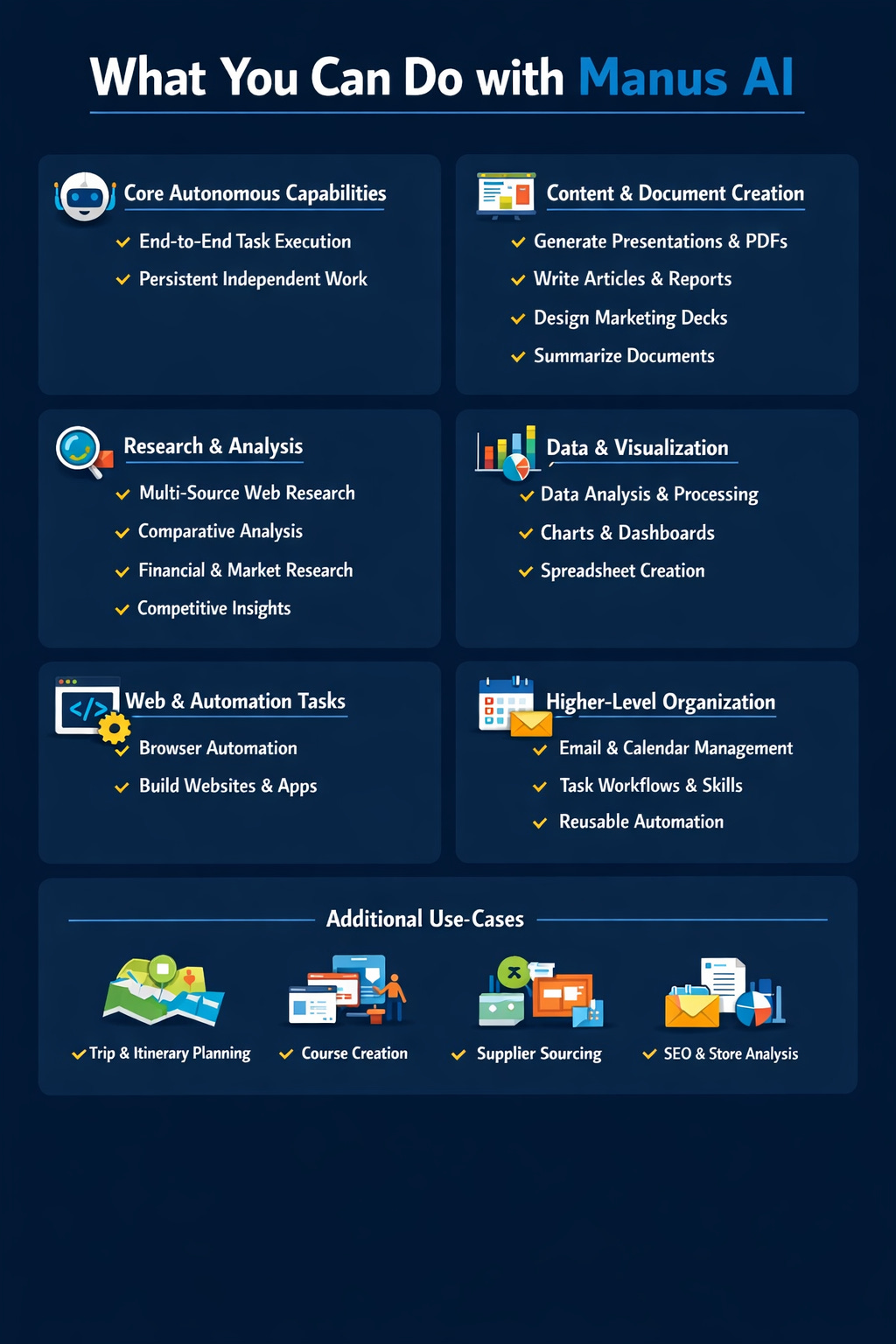
Manus is clearly designed for knowledge workers and the general public, not just developers. Its for Product managers, Marketers, Writers, Researchers, Finance Folks etc..
I had been publicly asking the Manus team on X (formerly Twitter) for a better conversational interface, since the time OpenClaw got launched and I got access to Manus.
My main gripe was that while the agent was powerful, the web-based chat felt disconnected, often losing context between sessions. A few weeks ago, they delivered.
Let’s first understand why Manus is easy for Product Managers, Researchers, Marketers, General Audience
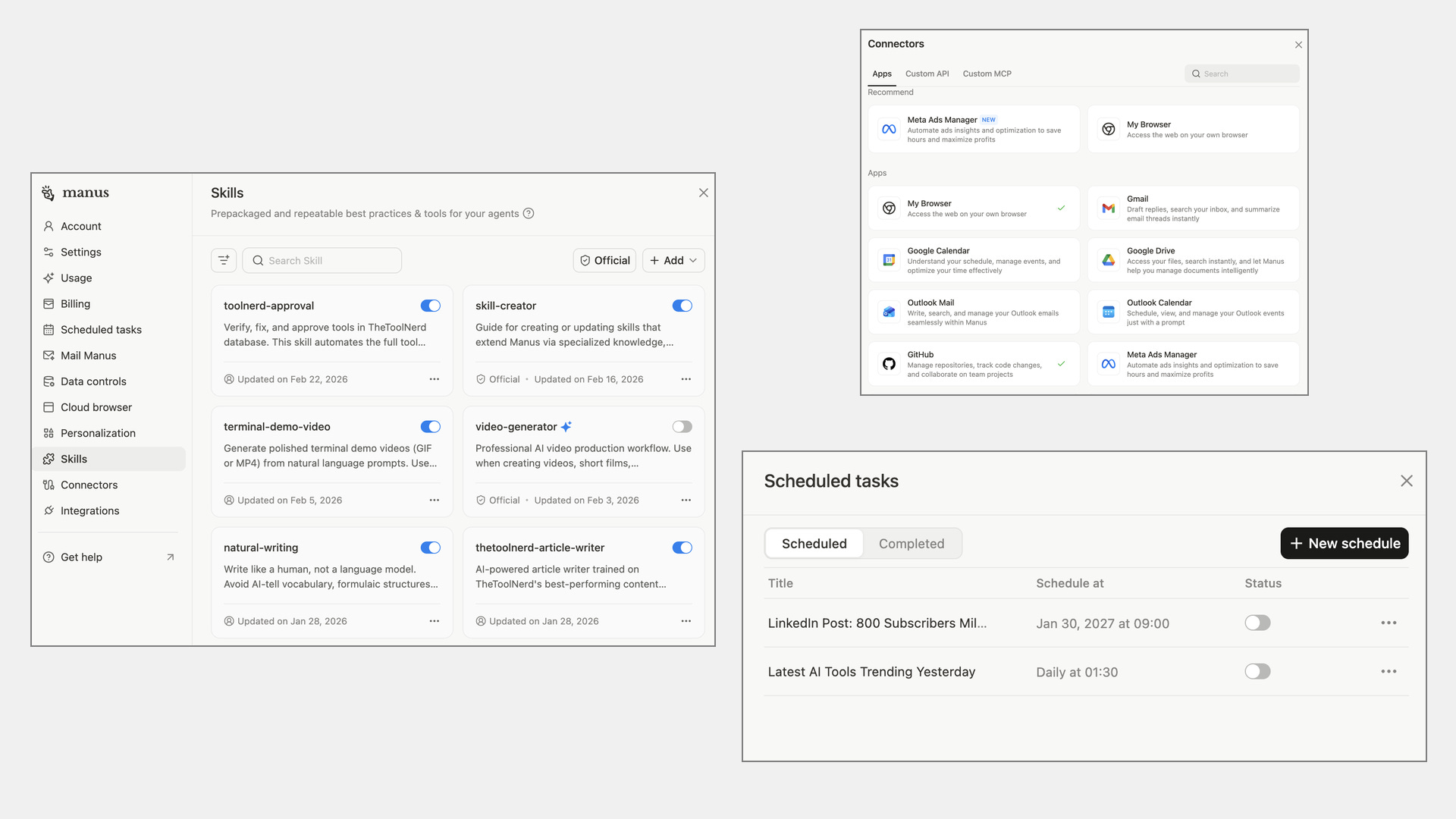
Easy to use & familiar - user interface via chat
You can even reach out to manus on Slack, Email as well
Connect to MCPs easily with ready plugins for tools like Notion, Google, Meta Ads Manager, GitHub, Linear, ElevenLabs, Supabase, Vercel and a lot more
Skills are easy to create and install. For any repetitive work, create a skill and create it as a scheduled task.
Scheduled Tasks for repetitive work.
Manus - Telegram Integration
The new Manus Agents feature, which integrates Manus directly into Telegram, is the first step in the direction of personal agents . It solves the context problem beautifully. Now, I can have ongoing conversations with my agent, and it remembers everything, just like a human assistant.
Integrating with Telegram is simpler than OpenClaw.
It’s the full power of Manus—research, coding, document generation—all accessible from a simple chat interface. I can send voice notes, drop in files, and get results delivered right back to my phone. It’s the seamless experience I’ve been waiting for. In the Manage Agents section, you can easily access all files and documents uploaded during your chat and conversation.
You can also define your assistant’s identity, name, tone, and other details in the personalization section, similar to what you can do with OpenClaw.
Backed by Meta AI
Another important shift: Manus has reportedly been acquired by Meta AI. If that integration fully materializes, it changes the risk profile entirely. Backing from a company like Meta means stronger infrastructure, deeper research support, and long-term stability. For businesses and professionals, that kind of ecosystem backing matters.
Where Manus Falls Short & its problems
Of course, Manus isn’t perfect.
Its biggest limitation is the lack of a terminal interface.
You can’t get under the hood in the same way you can with OpenClaw, which means you sacrifice a degree of power and flexibility. You are also locked into their ecosystem, so you can’t bring your own models to experiment with.
Manus also doesn’t currently offer the ability to spin off multiple independent agents or have separate conversations with each, a key feature of OpenClaw. While sub-agents and sub-tasks are on the roadmap, they aren’t clearly defined or available yet.
My other major issue is the cost.
The new “Agent Mode” consumes credits at an alarming rate, far more than the standard chat.
Sometimes the Manus gets into loop and consumes all the credits. You need to ask again their support team and try to get it resolved. This is a very bad experience. And has happened with me a couple of times.
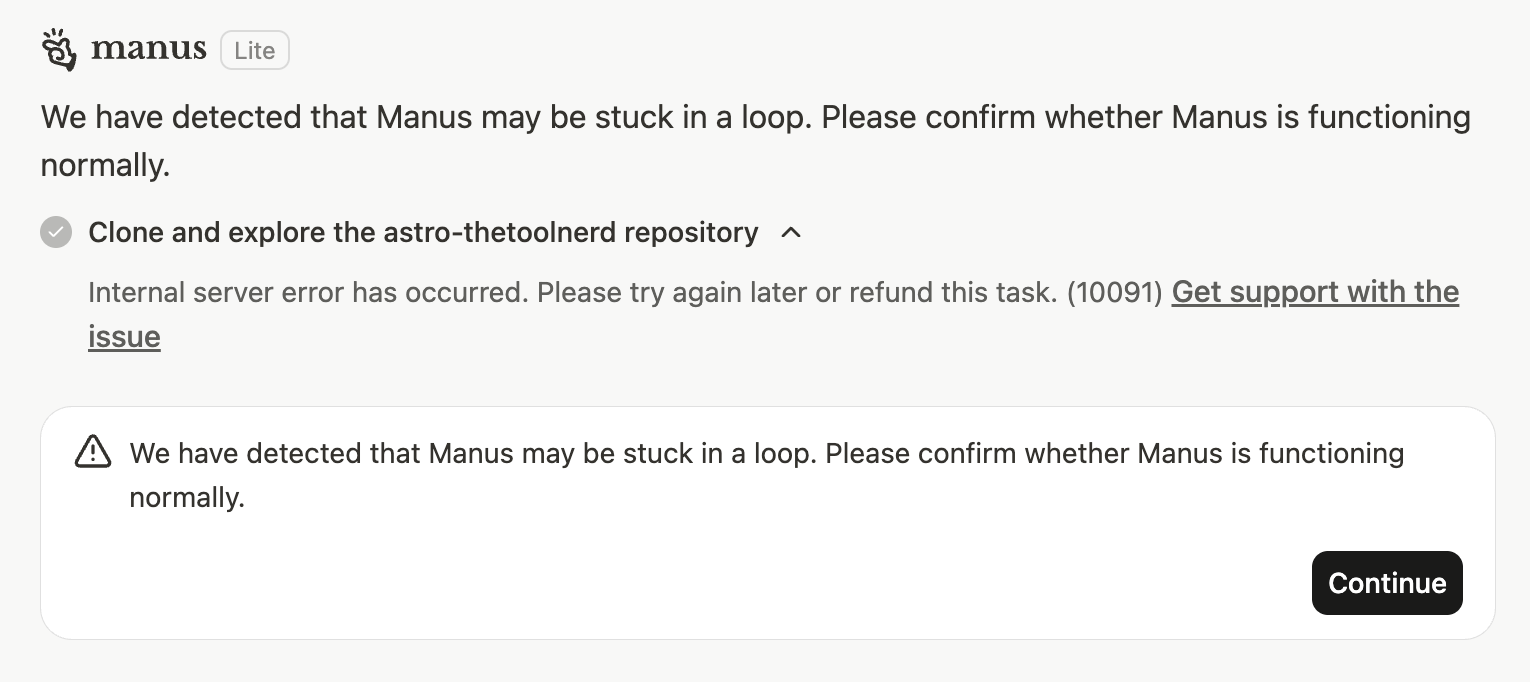
This feels like a poor user experience.
While the reliability is better, the cost can be a significant deterrent for heavy users. However, Manus’s pre-built features, like its wide agents that can parallelly run research tasks, are powerful enough for many use cases, even without building custom agents.
Manus vs. OpenClaw: A Quick Comparison
My Verdict: Manus or OpenClaw - Use the one that fits your need
After a month and a half in the trenches with both platforms, my verdict is clear. While OpenClaw represents an exciting, powerful future, it’s still a tool for experts and hobbyists who are willing to accept the risks and management overhead.
It’s a fantastic project, but it’s not something I can recommend for most professionals or businesses today, who aren’t well versed with or comfortable with tech complex configurations.
Manus, on the other hand, is ready for prime time.
It’s a reliable, secure, and increasingly powerful agent that integrates seamlessly into the tools I already use. The addition of the Telegram interface has addressed my biggest pain point and transformed it into a true AI assistant that I can rely on for day-to-day tasks.
I got access to Manus thanks to Lenny’s newsletter, and if you’d like to get more such tools, do check out Lenny’s newsletter.
For developers and AI product builders like myself, the choice comes down to a first-principles analysis of what matters most: raw, untethered power or reliable, consistent execution. Right now, for the vast majority of use cases, reliability wins. Manus delivers on that promise, and with its rapid pace of development, it’s the agent I’ll be sticking with.