

Did you notice? Anthropic is quietly building a complete operating system. It runs on your laptop, and it works on its own with every tool they ship. Claude isn’t a chatbot anymore.
Nobody at Anthropic calls it an OS. That’s my read, and the launch log backs it up.
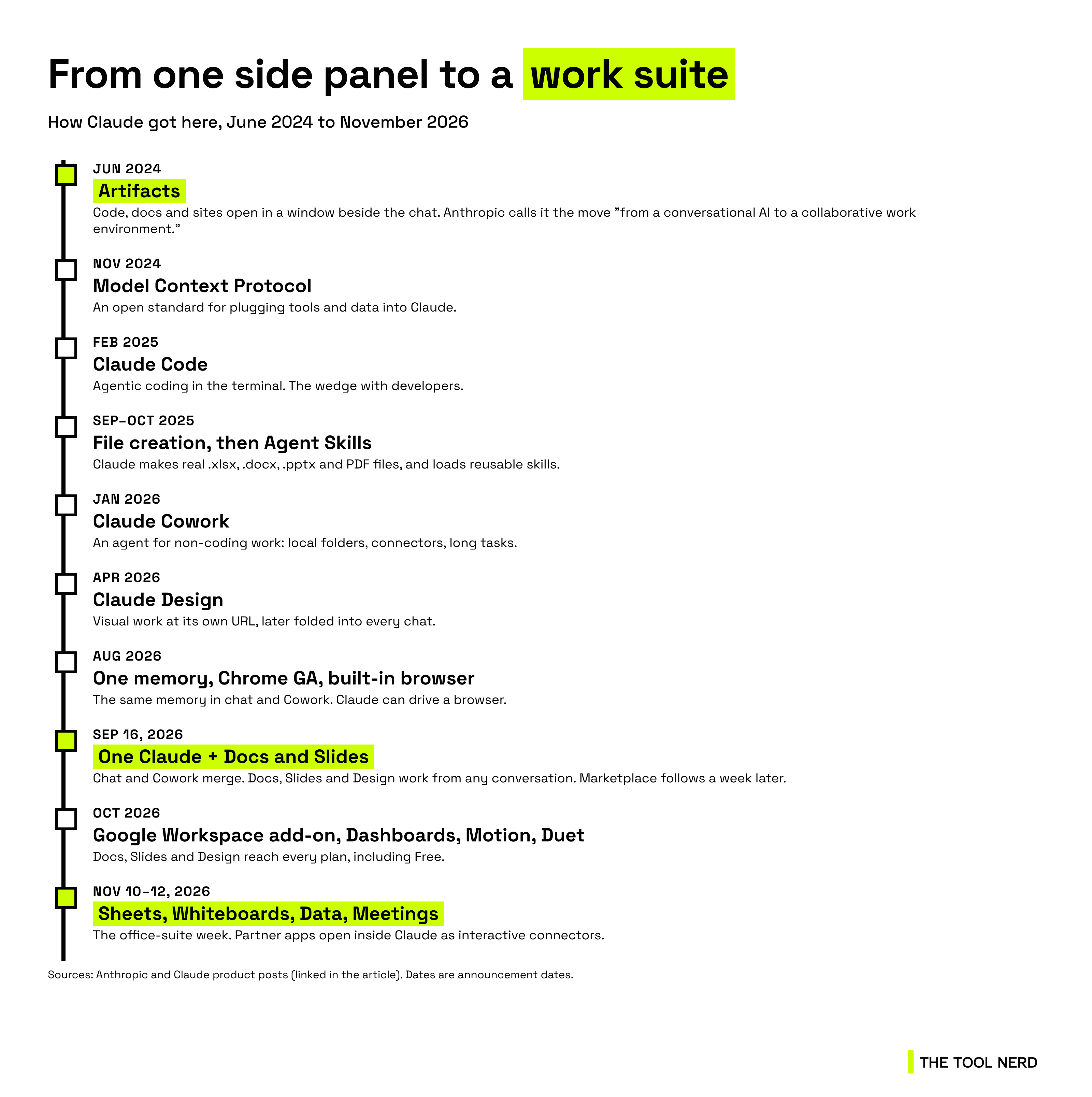
Look at the last ten weeks. Docs and Slides on Sep 16. Dashboards and Motion on Oct 8. A proactive agent app, Duet, on Oct 21. Then one week in November: Sheets, Whiteboards, Data and Meetings.
Now look underneath. The Claude desktop app works with folders on your computer. Since September, Claude can click, type and open apps on your desktop in the background while you do something else. (@claudeai) Hand it a report before you leave and it keeps going after you close the laptop. (Anthropic) It has its own files, its own memory, its own apps and drivers for thousands of other tools. Software with all of that isn’t a chat app.
TL;DR
Anthropic shipped a work suite in ten weeks. Claude Docs, Slides, Design, Sheets, Whiteboards, Data, Motion and Meetings all live inside Claude now.
It all grew out of Artifacts (June 2024). Back then Anthropic called it Claude’s “evolution from a conversational AI to a collaborative work environment”.
Claude Design shows the direction. It launched as its own site in April. Now it’s built into Claude chat and the desktop app, and the standalone site closes on Dec 14.
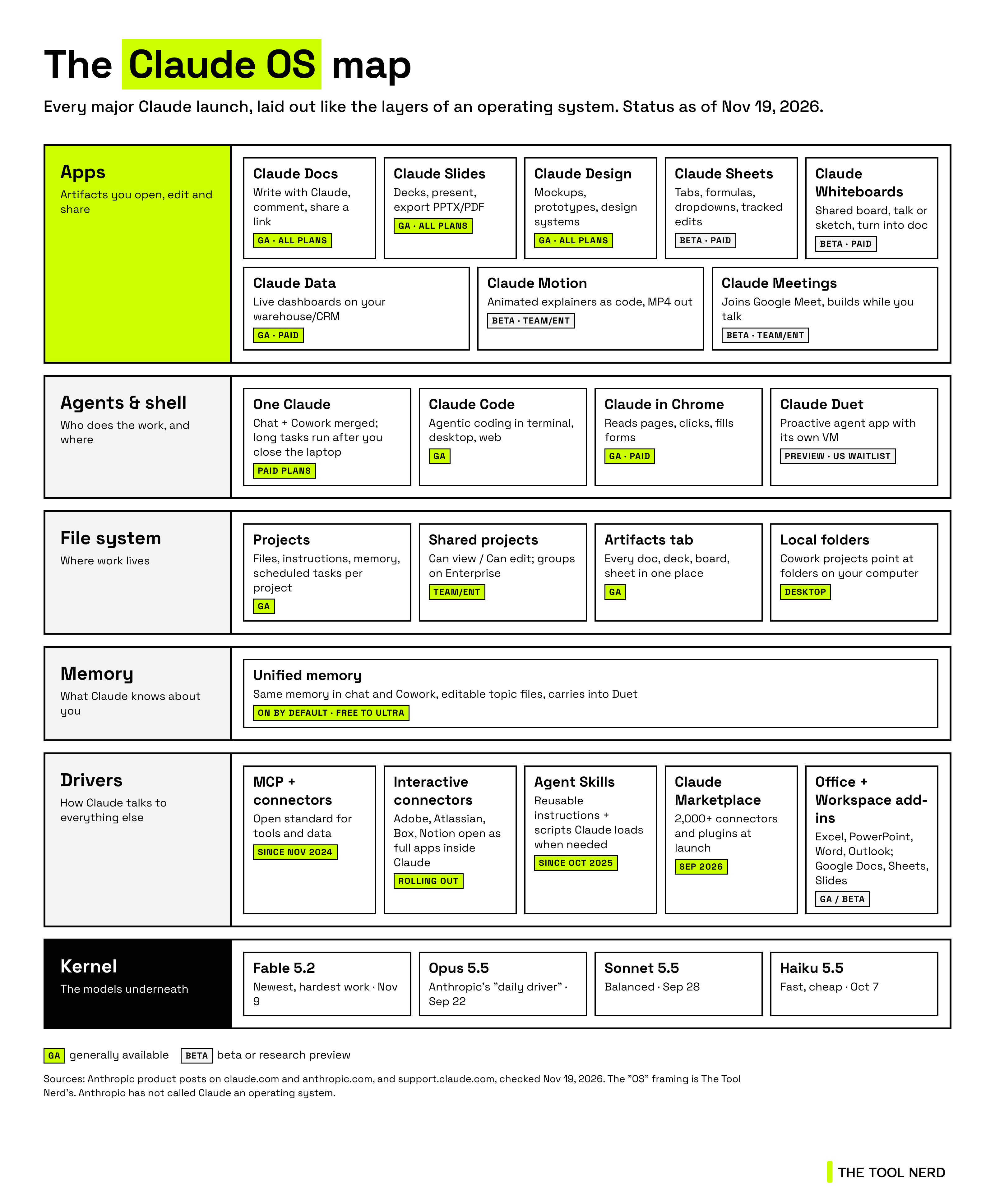
The stack now has every layer of an OS: apps (Docs to Meetings), a file system (Projects, shared projects, the Artifacts tab), memory, drivers (MCP, connectors, Skills, the Marketplace) and a kernel (Fable 5.2, Opus 5.5, Sonnet 5.5, Haiku 5.5).
A lot of it is still beta. Sheets and Whiteboards are beta. Meetings is beta, Team and Enterprise only, Google Meet only. Anthropic itself says Sheets has “simple spreadsheet functionality”.
Everyone else is building the same thing. OpenAI has Space, Pages and Slides inside ChatGPT. Microsoft put full Office inside Copilot in November. Google has Gemini inside Workspace.
I track every AI launch that changes how you work, so you don’t have to read ten launch posts a week. Subscribe to The Tool Nerd.
What Anthropic shipped
Here’s the launch log, straight from Anthropic’s own posts. Dates are when each product was announced.
Apr 17: Claude Design, as a standalone Anthropic Labs product
Aug 25: one memory across chat and Cowork
Aug 26: Claude in Chrome on all paid plans
Sep 2: Claude uses your desktop apps in the background
Sep 16: chat and Cowork become one Claude. Docs, Slides and Design arrive in every conversation
Sep 23: Claude Marketplace becomes one place for connectors, plugins and agents
Oct 6: Claude inside Google Docs, Sheets and Slides
Oct 8: Claude Dashboards and Claude Motion. Docs, Slides and Design come out of beta for every plan, including Free
Oct 21: Claude Duet, a proactive agent app
Nov 10: Claude Sheets, Claude Whiteboards, Claude Data and interactive connectors
Nov 12: Claude Meetings
It started with Artifacts
When Anthropic launched Claude 3.5 Sonnet in June 2024, it added a small feature on the side: code, documents and website designs would open “in a dedicated window alongside their conversation”. (Anthropic)
The same post said what this was for:
“This preview feature marks Claude’s evolution from a conversational AI to a collaborative work environment. It’s just the beginning of a broader vision for Claude.ai, which will soon expand to support team collaboration. In the near future, teams, and eventually entire organizations, will be able to securely centralize their knowledge, documents, and ongoing work in one shared space.” — Anthropic, Claude 3.5 Sonnet launch post, June 2024
Read that again with November 2026 in mind. It’s the roadmap.
Artifacts was one of the best ideas in AI that year, and everyone copied it. OpenAI shipped Canvas in October 2024. Google shipped Canvas in Gemini in March 2025.
What changed since is the scope. An artifact today is “anything Claude makes for you that you’d put in front of someone: a design, a deck, a document, a dashboard, or a small interactive tool”. (Claude Help Center) There’s an Artifacts tab with templates. Your team can edit the same artifact. By Oct 8, Anthropic said people had made more than 45 million docs, decks and designs in Claude. (Anthropic)
The side panel became the app layer. Mike Krieger, who builds at Anthropic Labs, said it plainly on Sep 16:
“Claude Docs, Claude Slides and Claude Design are now available in every conversation, powered by a revamped Artifacts platform.” — @mikeyk, Sep 16, 2026
The Claude OS map
Here’s the whole stack laid out as an operating system. Apps on top, the model at the bottom.
Apps: the office suite inside the chat
These are all artifact types now. You ask for one in any chat, or start from the Artifacts tab.

The apps row inside Claude. Source: my own Claude account.
Claude Docs and Slides
Docs, Slides and Design arrived together in conversations on Sep 16, the same day chat and Cowork merged into “one Claude”. They came out of beta and reached every plan, including Free, on Oct 8. (Anthropic, Anthropic) You draft a doc, comment on it, share a link. Slides builds a deck you can present inside Claude or export as PowerPoint, PDF or Google Slides.
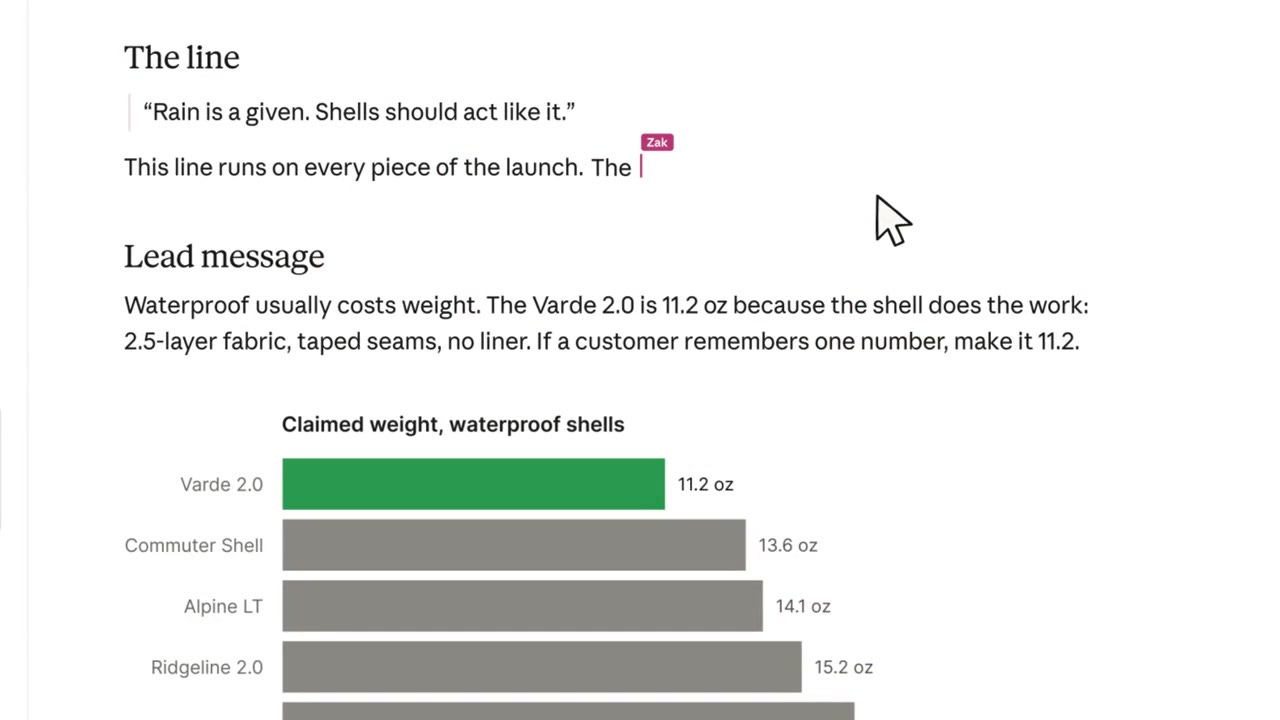
A Claude Docs draft with a chart, built in the conversation. Source: @claudeai launch video, Sep 16
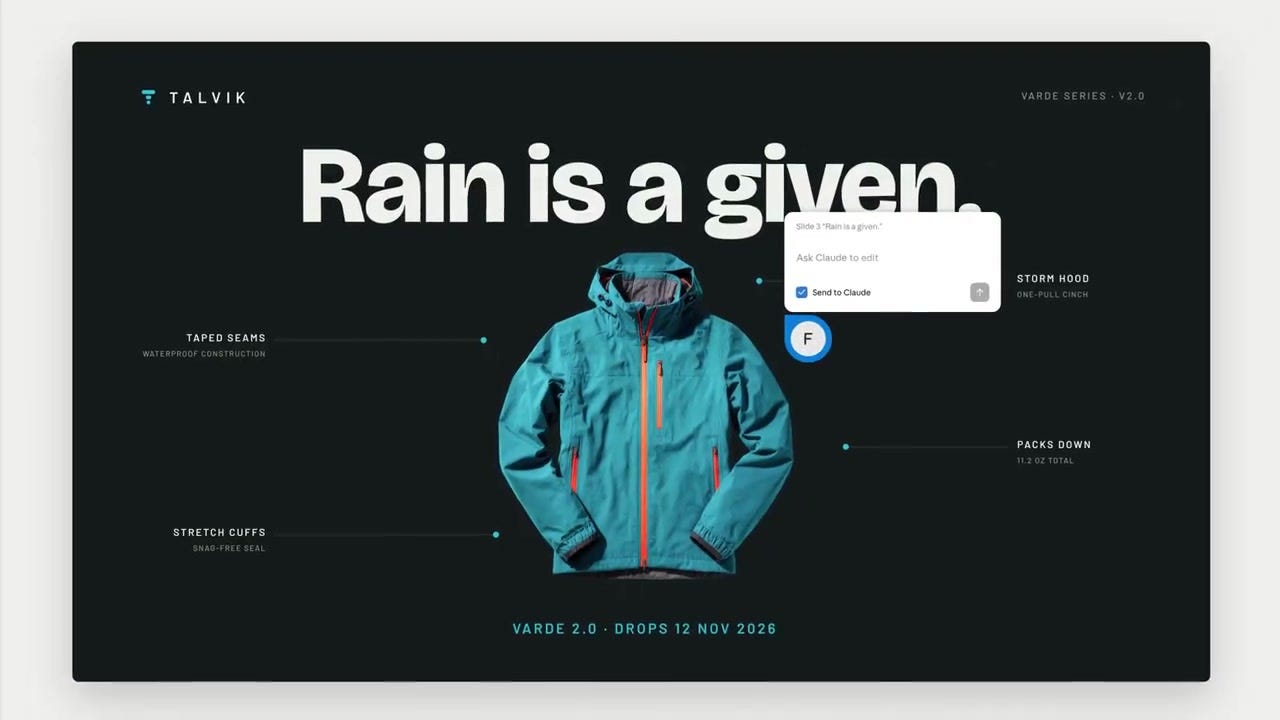
Commenting on a deck in Claude Slides. Source: @claudeai launch video, Sep 16
Want to see real use? Anthropic posted two short walk-throughs: how an Anthropic engineer uses Claude Docs and how an Anthropic designer uses Claude Slides.
Claude Design: from its own site to built in
Claude Design is the clearest sign of where this is going.
It launched on Apr 17 as a separate product from Anthropic Labs, with its own site at claude.ai/design. (Anthropic) It reached every paid plan in June. On Sep 16 it moved into every Claude conversation, and on Oct 8 it came out of beta for every plan, including Free.
Now Anthropic is switching the standalone site off. “Claude Design now lives in Claude. The standalone Claude Design site (claude.ai/design) will close on December 14, 2026.” (Claude Help Center) Design systems move over in one click, and new designs are saved as artifacts.
That’s what an OS does. A useful app starts on its own, then gets absorbed into the system. You don’t open a design tool anymore. You ask Claude, and the design shows up next to your chat, in the desktop app or in Claude Code.
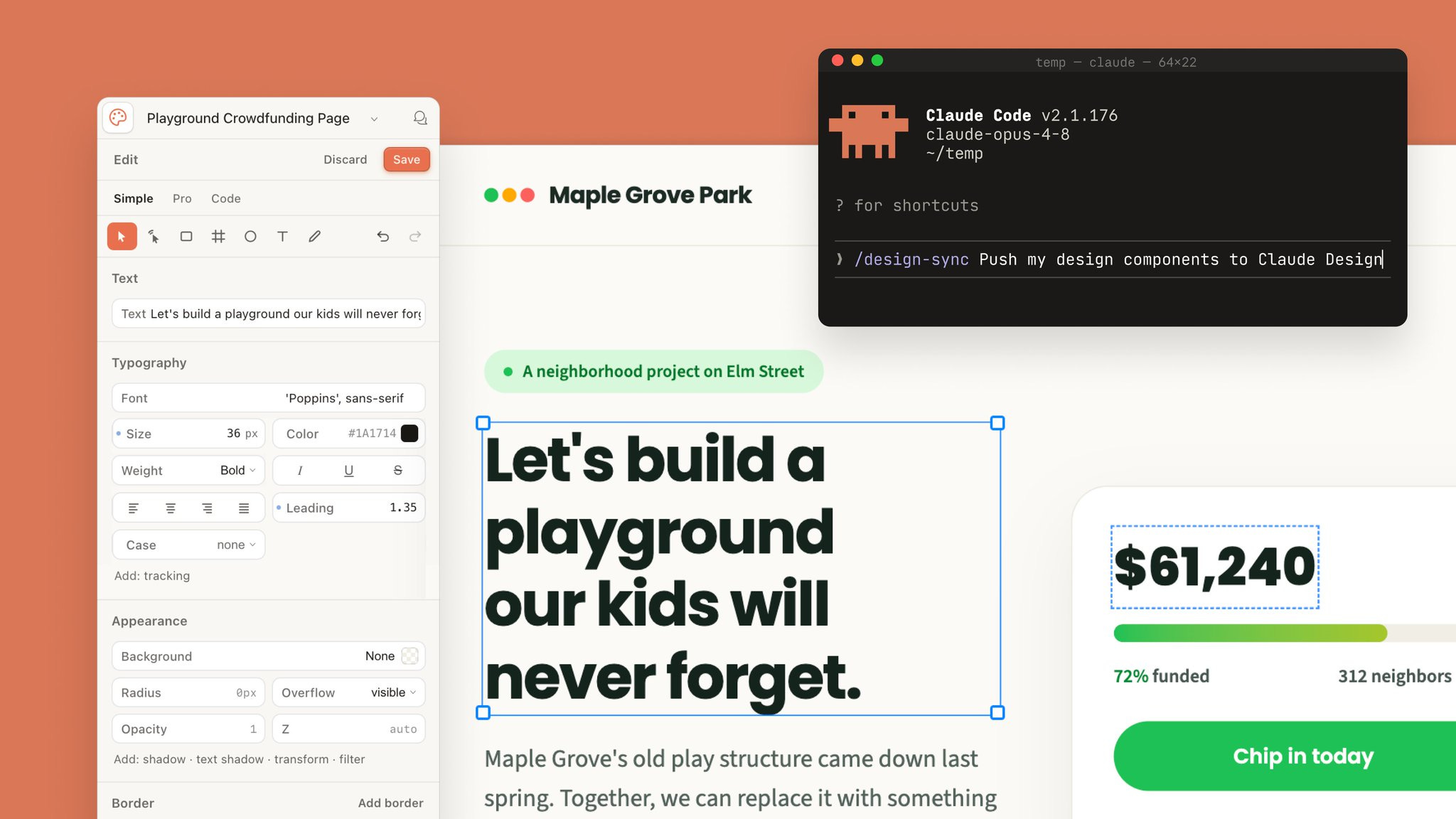
Claude Design building a landing page next to the chat. Source: @claudeai, Jun 17
What people make with it:


Design engineer @mandyymakes’ “magical pond background”, made with Claude Design the day after launch. Over 200k views.

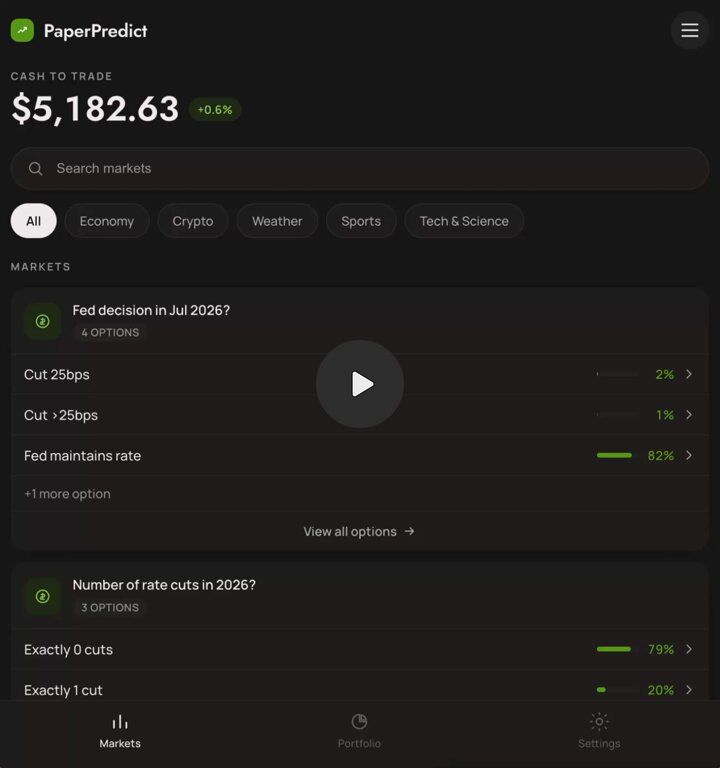
Software engineer @ivgenid’s PaperPredict app. The UI was built with Claude Design and a Figma kit.
Claude Sheets
Claude Sheets (beta, paid plans) builds spreadsheets with tabs, formulas, formatting and dropdowns from a prompt, then edits cells alongside you and outlines each change. (Anthropic)
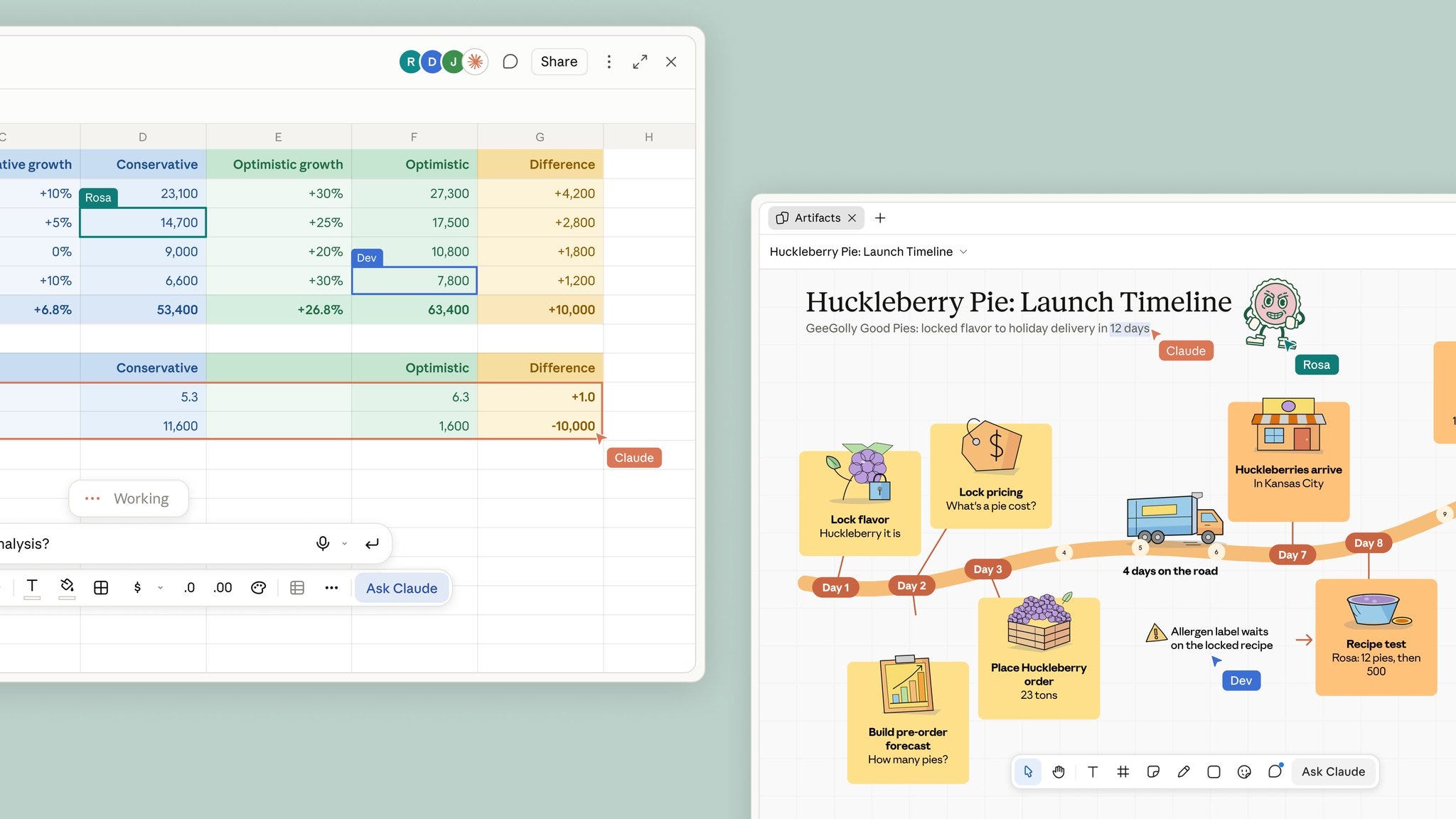
A tracker in Claude Sheets, with the matching whiteboard behind it. Source: @claudeai, Nov 10
Claude Whiteboards
Claude Whiteboards (beta, paid plans) is a shared board. You talk through a messy plan and Claude draws it as a timeline with owners and dates. When you’re done, it turns the board into a doc or deck, or sends it to Lucid, Miro or Zoho Vani.
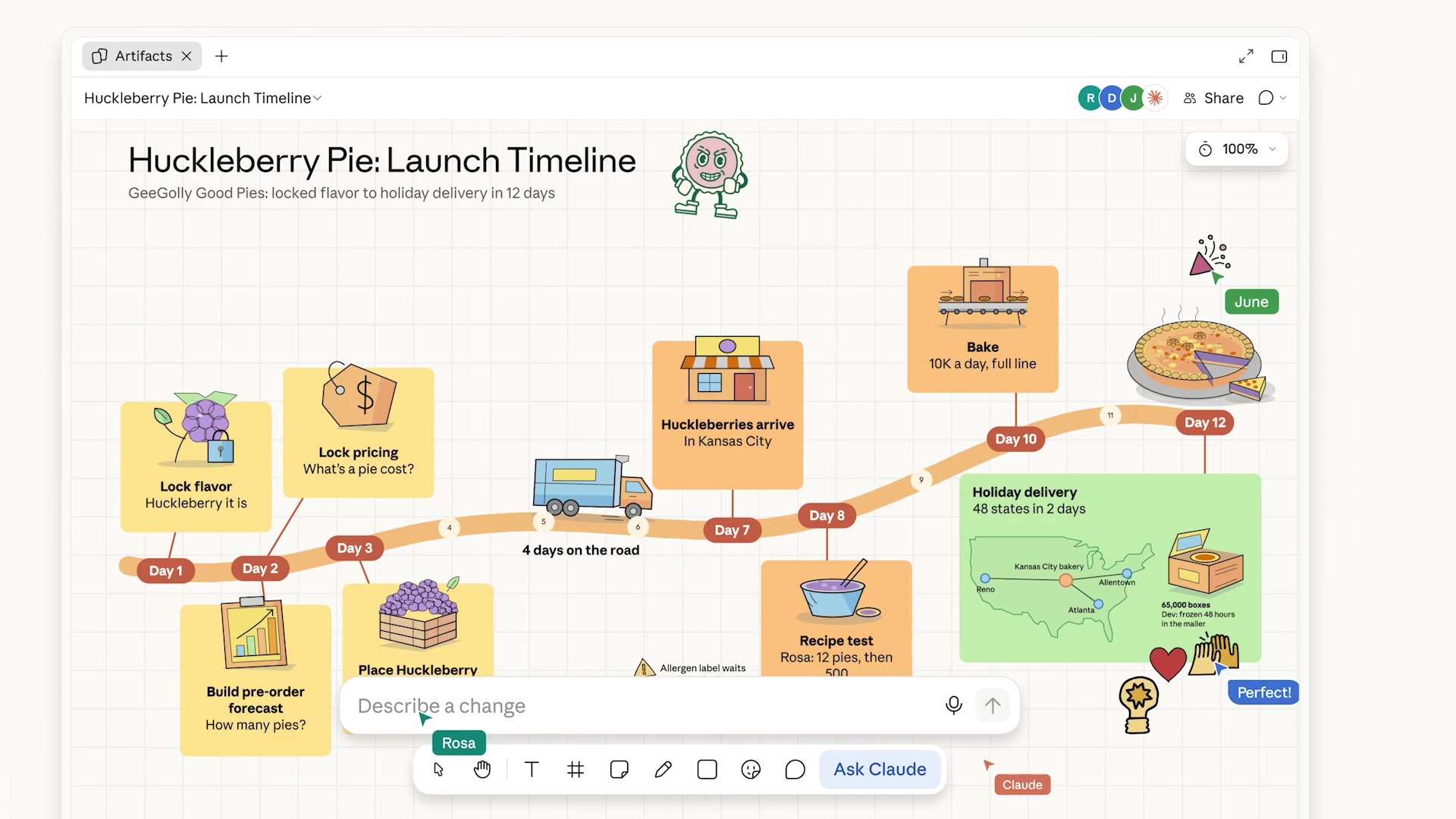
A launch timeline on a Claude whiteboard. Source: @claudeai launch video, Nov 10


Claude Data
Claude Data (GA, paid plans) is the renamed Claude Dashboards, which arrived on Oct 8. It connects to your warehouse or CRM, keeps charts current, and adds certified metrics and live sharing.
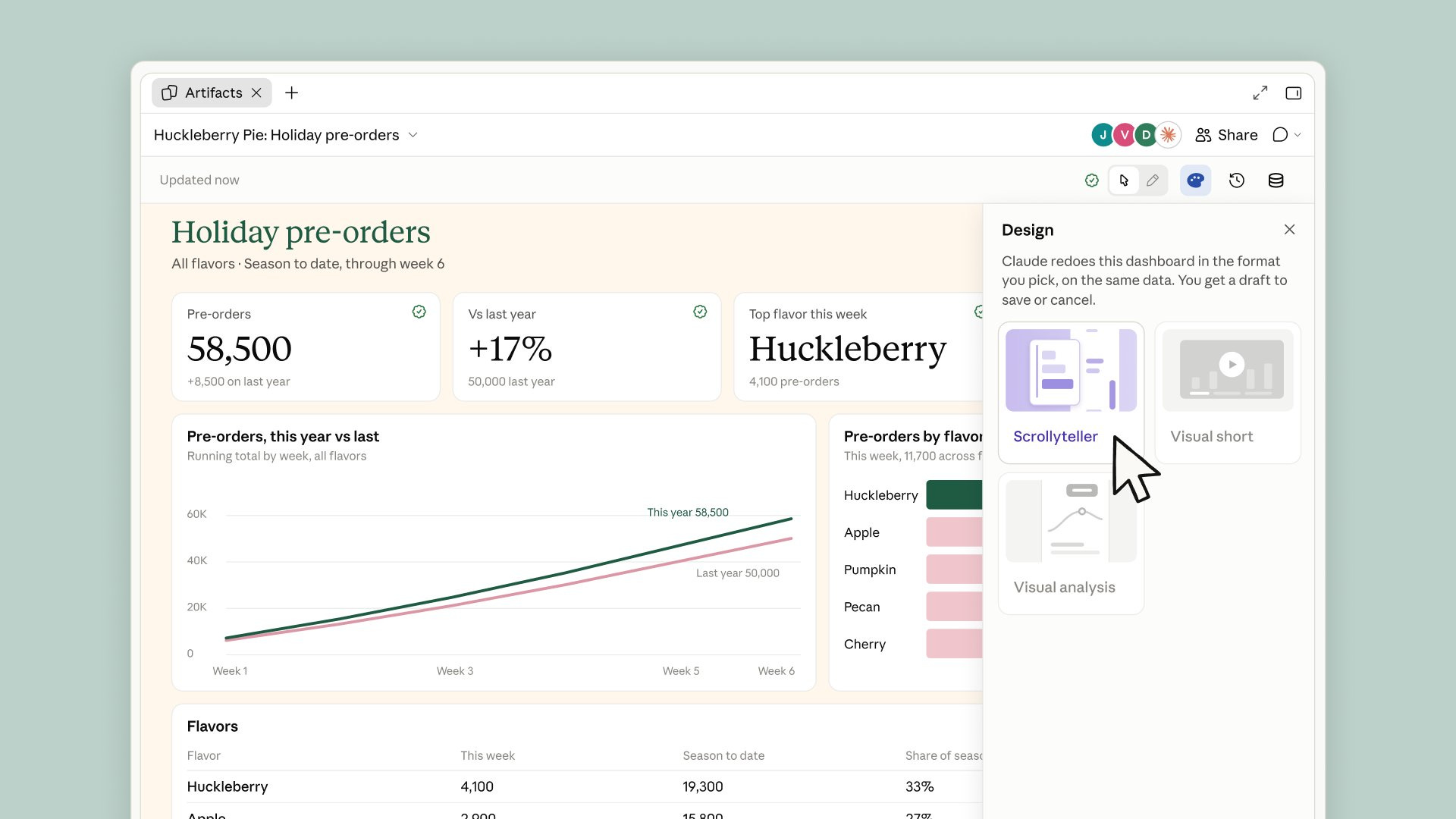
A live dashboard in Claude Data. Source: @claudeai, Nov 10

Claude Motion
Claude Motion (beta, Team and Enterprise) turns a report into a short animated explainer. It writes code rather than generating video, so there’s “no generated footage and no AI-generated people”. (Anthropic) You can take it further in tools like Descript, HeyGen or Runway.
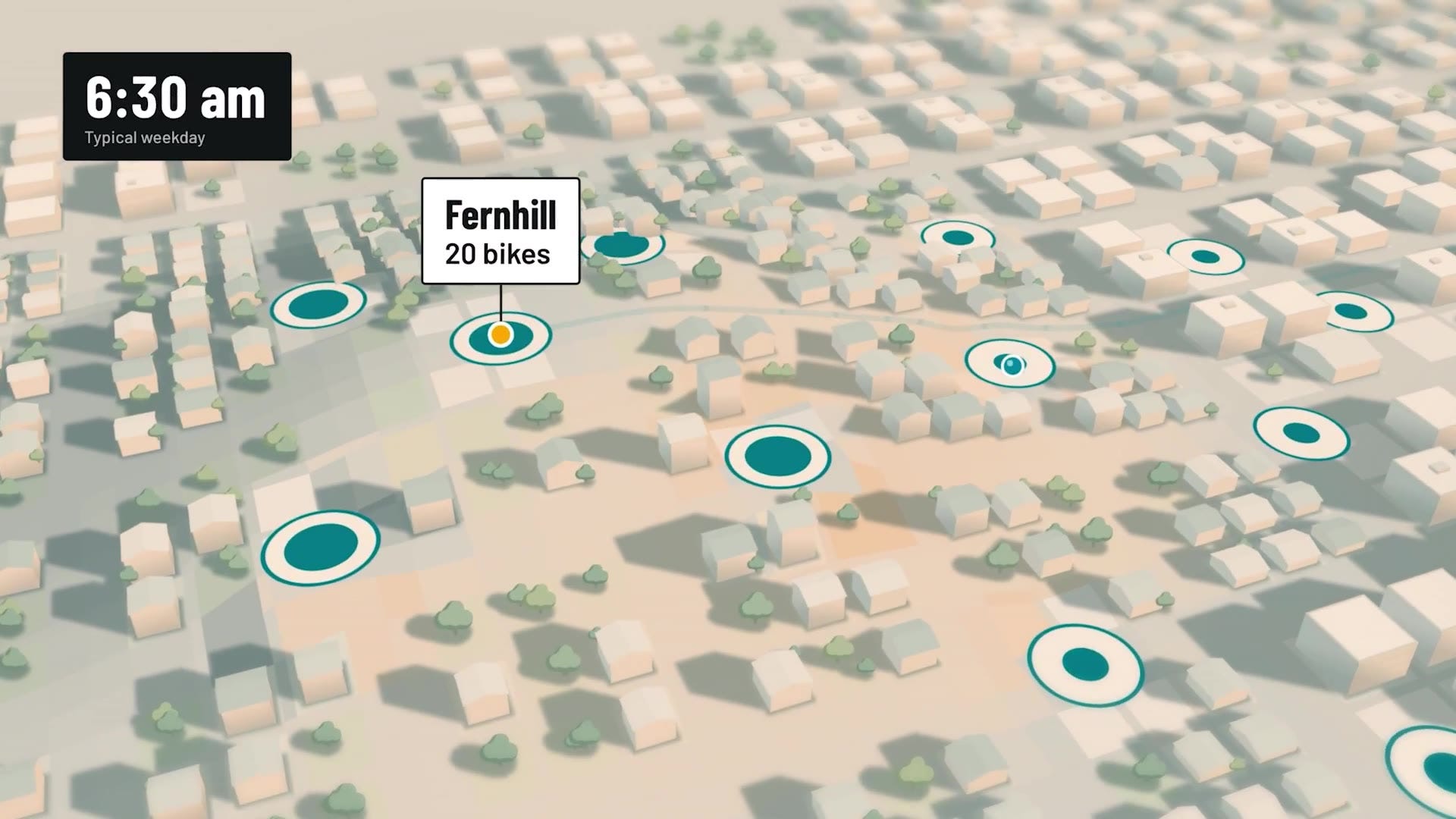
A 3D map animation made in Claude Motion. Source: @claudeai launch video, Oct 8
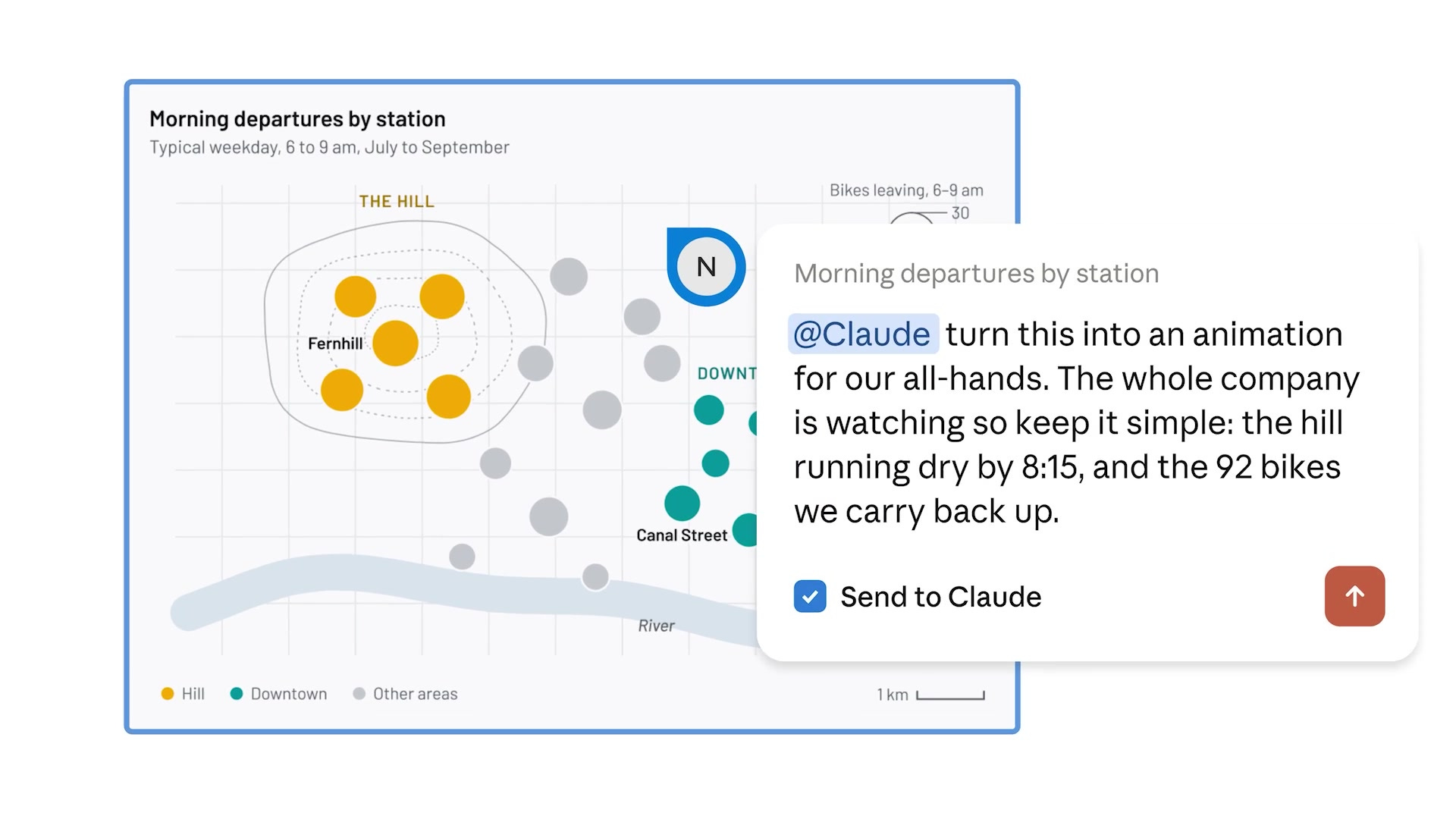
Asking Claude to turn a chart into an animation for an all-hands. Source: @claudeai launch video, Oct 8



HyperFrames, HeyGen’s open-source video tool, worked with Motion from day one: send a Motion video over and add music and sound effects.
Claude Meetings
Claude Meetings (beta, Team and Enterprise) joins your video call as a visible participant. While you talk, it drafts the plan, maps the timeline on a whiteboard and answers questions in the chat. Afterwards, everything sits on a meeting page in claude.ai. (Anthropic)
“Introducing Claude Meetings: add Claude to your team’s video call and it builds docs, whiteboards, and other artifacts with you while you’re still talking.” — @claudeai, Nov 12, 2026 (81k likes, 10.2M views when I checked)
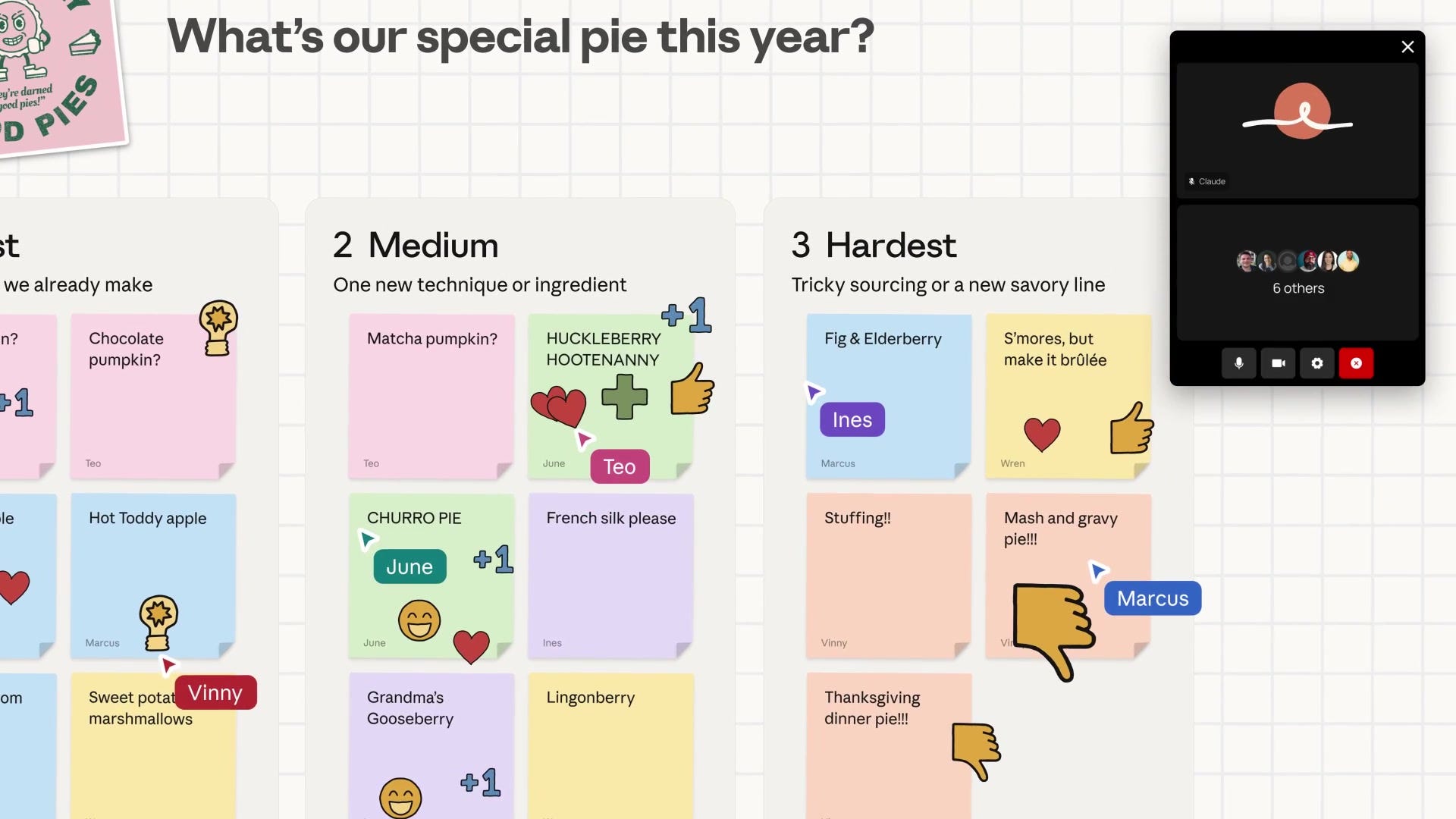
Claude filling a whiteboard while the team talks. Source: @claudeai launch video, Nov 12
Agents and shell: who does the work
An OS doesn’t just store things. It runs processes in the background.
One Claude. Since Sep 16, chat and Cowork are the same product. You can hand it “a report due at noon” and it keeps working “even after you’ve closed your laptop”. It can also run on a schedule. (Anthropic)
Background computer use. Since Sep 2, Claude can open and use apps on your desktop while you work on something else. It asks for access first. (@claudeai)
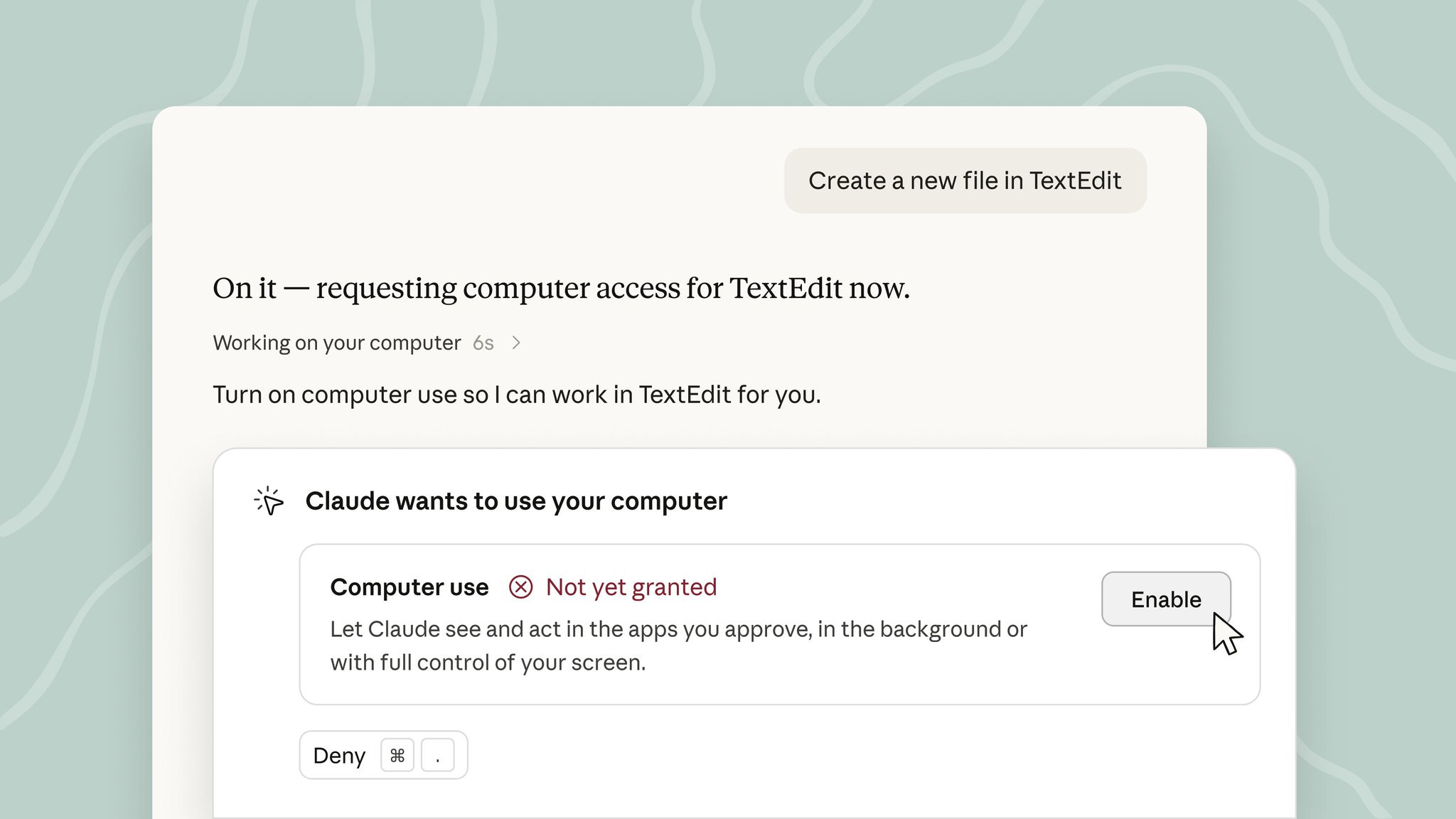
Claude asks before it takes over an app on your computer. Source: @claudeai, Sep 2
Claude Code started in the terminal on Feb 24, 2025 and is now the developer-facing half of the same system.
Claude in Chrome is generally available on paid plans. It reads the page, clicks, types and fills forms, and now takes actions on its own after a safety classifier checks each one. (Anthropic) That went live on Aug 26.
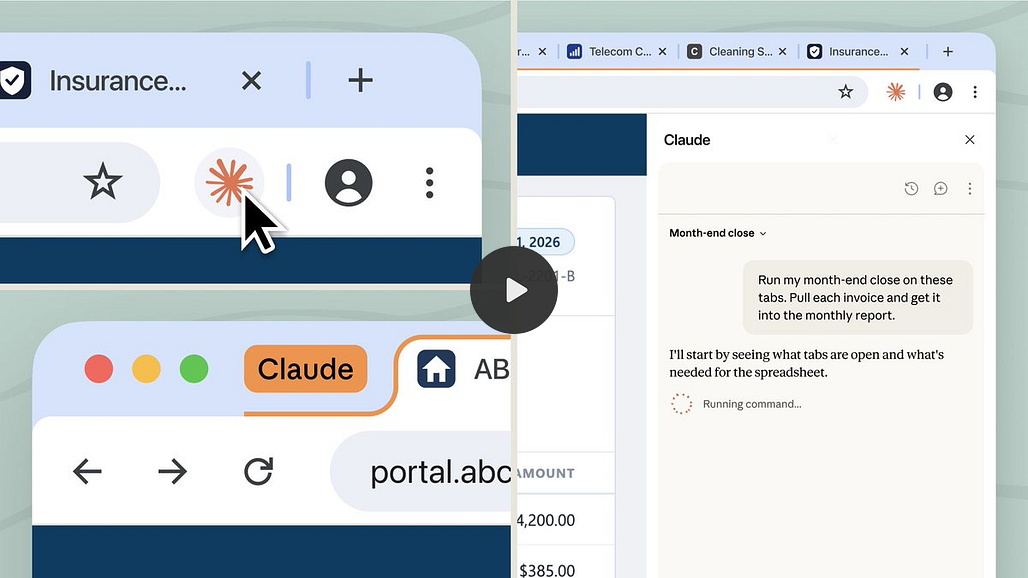
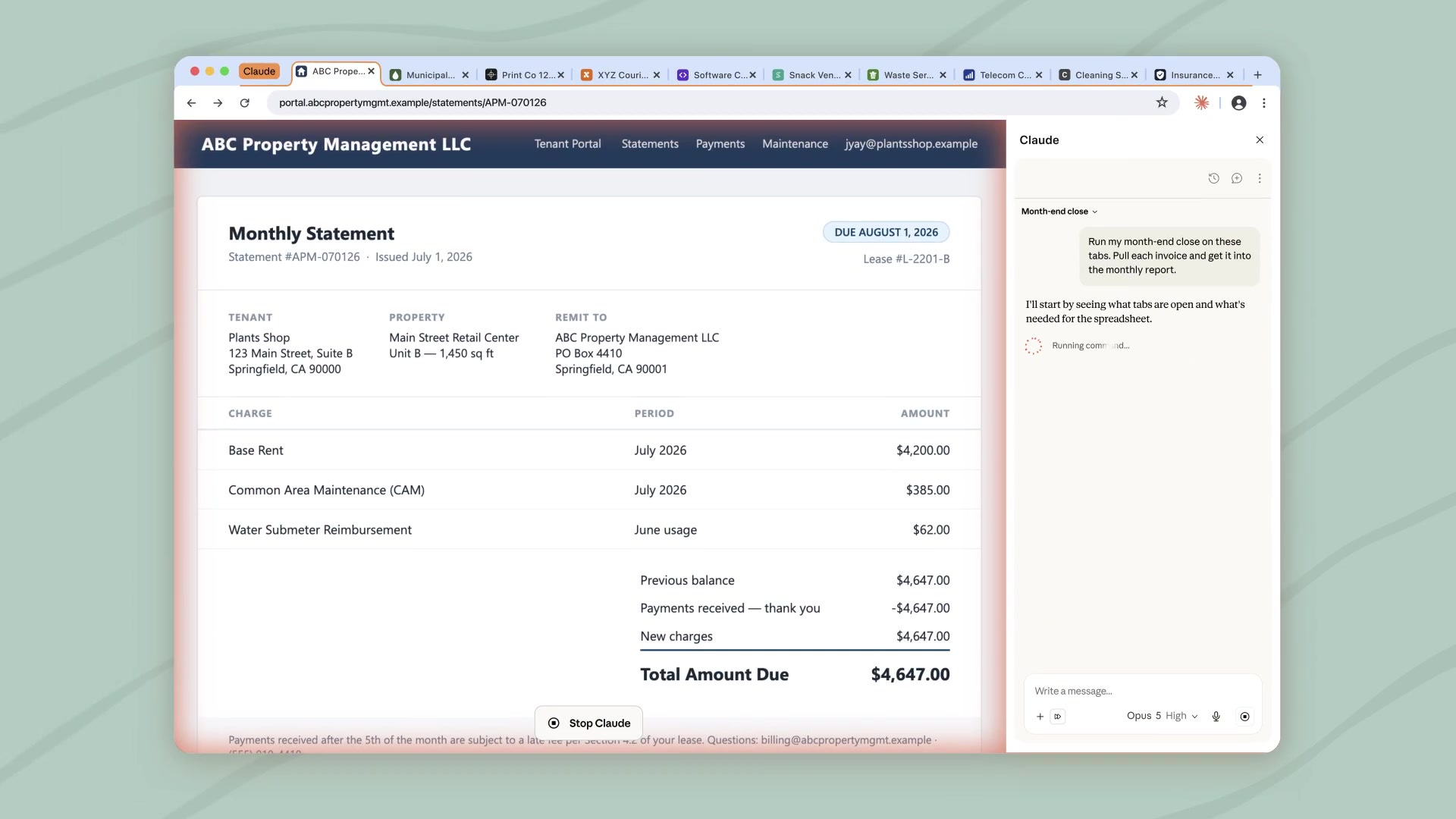
Claude in Chrome working through a monthly statement in the side panel. Source: @claudeai, Aug 12
Claude Duet: Personal Agent by Claude
Claude Duet is a separate app where Claude comes to you first. Anthropic opened a research preview on Oct 21. (Anthropic, @claudeai) It’s a standalone app on iOS and Android, and on claude.ai. It runs on Opus 5.5.
Each morning it sends a short brief on the most important items across your connected apps, including email and calendar. Through the day it checks those accounts every few hours and messages you only when something needs you. You can also hand it a task, from scheduling a meeting to building a dashboard or drafting invoice reminders from Stripe or QuickBooks.
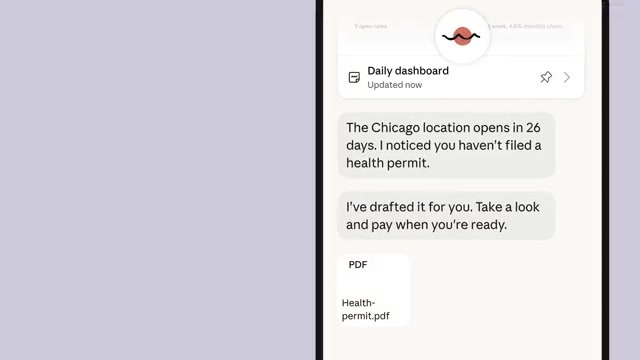
Duet’s daily dashboard: it spotted a missing health permit and drafted the filing. Source: @claudeai launch video, Oct 21
File system: Projects, sharing and folders
This is the part that convinced me. It’s the most OS-like layer of all.
A project in Claude has its own files, instructions, memory and scheduled tasks. Cowork projects can point at a folder on your computer, and the files stay there. (Claude Help Center)
On Team and Enterprise, you share a project with “Can view” or “Can edit” permissions. Your Projects page has “Your projects”, “Organization” and “Shared with you” tabs. Enterprise can share with whole groups, so new hires get access automatically. Admins can turn sharing off for the whole org. (Claude Help Center, sharing)
Folders, permissions, groups, admin policies. That’s a file system with an access-control model.
Every Thursday I go deep on one shift in AI tools. Subscribe so you don’t miss the next one.
Memory: what the OS knows about you
Since Aug 25, chat and Cowork share one memory. Claude adds topics as you talk, and you can read, edit or delete each memory file. It’s on by default on Free, Pro, Max and Ultra. On Team and Enterprise, admins decide, and since Oct 31 it’s on by default for most new orgs. (Anthropic)

Duet carries that memory, plus your skills and connectors, into its own app. That’s the point of a shared memory layer: every new “app” starts already knowing you.
Drivers: how Claude talks to everything else
MCP (Nov 25, 2024) is the open standard underneath most Claude connectors.
Agent Skills (Oct 16, 2025) are folders of instructions and scripts Claude loads when they’re relevant. (Anthropic)
Claude Marketplace became one place for connectors, plugins, agents and partners on Sep 23, with more than 2,000 connectors and plugins. (Anthropic) By Duet’s launch a month later, Anthropic was citing “over 6,000”.
Interactive connectors (Nov 10) open apps like Adobe, Atlassian, Box and Notion as full apps beside your chat, where you or Claude can work in them. (Anthropic)
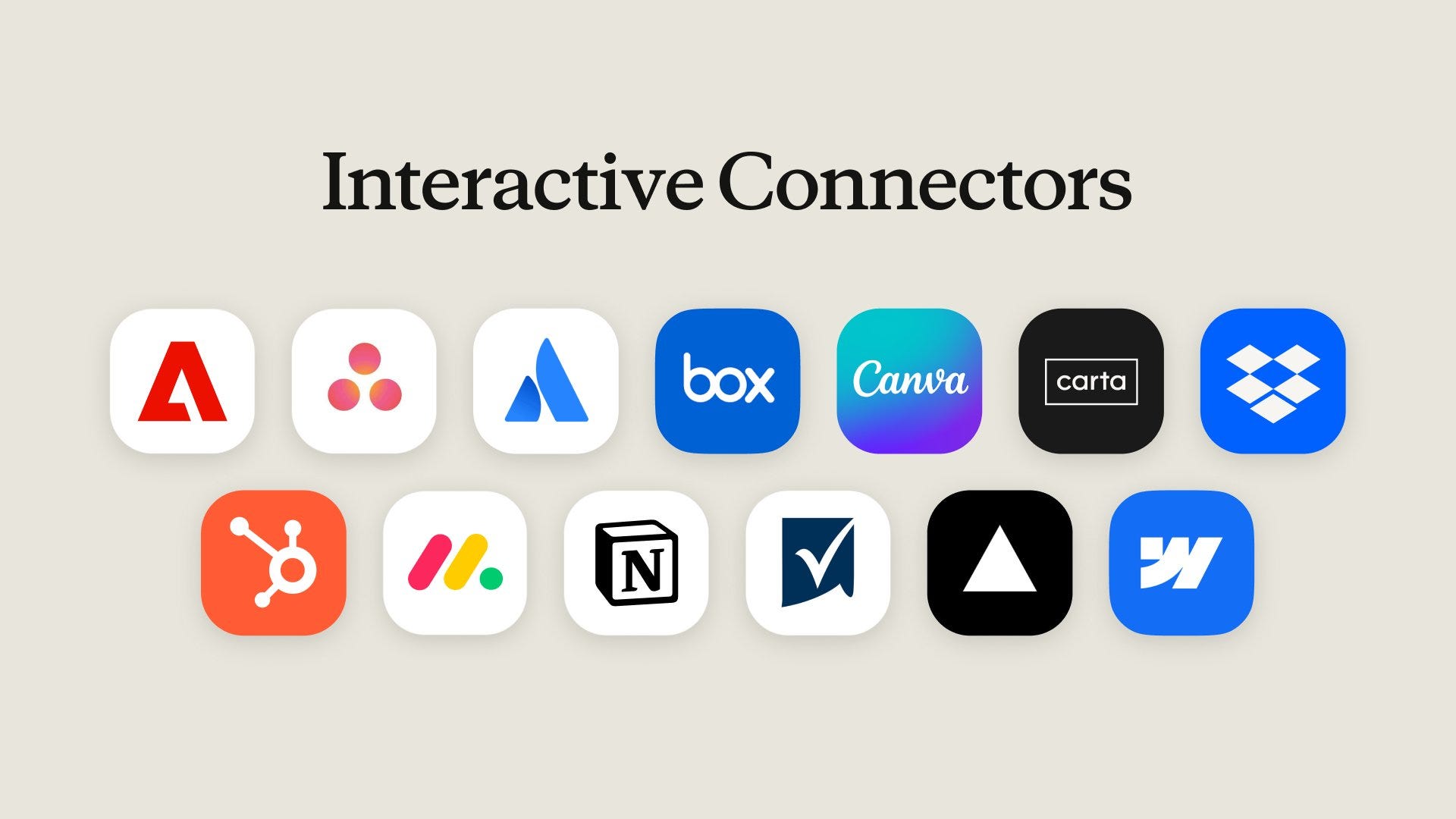
Apps that now open inside Claude. Source: @claudeai, Nov 10
Kernel: the models
Under all of it sit four models: Fable 5.2 (Nov 9) for the hardest work, Opus 5.5 (Sep 22), which Anthropic calls its “strongest daily driver”, Sonnet 5.5 (Sep 28) and Haiku 5.5 (Oct 7). I covered the lineup in detail in my Claude model guide.
Anthropic has even tested the literal version. In the Fable 5.2 launch post, it says one engineer gave the model an empty folder and asked for a prototype operating system. Over eight days, more than 1,000 subagents built one that boots on a laptop, with drivers, file storage, windows, a login screen and “built-in Claude functionality”. (Anthropic) That’s the model at the bottom of this stack.
My take
I’ve used Docs, Slides, Sheets, Whiteboards, Design, Motion and Data. They’re phenomenal. No doubt about that. I haven’t used Meetings yet, so I’m not judging it here.
The best part isn’t any one app. It’s that they all work inside Claude, with the same context. Build a tracker and it saves straight to an Excel sheet. Hand it an existing Excel file and it opens it, works through the numbers and makes things run. No copy-pasting between five tabs.
So is it an operating system? For a knowledge worker, yes, in the way that matters: it’s where work starts, where it’s stored, what remembers context, and what keeps working while you’re away. For an IT team, not yet: it doesn’t own the files of record, several apps are still in beta, and Microsoft still holds most company documents.
Anthropic wrote the plan down in June 2024: “centralize their knowledge, documents, and ongoing work in one shared space.” Two and a half years later, it’s mostly built.
What I’d do with it today:
Use it now: Docs, Slides, Design, Sheets, Whiteboards and Data, plus Motion if you’re on Team or Enterprise. Set up Projects with shared instructions for anything your team repeats.
Try it: Meetings, if you’re on Team or Enterprise and run calls on Google Meet. It’s beta, and everyone on the call has to be OK with a transcript.
Wait: anything regulated, and Duet unless you’re in the US and off the waitlist. Keep heavy financial models in Excel. Claude can open them there too.
Which layer are you already running on Claude? Reply and tell me.
If this map was useful, subscribe. I’ll update it as Anthropic ships the next layer.